 HG Precision
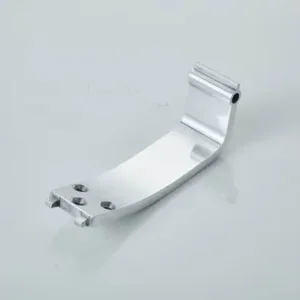

Engineering Custom Aluminum Profiles for High-Power LED Systems
Modern solid-state lighting relies heavily on high-power LED systems, which require highly efficient thermal management. An LED emitter converts only a portion of its electrical energy into visible light; the remaining energy is converted into heat. Without proper thermal dissipation, junction temperatures rise, reducing luminaire life, causing color shifting, and lowering lumen output. Custom-engineered 6060, 6063, and 6061 aluminum alloy profiles serve as both structural protective cases and high-performance heat sinks.
"Thermal management is the single most critical factor in the durability of high-output LED systems. An extrusion profile designed with optimal heat sinks can extend the lifetime of LED arrays by up to 50,000 operating hours."
1. Global Enterprise Procurement Trends & Demand Dynamics
Global procurement offices face changing demands. In commercial, industrial, and architectural sectors, LED systems are no longer just simple light fixtures. They are now integrated into smart building designs, automotive structures, and horticultural frameworks. Consequently, engineering buyers require customized aluminum extrusion profiles that meet specific mechanical criteria:
- Architectural & Linear Lighting: Demands thin-walled, lightweight profiles with excellent surface quality for decorative and direct-view luminaires. Key challenges include eliminating visible die lines and ensuring consistent anodizing color across different production batches.
- Horticultural & High-Bay Systems: Requires heavy-duty profiles with wide, multi-fin configurations. These profiles must have high thermal dissipation capacity to cool 600W+ LED engines without passive cooling failures.
- Automotive & Transit Integration: Demands strict structural tolerances (often to ISO 2768-m or fine grades) along with certified alloy chemistry (such as 6063-T6 or 6061-T6) to handle dynamic vibration and structural loads.
2. Macro-Industry Solutions: Beyond the Simple Extrusion
Foshan Golden Source provides comprehensive solutions for complex challenges. By integrating tooling design, extrusion, CNC milling, and surface treatment under one roof, we address critical manufacturing issues:
| Industry Sector | Engineering Challenge | Custom Material/Process Solution | Key Benefit |
|---|---|---|---|
| Smart Urban Lighting | Extreme outdoor exposure, saline environments, high humidity. | 6063-T6, Thick Film Anodizing (15-20 microns) or architectural powder coat. | Corrosion resistance (>1000 hrs salt spray testing) and robust structure. |
| Data Center & Optical Modules | Ultra-dense packaging requiring thin, high-aspect-ratio cooling fins. | OEM heat sink extrusion, custom tooling with in-house alloy casting. | Optimal thermal conductivity, minimal footprint, and reliable performance. |
| E-Bike Battery Enclosures | Vibration resistance, strict battery cell space limitations. | Complex hollow profiles with precise CNC machining. | High impact resistance, secure fitment, and weight optimization. |
3. Technical Roadmap: Materials Science & Extrusion Engineering
Our engineering team works with a wide range of aluminum alloys, including the 1XXX, 3XXX, 5XXX, 6XXX, and 7XXX series. For LED thermal management, the 6XXX series remains the preferred choice due to its balance of extrudability, mechanical strength, and thermal conductivity:
Alloy Composition Comparison & Thermal Properties
The choice of temper (e.g., T5 vs. T6) significantly impacts mechanical performance. While T6 tempering offers higher tensile and yield strength through solution heat treatment and artificial aging, T5 tempering is often preferred for intricate LED shapes because it maintains dimensional stability and minimizes deformation during the extrusion process.
- Alloy 6063: Features a thermal conductivity of approximately 200 W/m·K. It is highly extrudable, making it ideal for detailed LED profiles and linear fixtures.
- Alloy 6061: Offers superior mechanical strength and structural integrity. With a thermal conductivity of 166 W/m·K, it is suited for structural mounting and heavy-duty industrial fixtures.
- Anodizing Optimization: By controlling iron and silicon impurities during our in-house casting process, we produce materials that respond well to clear, black, or custom color anodizing. This eliminates the dull, cloudy finishes often found in lower-grade alloys.
Anodizing and Powder Coating Surface Finishing
Our in-house surface finishing lines provide both protective and cosmetic options. Anodized finishes protect against corrosion and enhance surface emissivity, improving radiation heat transfer in sealed environments. For architectural and high-visibility settings, our powder-coating lines offer a wide range of RAL colors that resist weathering and UV degradation.
4. Future Outlook: Lightweight and High-Dissipation Trends (2025–2030)
The LED industry is moving toward higher power densities and smaller footprints. The next generation of profiles will incorporate advanced features like micro-channel cooling structures, direct copper-to-aluminum cladding, and integrated optical mounting tracks. These details help reduce overall component count, simplify assembly, and lower final production costs.
At the same time, environmental regulations are driving demand for green materials. Architectural and automotive markets increasingly require certified post-consumer recycled aluminum. Our GRS and RCV certifications enable us to supply verified recycled content, helping clients meet environmental goals and qualify for green building certifications like LEED.