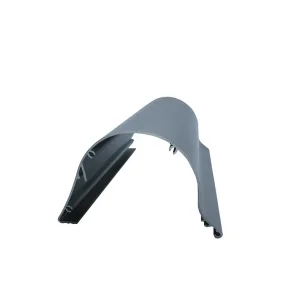
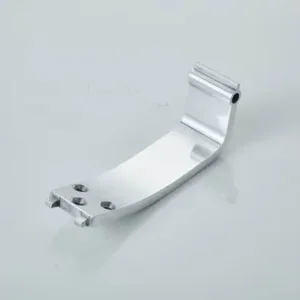
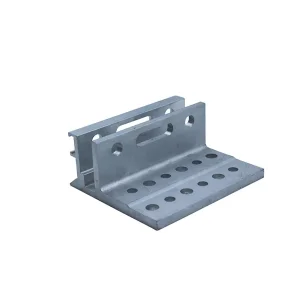
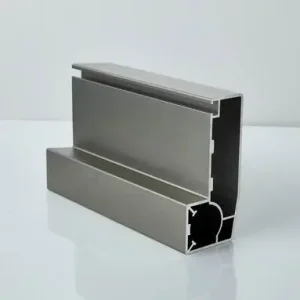
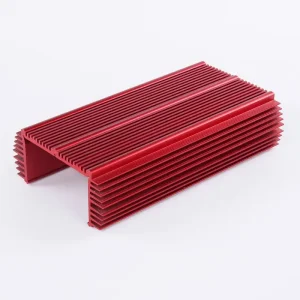
Explore our curated selection of high-precision customized structural profiles and CNC-machined components, engineered for maximum performance across automotive, marine, residential, and electronics industries.
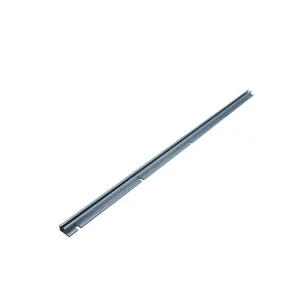
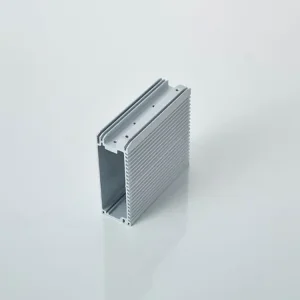
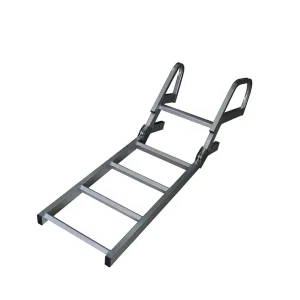
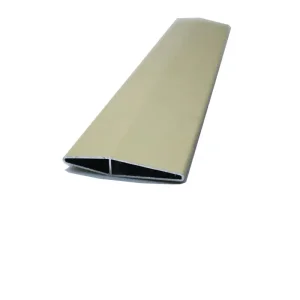
The modern industrial ecosystem demands unprecedented precision, modularity, and structural adaptability. Inside this paradigms, the T-Track Aluminum Profile has transitioned from a simple accessory used in woodworking fixtures to a critical structural foundation in advanced industrial automation, automotive architecture, electronics packaging, and cleanroom design.
As a leading OEM T-Track manufacturer, Foshan Golden Source Precision Manufacturing Co., Ltd recognizes that T-slot geometries require extreme dimensional accuracy and mechanical integrity. A minor variance in slot geometry can lead to mechanical binding, structural instability, or premature failure in high-stress assembly environments.
Our comprehensive whitepaper explores the critical engineering parameters, metallurgical choices, and design methodologies that differentiate high-performance structural systems from standard commercial-grade extrusions. Through rigorous raw material selection, state-of-the-art die manufacturing, and advanced surface treatment technologies, we enable global enterprises to streamline their assembly systems and optimize mechanical performance.
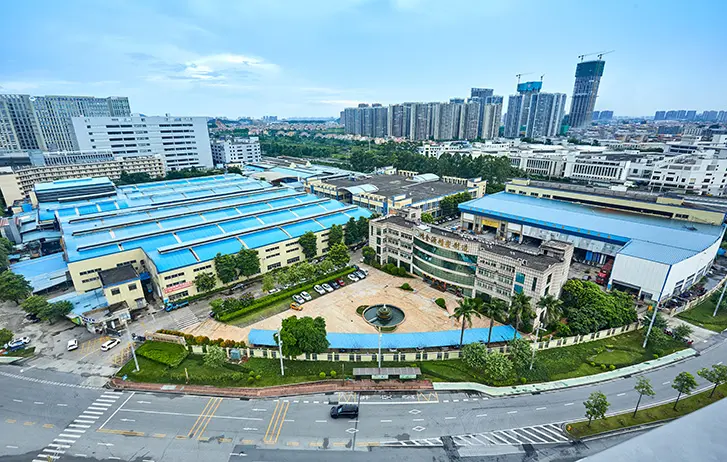
Established in 1991, Foshan Golden Source Precision Manufacturing Co., Ltd has built a legacy of precision and reliability. Over a modern and environmentally friendly footprint of 73,000 square meters, we deliver a seamless, one-stop OEM and ODM production experience.
We melt our aluminum alloys in-house, enabling precise customization of chemical compositions. This directly enhances tensile properties, structural purity, and anodizing consistency.
With dedicated high-speed CNC machining centers, stamping systems, welding lines, and product assembly teams, we carry out all steps in-house to reduce unit costs and enforce strict tolerances.
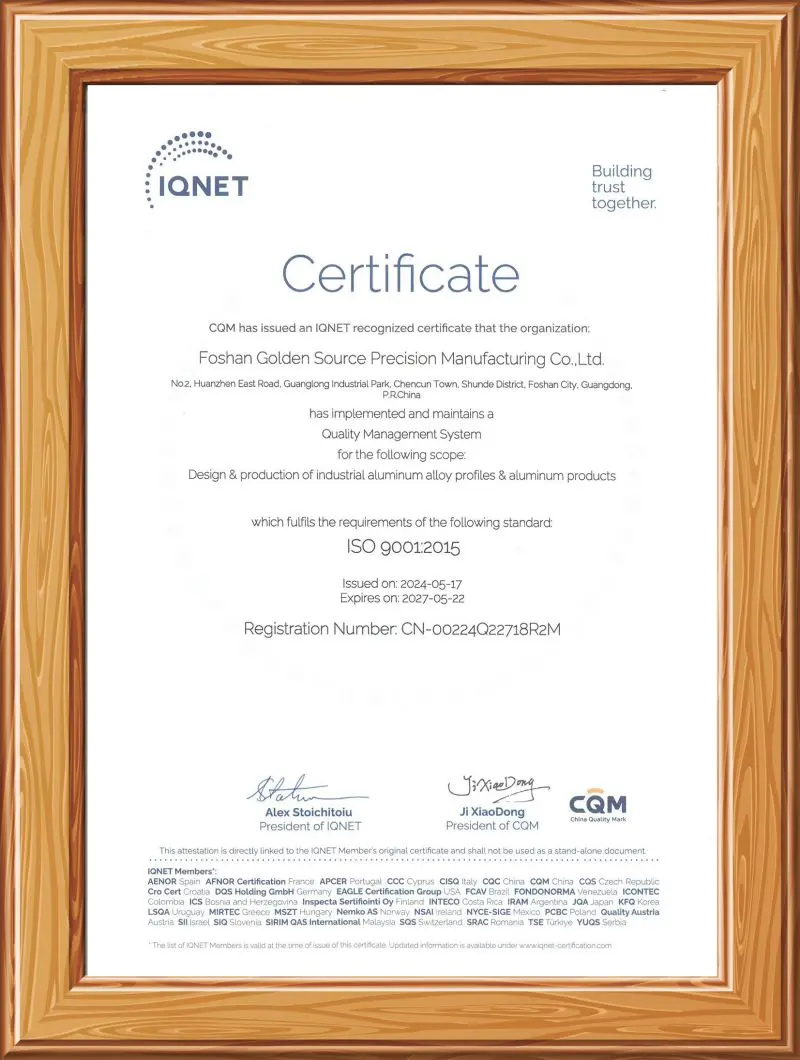
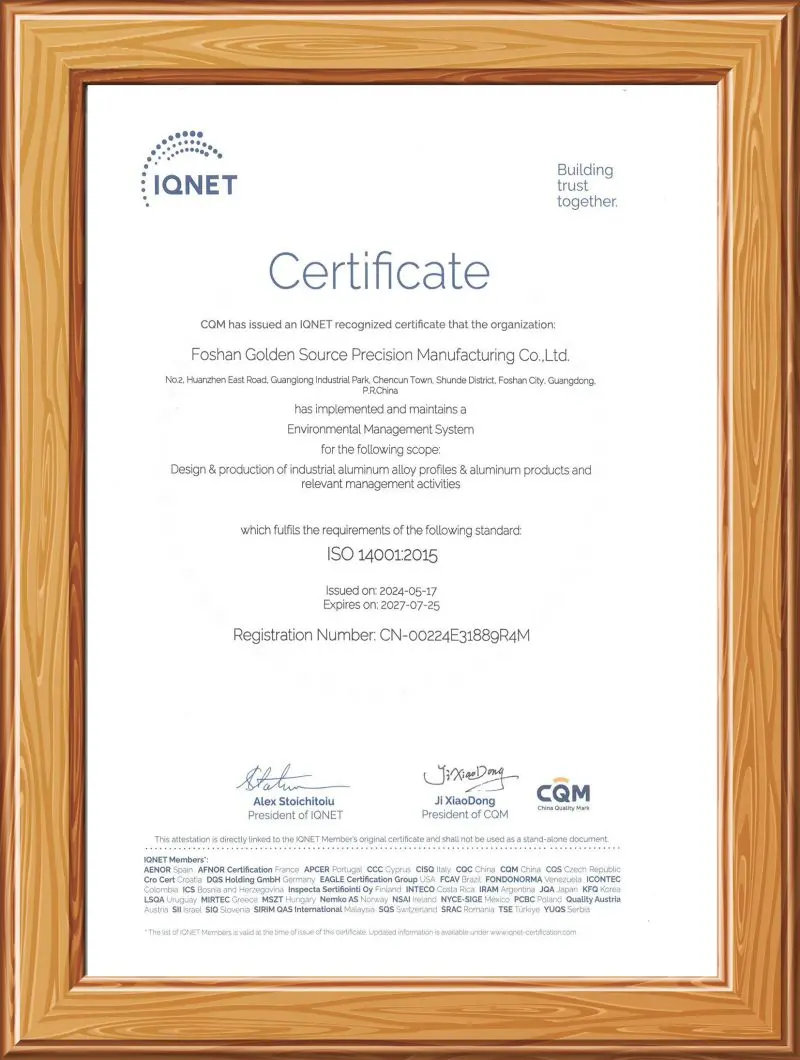
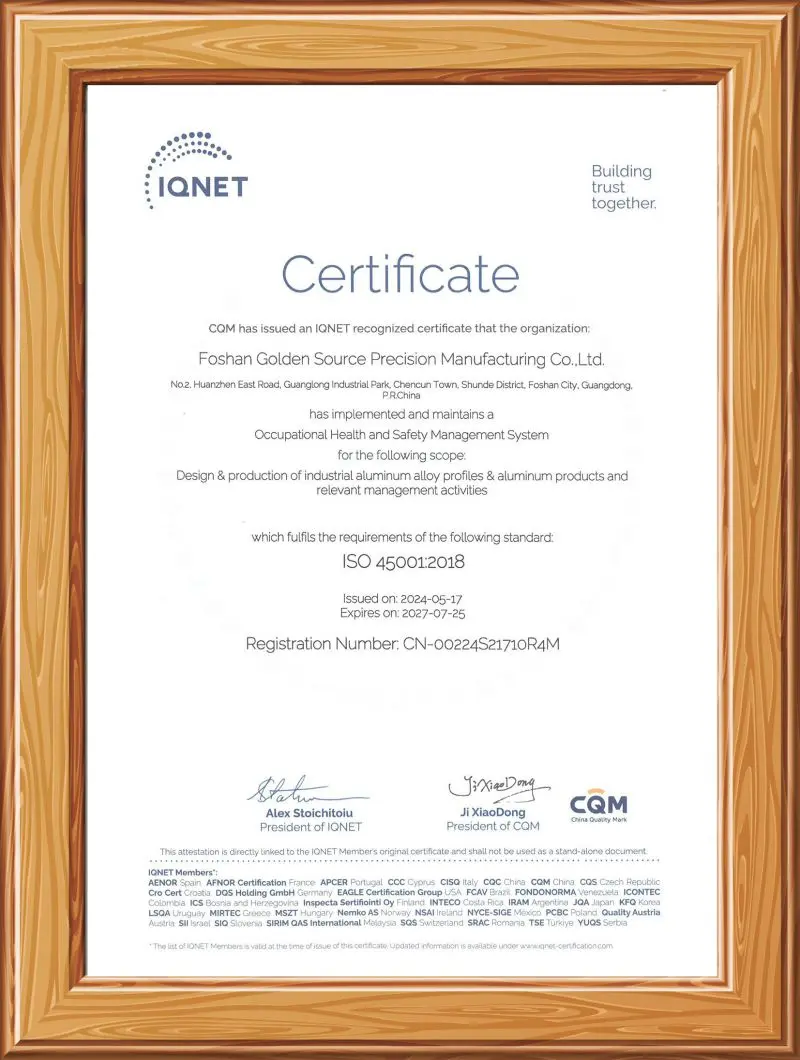
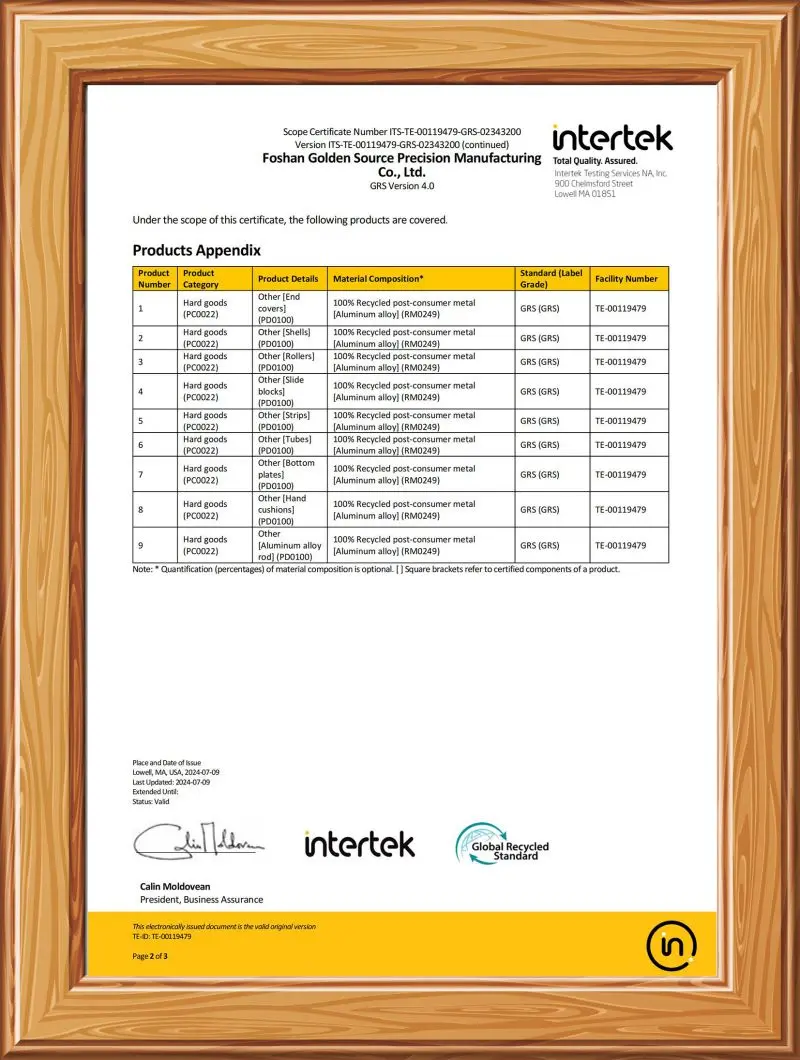
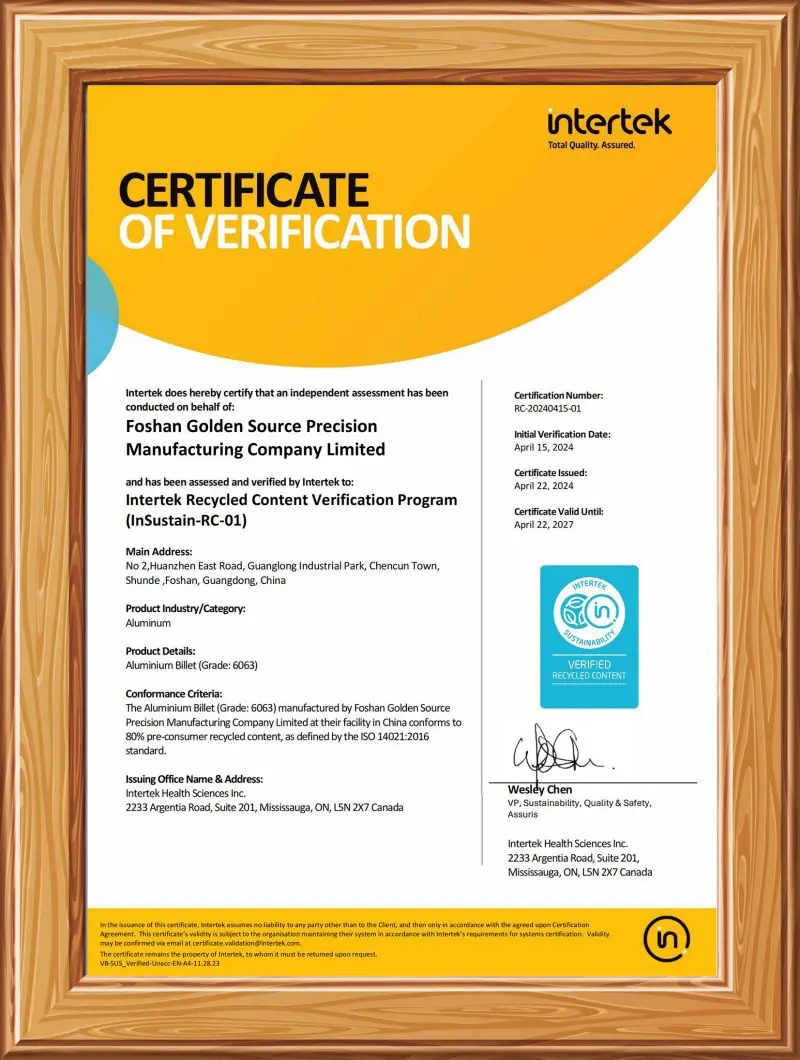
Holding GRS (Global Recycled Standard) and RCV certifications alongside ISO9001, ISO14001, and ISO45001, our production lines fully align with the strict requirements of EU REACH regulations.
International procurement operations face shifting macro environments, characterized by changing trade tariffs, evolving supply-chain logistics, and strict carbon-footprint accounting. For procurement managers sourcing structural aluminum, balancing cost efficiency with technical capability is paramount.
Historically, buyers prioritised price-per-ton metrics. However, smart manufacturers look beyond base material costs to evaluate total cost of ownership (TCO). Inconsistent tolerances on T-slot dimensions lead to assembly delays and manual filing processes on the shop floor. By enforcing strict tolerances (under ±0.1mm on critical slot paths), Foshan Golden Source helps customers eliminate secondary correction steps, saving thousands in labor costs.
Additionally, the rise of the circular economy makes carbon tracking essential. European and North American buyers increasingly choose factories holding GRS (Global Recycled Standard) certification. The ability to verify the post-consumer recycled content of aluminum extrusions is key to satisfying domestic environmental disclosure mandates.
Selecting the correct alloy chemical profile and temper configuration dictates the load deflection, wear resistance, and surface finish of a T-Track. Below, we compare the primary aluminum alloys used in structural and high-wear T-track applications.
| Alloy Group | Common Temper | Tensile Strength (MPa) | Yield Strength (MPa) | Key Performance Indicators | Primary Industrial Use-case |
|---|---|---|---|---|---|
| 6063 | T5 | 150 - 186 | 110 - 145 | Excellent surface finish, high corrosion resistance, easy extrusion. | Display stands, furniture slides, architectural frames. |
| 6063 | T6 | 220 - 240 | 170 - 214 | Improved hardness, better machinability, medium structural stability. | Industrial workbenches, jig tracks, medium load fixtures. |
| 6061 | T6 | 290 - 310 | 240 - 275 | High strength, excellent heavy-load performance, great weldability. | Heavy automation frames, transport tracks, aerospace fixtures. |
| 7075 | T6 | 510 - 540 | 430 - 480 | Extreme yield strength, comparable to mild steel, reduced corrosion resistance. | High-stress military mounts, clamping fixtures. |
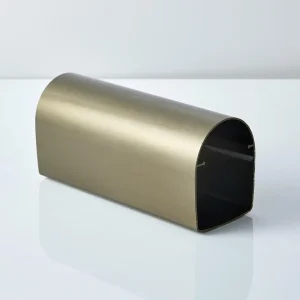
Beyond alloy selection, surface finish thickness determines the lifetime of sliding components within the T-track. For dry-running sliders, we recommend a minimum clear anodized layer of 10 to 15 microns to prevent galling. For harsh marine or outdoor applications (e.g., solar panels, boat-mounted fishing rod holders), our electrolytic bronze anodizing and powder coating techniques prevent pitting corrosion and sustain performance over thousands of hours of salt spray testing.
How global design engineers apply our structural components to solve complex assembly and thermal challenges.
T-tracks provide dynamic structural framing for robotic arms, automated pick-and-place lines, and optical table guides, enabling rapid repositioning and high repeatability.
Custom heat-sink cases in 6063-T5 aluminum are critical for active noise cancellation, cooling high-power amplifiers, and protecting acoustic systems from thermal fatigue.
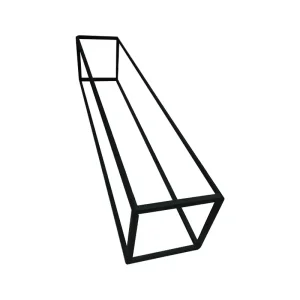
Anodized and powder-coated furniture frames provide structural, corrosion-resistant support in modern damp-area storage units and cleanroom kitchen applications.
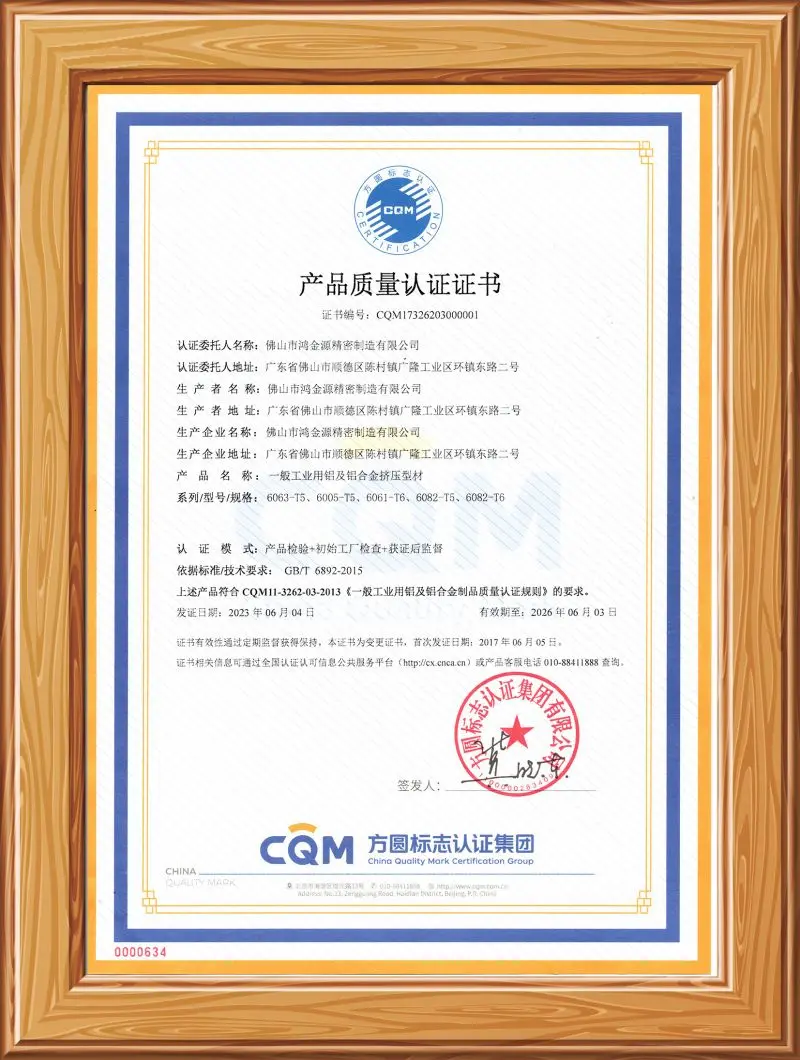
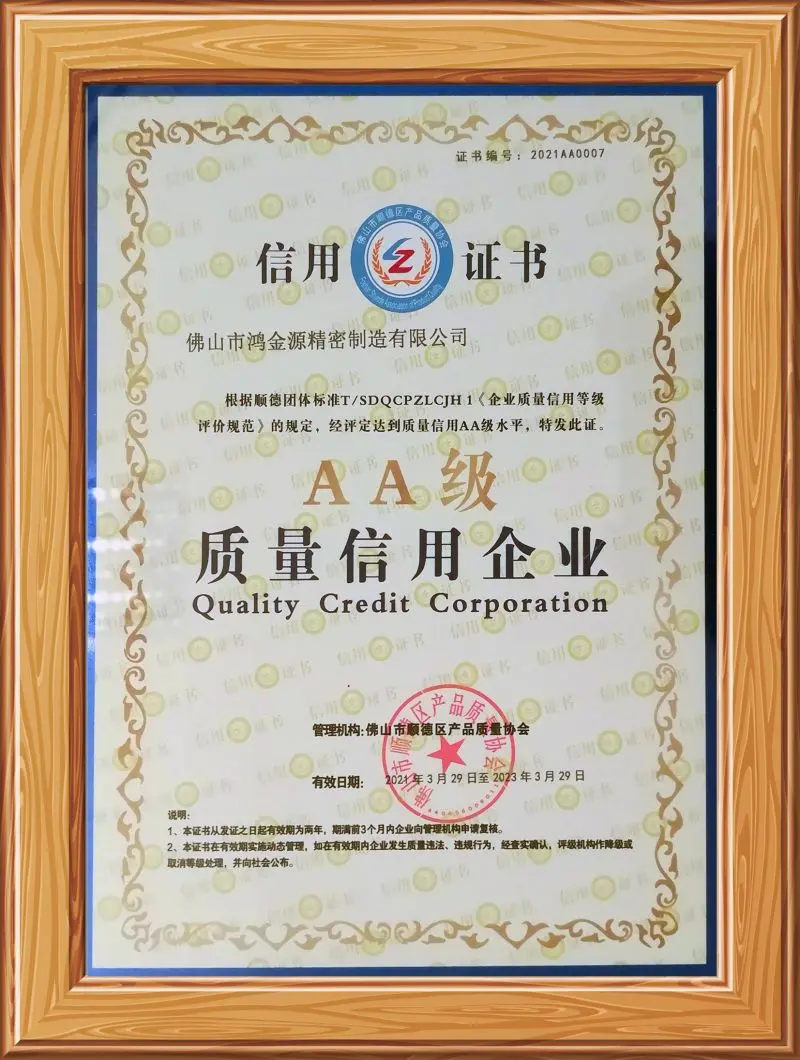
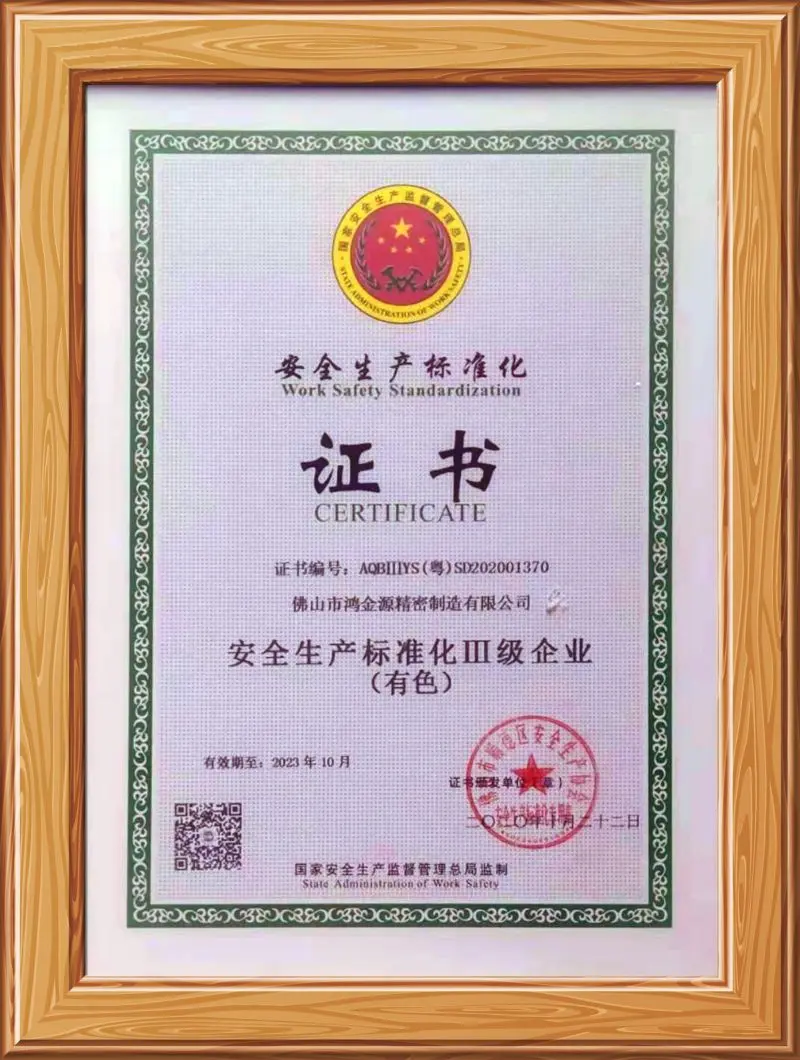
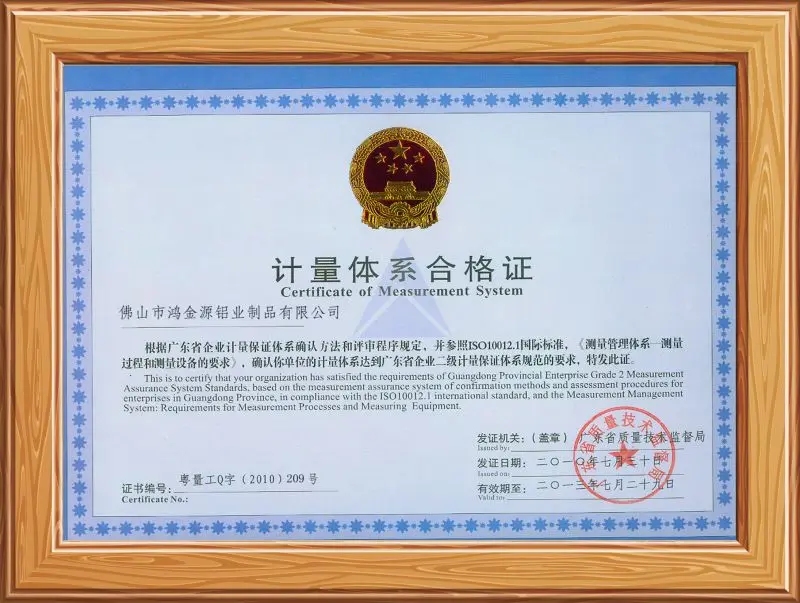
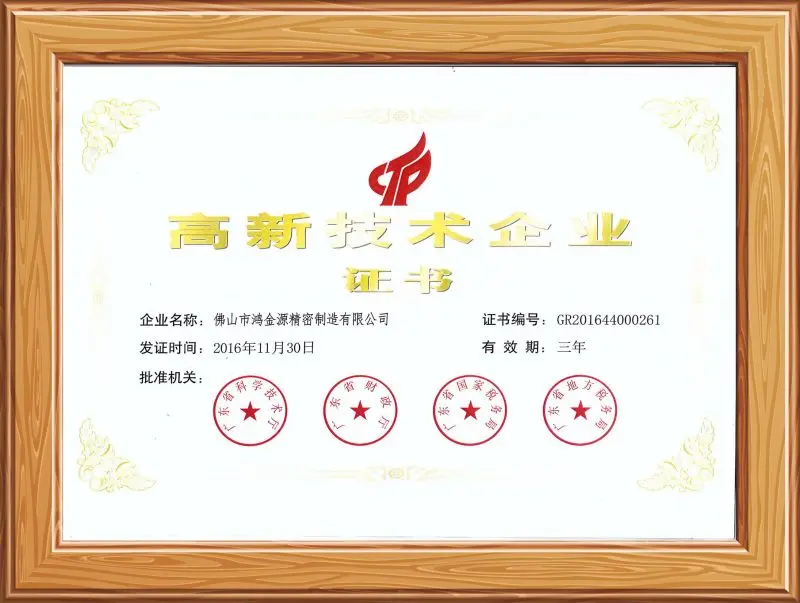
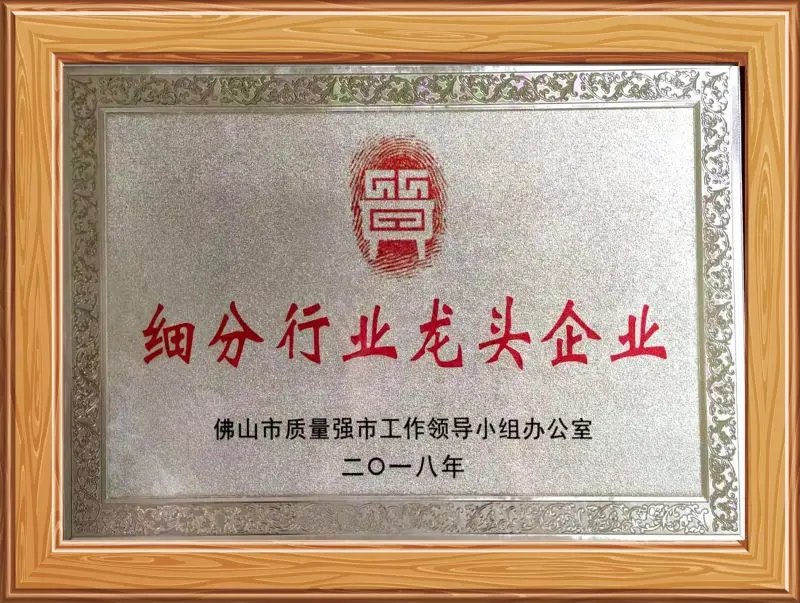
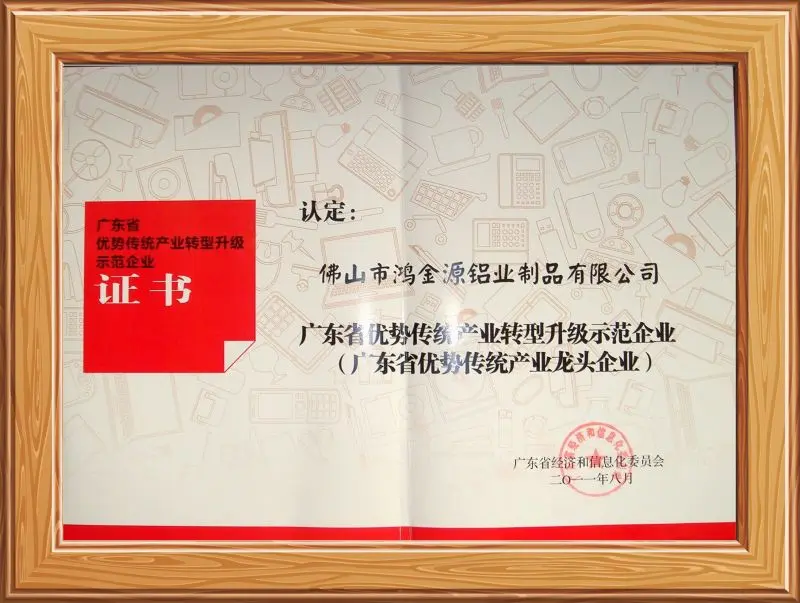
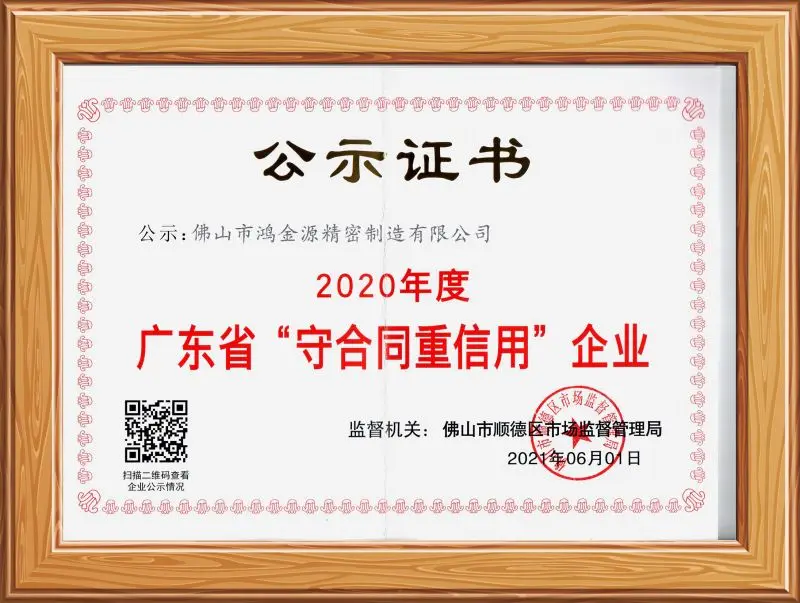
Foshan Golden Source operates to international standards. Below are our key regulatory and quality certifications (ISO9001, ISO14001, ISO45001, GRS, RCV), guaranteeing global supply chain compliance.
The industrial extrusion sector is transitioning toward carbon neutrality and smart integration. Foshan Golden Source is actively developing next-generation metallurgical alloys using recycled post-consumer scrap without compromising structural strength. Our material development roadmap focuses on high-impurity-tolerance alloys that maintain the anodizing characteristics of virgin billet.
Furthermore, we are partnering with automation companies to design "smart profiles." These channels integrate embedded sensor pockets directly into structural guide tracks. These sensors monitor vibrational changes, temperature spikes, and structural stress in real-time, providing predictive maintenance alerts before machinery downtime occurs.
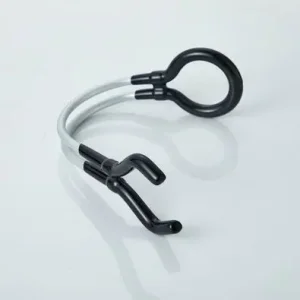
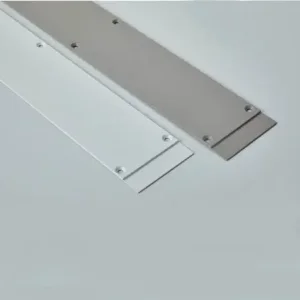
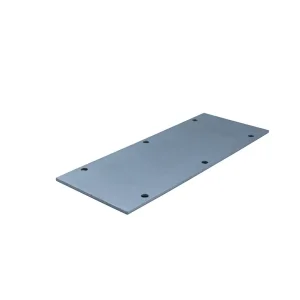
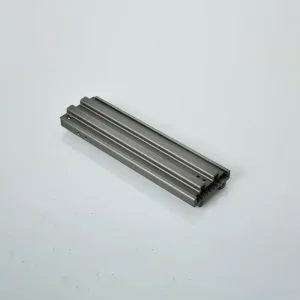
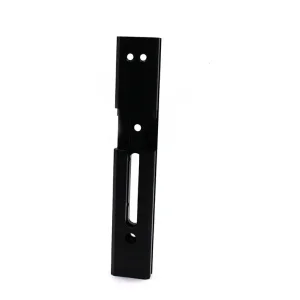
Examine our diverse production range, including CNC locks, slider tracks, brackets, and structural frames manufactured for demanding industrial applications.
 HG Precision