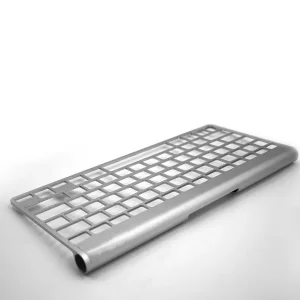
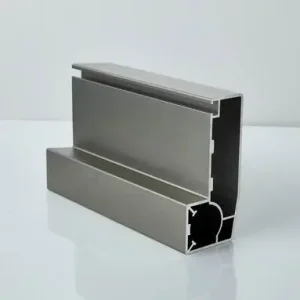
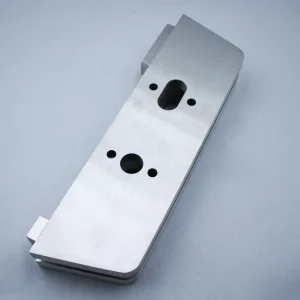
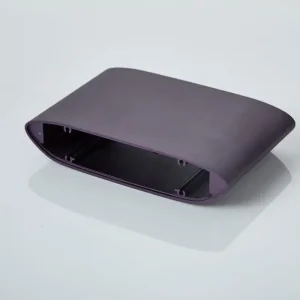
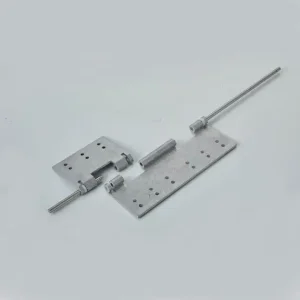
Explore our custom capabilities in high-grade aluminum extrusions, precise CNC machining, and specialized finish coatings.
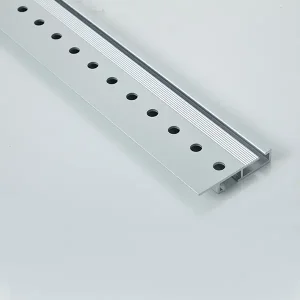
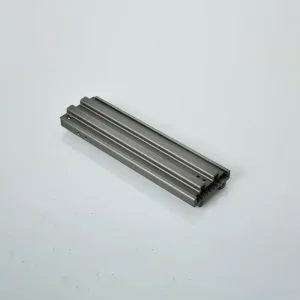
Aluminum oval tubing, also recognized in high-end structural fabrication as flat oval or elliptical extrusion profiles, is an essential component across multiple industrial fields. Engineered to combine aerodynamic structural efficiency with a high strength-to-weight ratio, these profiles are widely specified for applications requiring directional resistance to bending. Unlike standard round tubes, oval configurations offer superior structural integrity in one primary axis, making them ideal for structural frames, architectural louvers, liquid distribution paths, and high-end automotive acoustic housings.
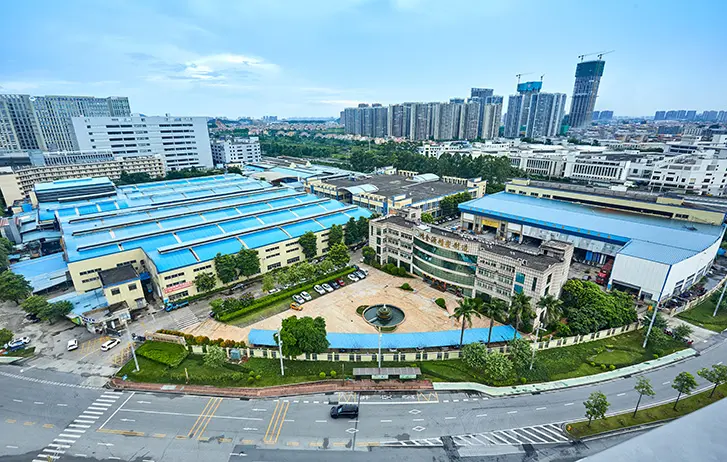
Foshan Golden Source Precision Manufacturing Co., Ltd. has stood at the forefront of custom aluminum extrusion technology since 1991. By integrating complete material composition control with deep tooling capabilities, we support complex architectural design criteria and heavy industrial applications. Operating a state-of-the-art, ecologically certified 73,000 square meter plant, we offer global procurement teams a fully integrated supply chain from custom raw chemical alloy casting to finished CNC machined products.
Why procurement managers choose Foshan Golden Source for technical aluminum profile design and manufacturing.
We refine 1xxx, 3xxx, 5xxx, 6xxx, and 7xxx series alloy chemistries directly in-house. This dynamic control over composition ensures high-purity billets tailored for architectural finish-grade anodizing or structural load paths.
From billet casting and die building to multi-axis CNC machining, structural welding, assembly, and surface treatments, every stage is executed within our own facilities to reduce production costs and maintain dimensional tolerances.
Eliminating third-party sub-contractors allows us to accelerate standard lead times by 20% to 30%. Our fully integrated production schedule provides predictable transit and manufacturing times.
Selecting the appropriate alloy and temper is critical when designing structural components. The mechanical performance of an aluminum tube is directly determined by its chemical makeup and subsequent thermal processing. Below is a comprehensive guide to the typical alloys used for our custom oval extrusions:
| Alloy & Temper | Yield Strength (min) | Tensile Strength (min) | Elongation (min) | Primary Application Areas |
|---|---|---|---|---|
| 6063-T5 | 110 MPa | 150 MPa | 8% | High-finish architectural profiles, sliding window channels, furniture trims. |
| 6063-T6 | 170 MPa | 205 MPa | 8% | Heavy-duty ladders, structural framing, solar panel supports, marine rails. |
| 6061-T6 | 240 MPa | 260 MPa | 10% | High-stress structural frames, automotive chassis brackets, marine structures. |
| 6082-T6 | 250 MPa | 290 MPa | 8% | Highly dynamic stress components, machinery parts, crane spars. |
The geometric complexity of an oval profile requires special tooling consideration. Bending moments vary dramatically across the major and minor axes. During the extrusion process, differential cooling rates can cause internal stresses, leading to twisting or bowing. Our tool and die designers run simulation models to adjust wall thickness variation down to ±0.1mm, ensuring uniform mechanical properties across all sections of the profile.
Industrial components entering markets in North America and Western Europe must comply with strict environmental and chemical regulations. Foshan Golden Source has invested heavily in certifying our processes to meet these standards, providing the paperwork needed for complex compliance pathways.
Certifies our material origin verification processes. We support projects requiring verified recycled content to meet LEED or other circular economy standards.
Validates the post-consumer and pre-consumer scrap allocation in our melts. This gives global procurement teams certified low-carbon options.
Guarantees that all surface finishes (such as bronze, champagne, and clear anodizing) and core raw materials are free from hazardous SVHCs.
Verified manufacturing processes compliant with global quality, safety, and environmental standards.
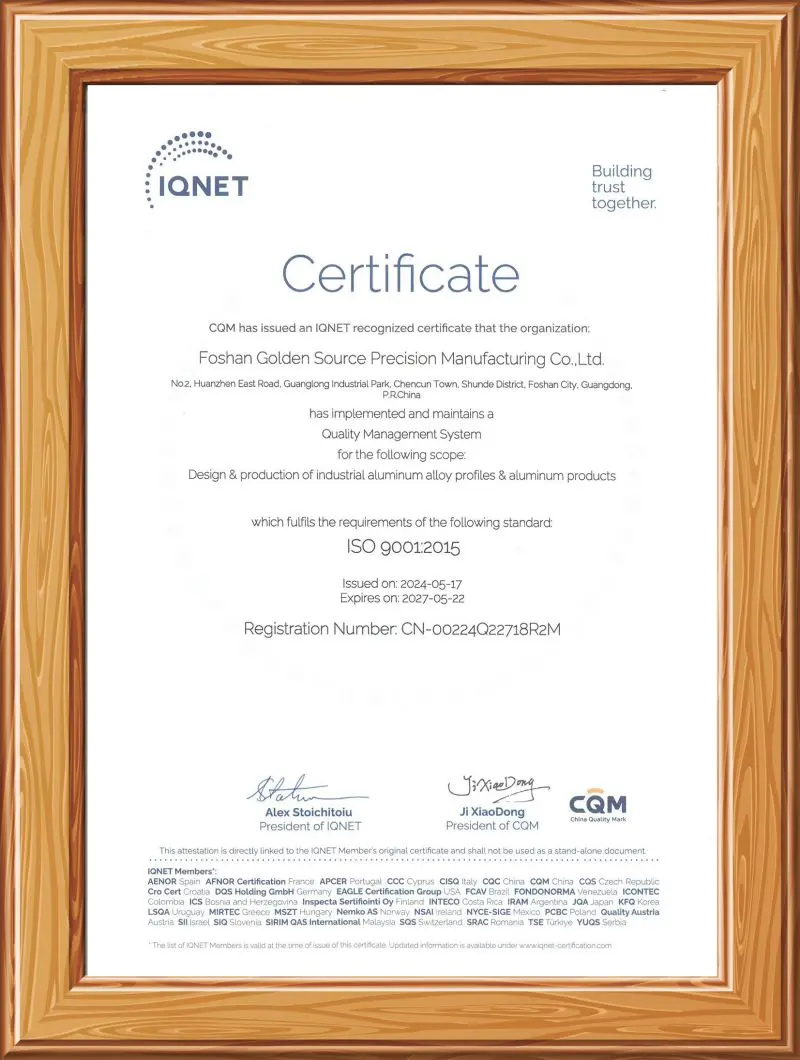
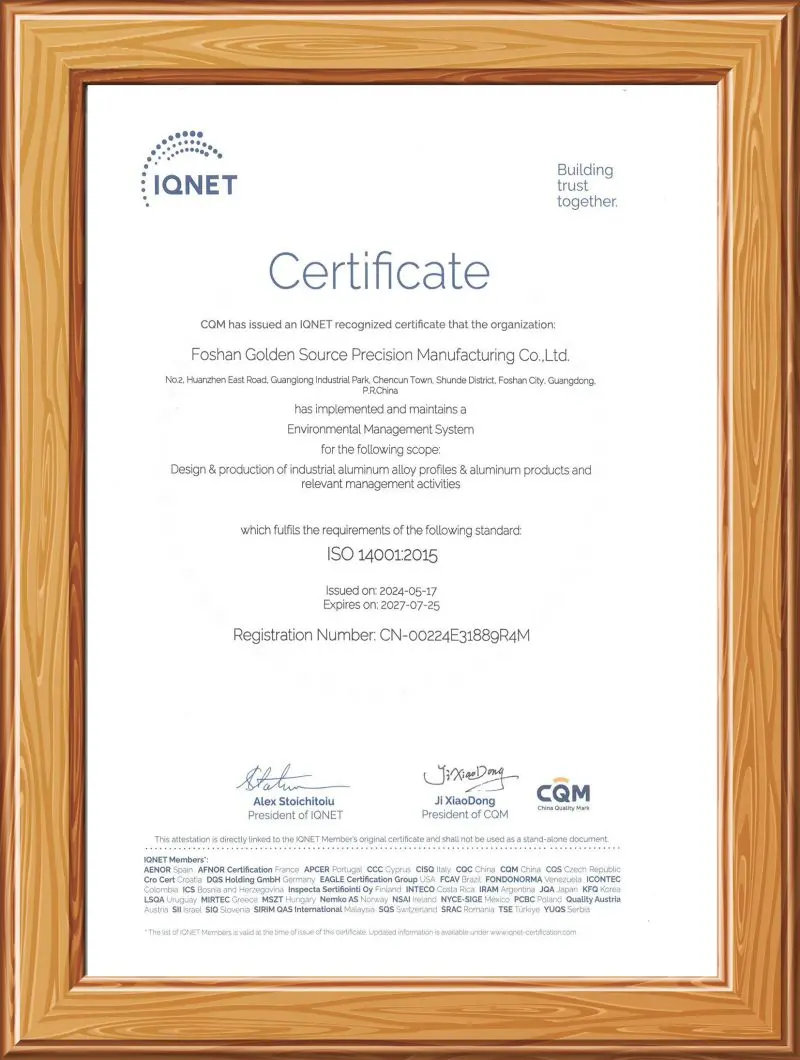
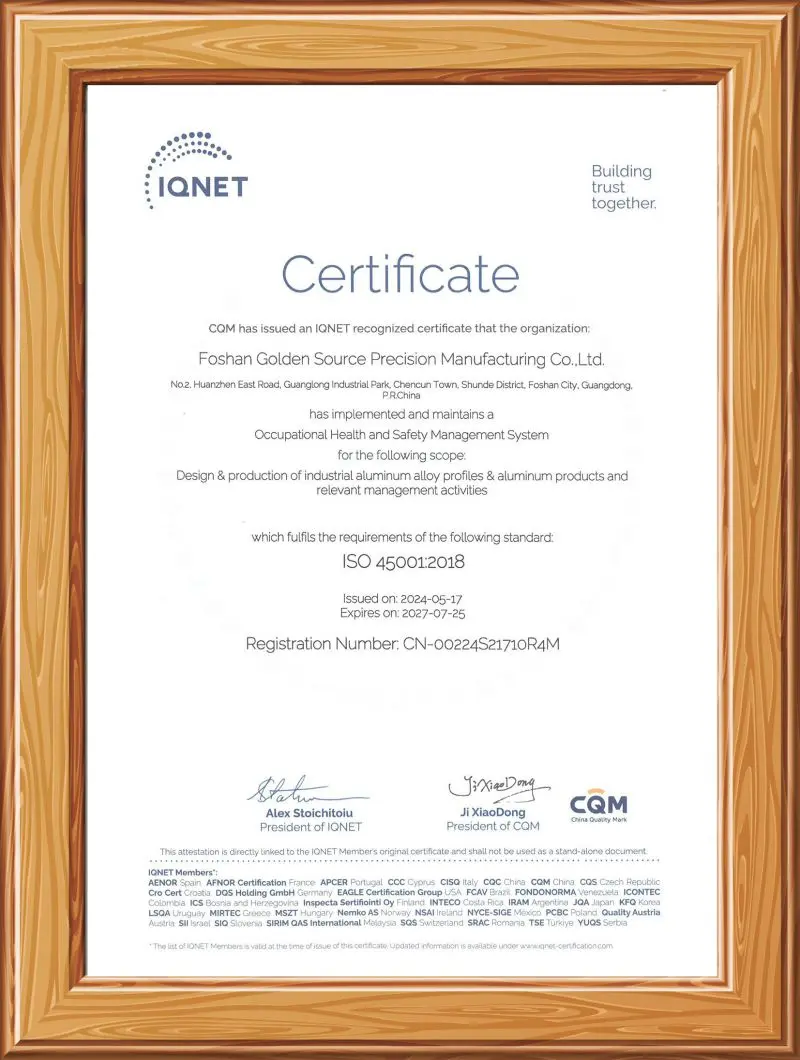
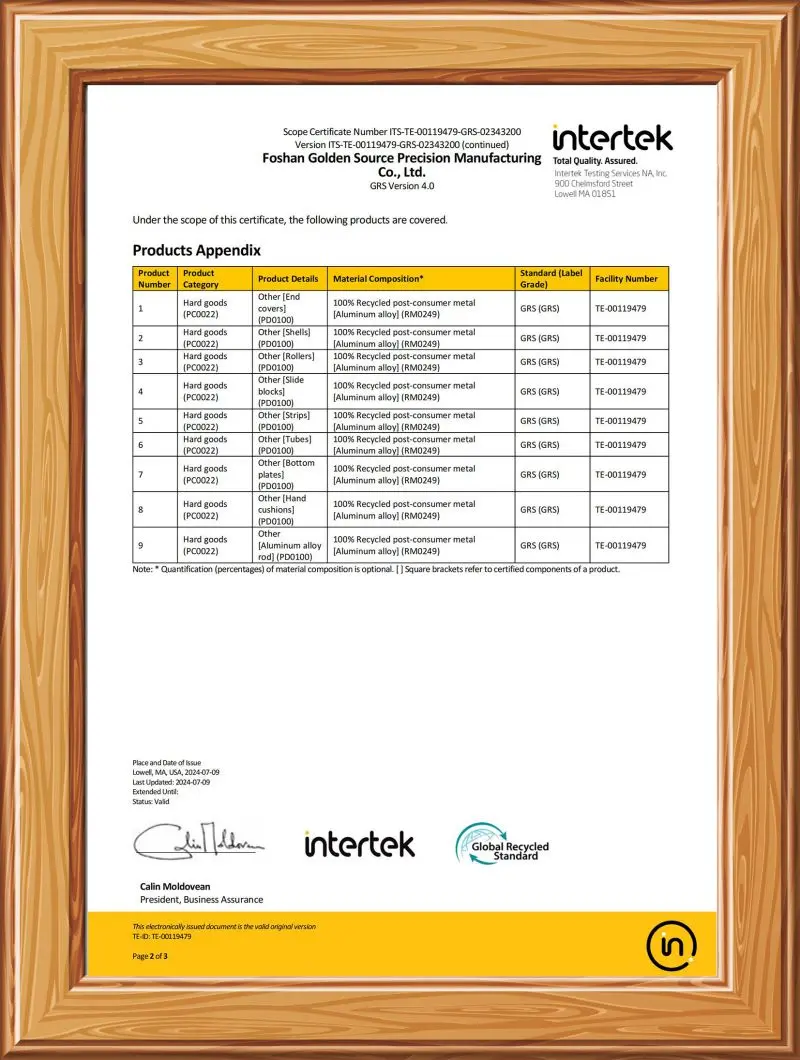
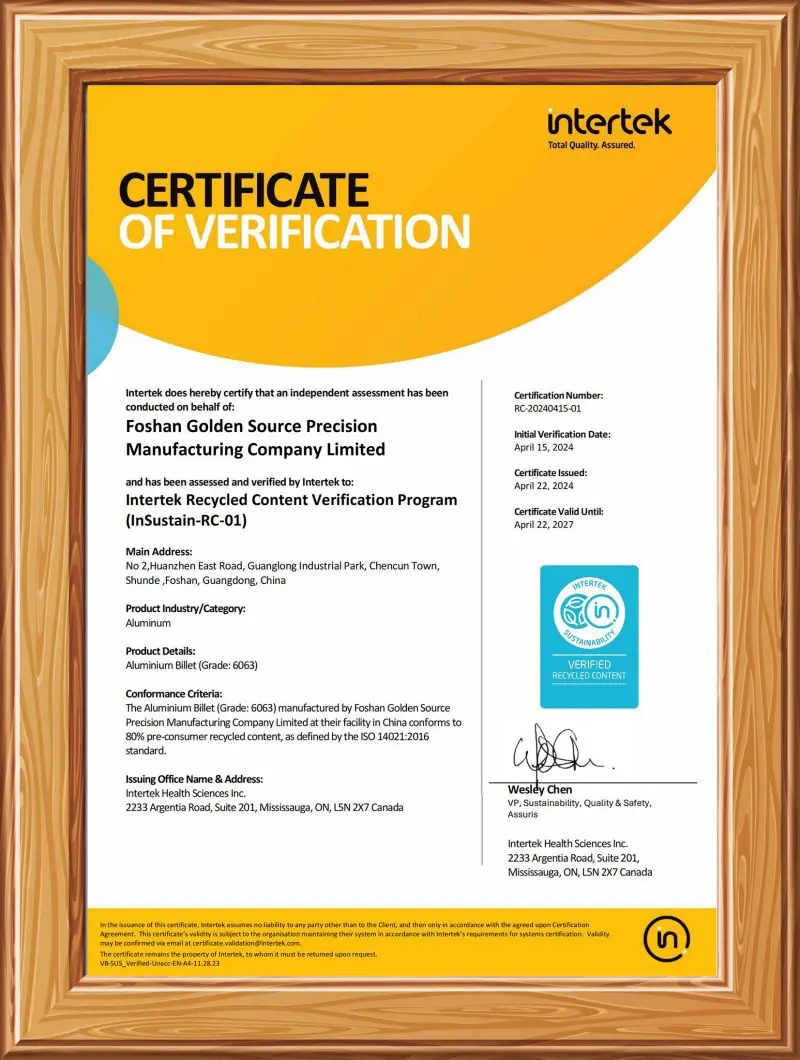
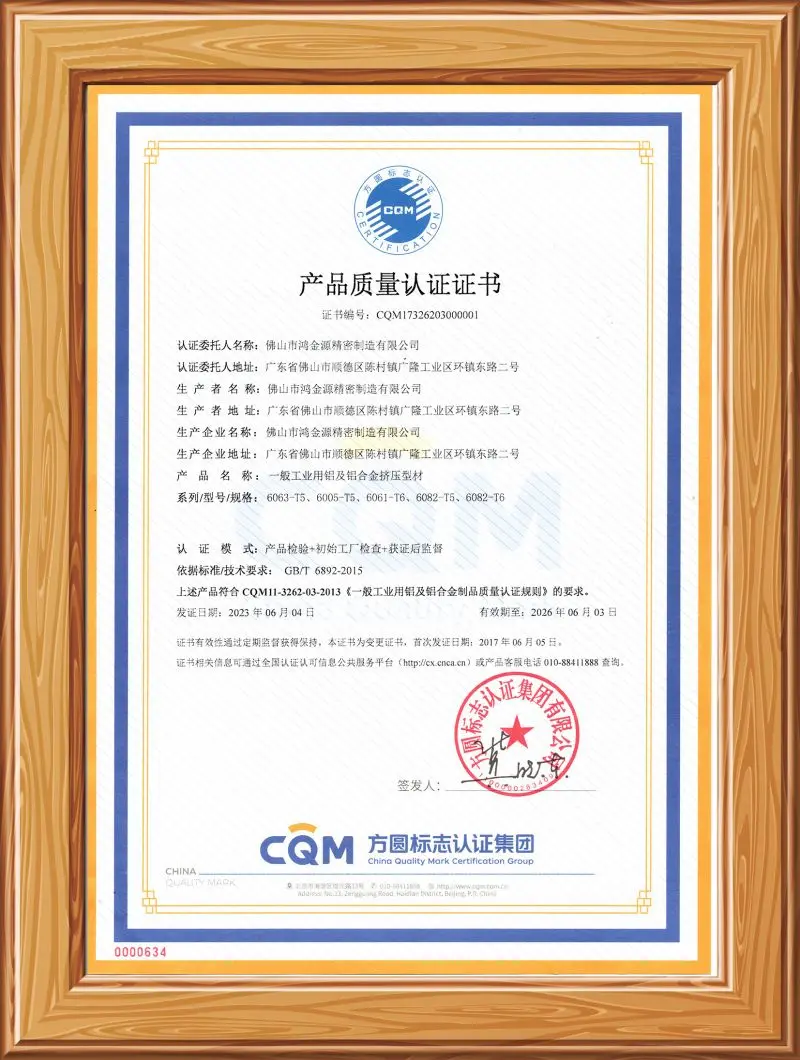
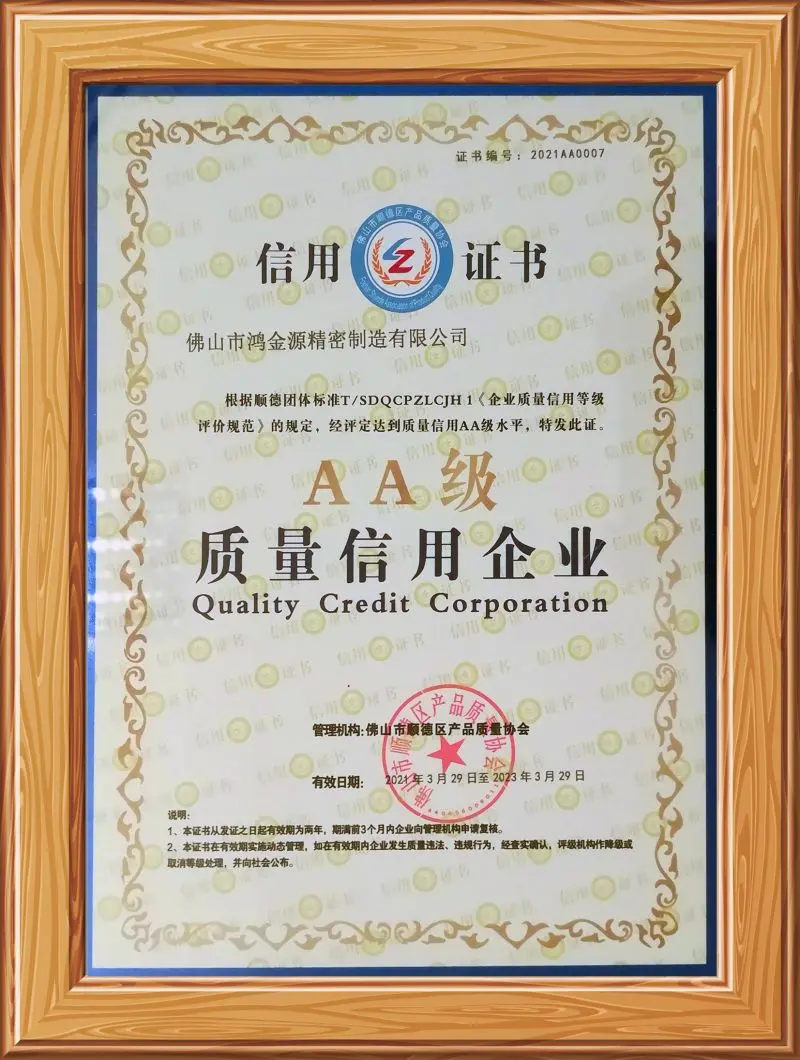
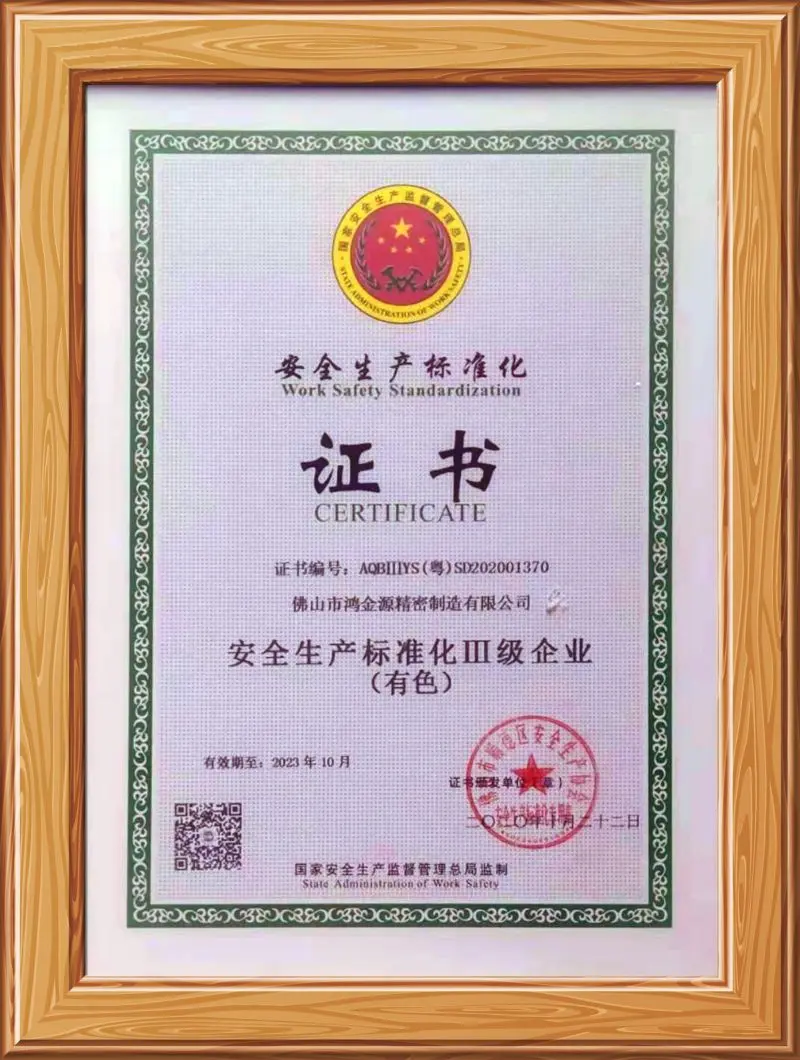
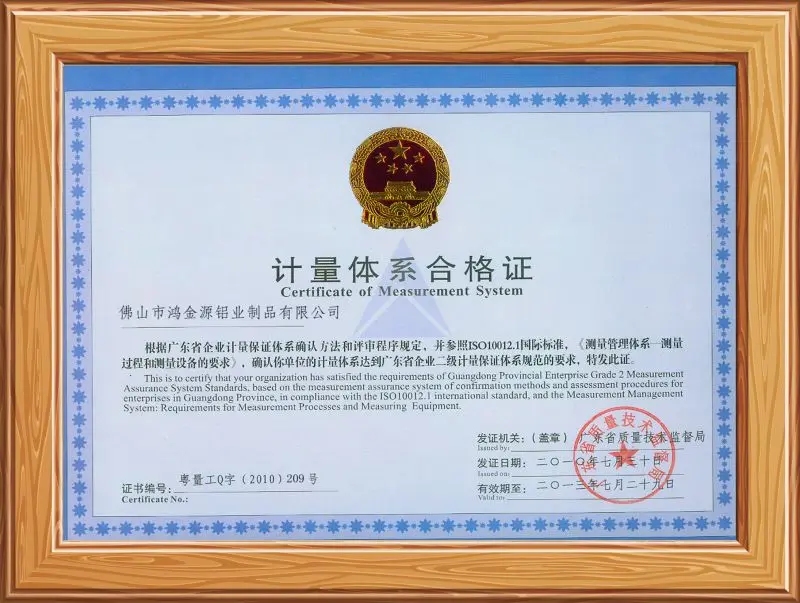
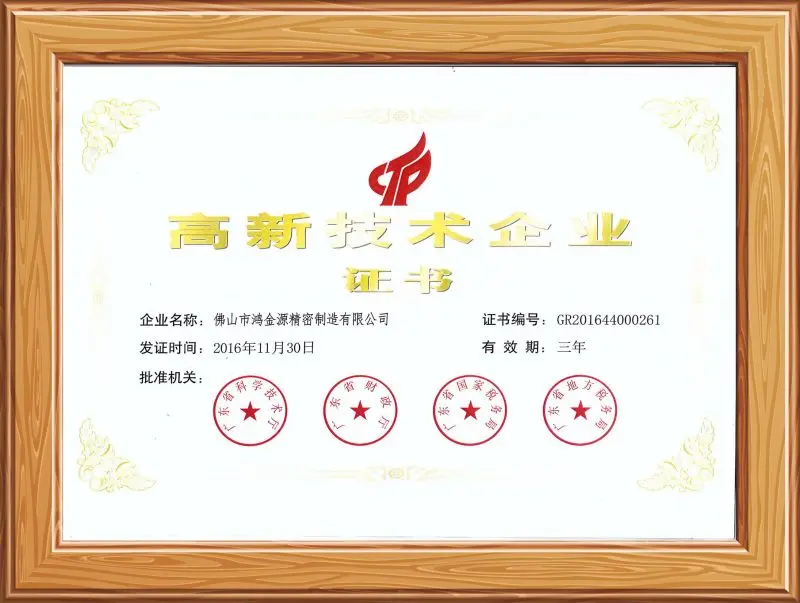
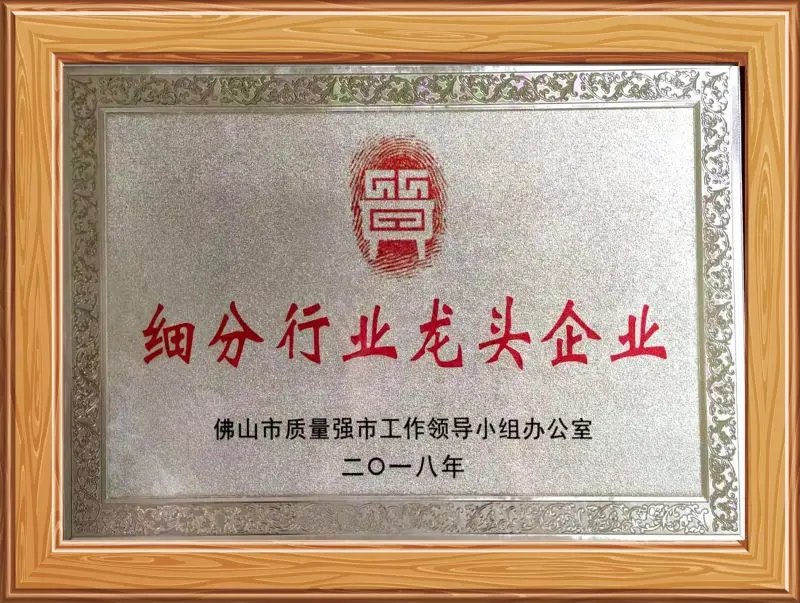
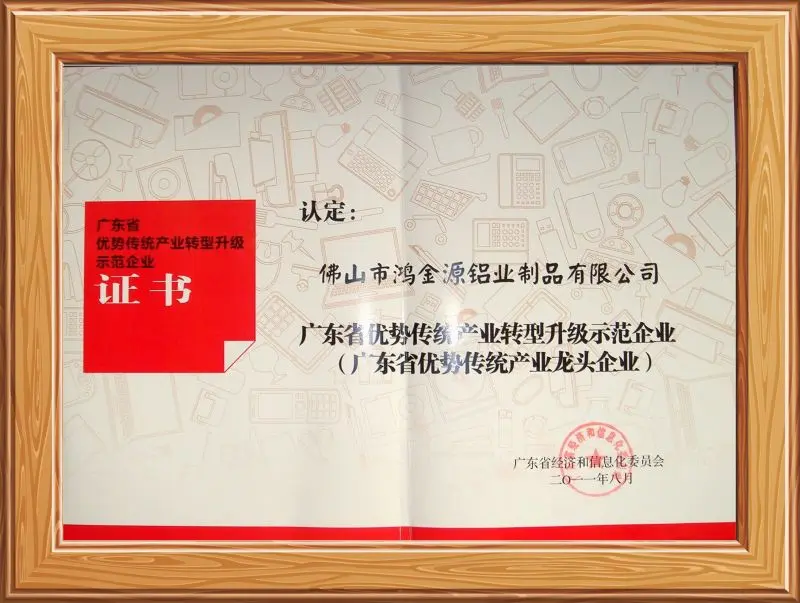
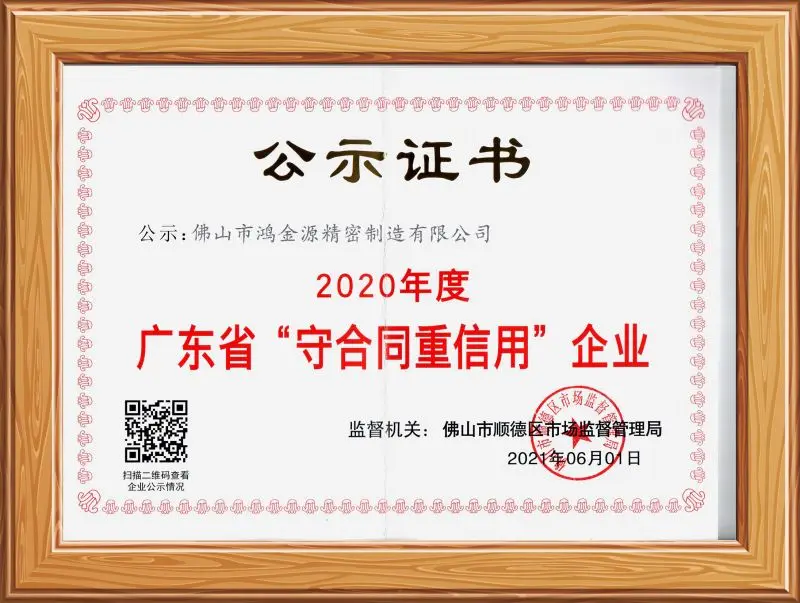
Foshan Golden Source has earned local, provincial, and national recognition for cleaner production practices, technological innovation, and structural upgrading. Our operations are optimized for green metallurgy, energy conservation, and strict workplace safety protocols across all manufacturing departments.
Where precision and structural properties intersect to meet performance demands.
Using high-strength 6063-T6 alloys with clear anodized coatings to build structural solar framing components. Our profiles offer wind resistance and corrosion protection in coastal environments.
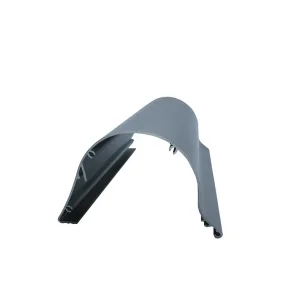
Designed for noise-canceling systems and automotive acoustic enclosures. Precise wall thickness control prevents resonant frequencies and helps isolate mechanical vibration.
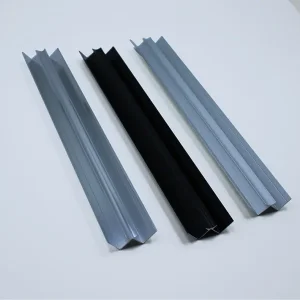
Used for structural glass-door frames, sliding wardrobes, and decorative trims. Fine sandblasting combined with gold, champagne, and bronze anodizing creates high-end consumer finishes.
Enterprise buyers typically evaluate three main criteria: quality consistency, cost efficiency, and reliable delivery. The challenge for many sourcing groups is managing quality handoffs when profiles are extruded at one factory, sent to another for CNC milling, and then shipped to a third facility for surface anodizing. These multi-step supply chains introduce high scrap rates, tracking issues, and split liabilities.
Foshan Golden Source resolves this with a fully integrated, single-site manufacturing model. Our facility houses alloy formulation, tool design, extrusion lines, multi-axis CNC machines, surface finishing, and packaging. Controlling the entire workflow reduces transport handling, protects cosmetic surfaces, and ensures a single point of responsibility for product quality.
To support global supply chains, we provide customized container loading, protective packing, and cargo consolidation services. By utilizing strict transit tracking systems, we coordinate with domestic and international freight forwarders to ensure customs compliance and timely delivery to your regional warehouses.
Answers to common engineering and sourcing questions regarding custom aluminum oval profile manufacturing.
Our standard extrusions conform to EN 755-9 and ASTM B221 standards, which typically allow a tolerance range of ±0.15mm to ±0.30mm depending on the cross-sectional dimensions. For high-precision applications, we use in-house precision drawing and sizing dies to achieve tighter tolerances of ±0.05mm to ±0.10mm on wall thickness and outer cross-sectional dimensions.
Oval profiles exhibit asymmetrical moments of inertia (Ixx vs. Iyy). This means they provide high bending resistance in one direction (the major axis) while keeping weight low. Sourcing teams select this geometry for aerodynamic applications, architectural cladding, or structural frames that support load along a primary axis.
For outdoor use, we recommend architectural anodizing (Class I, film thickness > 15 microns) or PVDF powder coating. This protects the aluminum from UV exposure and industrial or marine atmospheres, helping to prevent pitting corrosion and discoloration.
We hold GRS (Global Recycled Standard) and RCV (Recycled Content Verification) certifications, ensuring our processes support environmental reporting. All materials and surface treatments comply with EU REACH and RoHS regulations, and our facilities operate under certified ISO 14001 environmental management systems.
Yes. Because we melt and cast our billets in-house, we can adjust trace element percentages (such as silicon, magnesium, iron, and manganese) within ASTM standards. This allows us to optimize the metal for structural toughness, high elongation for bending, or superior reflectivity for decorative anodizing.
High-precision extrusions and machined components built for global industrial markets.
 HG Precision