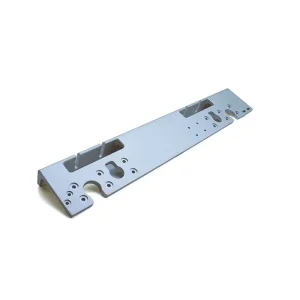
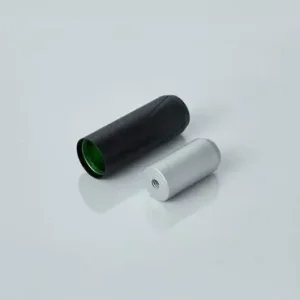
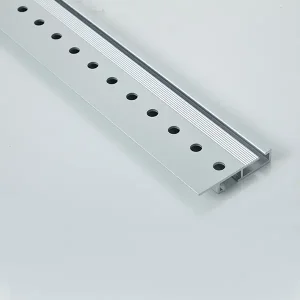
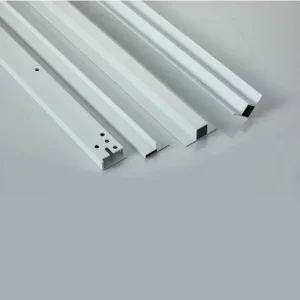
Explore our diverse portfolio of custom-machined aluminum profiles, heat sinks, and structural components tailored for demanding global industries.
Understanding the shift towards high-performance architectural systems, sustainable metallurgy, and precision-engineered structural solutions.
Modern architectural design demands unprecedented energy efficiency. Aluminum, while structurally superior, has high thermal conductivity. The evolution of thermal break technology—using polyamide barrier strips—has revolutionized aluminum window frames. This advancement reduces U-factors dramatically, matching the strict energy efficiency requirements of LEED and Passive House standards. Furthermore, global policies targeting Net-Zero construction have forced a transition from primary smelted aluminum to high-recycled-content alloys (GRS certified), minimizing embedded carbon in new structures.
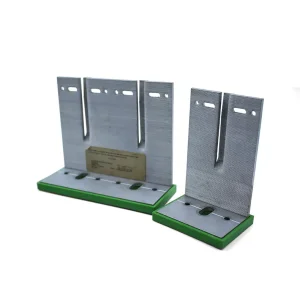
Architects are pushing boundaries with minimal aesthetics, demanding ultra-slim sightlines without compromising wind-load resistance or safety parameters. High-strength aluminum alloys such as 6063-T6 and 6061-T6 provide the structural modulus required for floor-to-ceiling structural glazing and heavy curtain walls. The integration of precision CNC machining allows manufacturers to cut, drill, and tap architectural components to sub-millimeter tolerances, facilitating seamless onsite assembly and flawless aesthetic execution.
Deciphering structural criteria, surface treatment specifications, and compliance standards necessary for international construction projects.
| Alloy Series | Common Temper | Key Properties & Structural Modulus | Ideal Architectural / Industrial Applications |
|---|---|---|---|
| 6063 Alloy | T5 / T6 | Excellent surface finish potential, high corrosion resistance, moderate strength. | Standard window frames, curtain walls, kitchen cabinet frames, furniture trims. |
| 6061 Alloy | T6 | High structural strength, good weldability, excellent heavy-load performance. | Heavy-duty structural frames, pool ladders, industrial safety components. |
| 6082 Alloy | T6 | Highest strength in the 6000-series, superb resistance to dynamic stresses. | Metro train door components, heavy machine framing, marine structures. |
| 5XXX Series | H32 / H34 | Superior saltwater corrosion resistance, outstanding ductility. | Marine architectural components, specialized industrial mounting clamps. |
For B2B procurement managers, the primary risk in sourcing extruded profiles is structural variation and surface defects. When extrusion factories buy third-party aluminum billets, impurities (such as iron over-concentration) can leak into the melt. This leads to streaks, structural weak points, and poor anodizing receptivity. By maintaining an in-house casting house, raw materials are scrutinized, alloyed, and refined under laboratory conditions, guaranteeing homogeneous microstructures that respond perfectly to architectural anodization (natural, champagne, bronze, red, and custom tints).
Architectural aluminum window profiles are subjected to extreme weather. Procurement specialists prioritize longevity. Surface finishes must meet rigorous standards: outdoor powder coatings (Qualicoat certified) and anodization thicknesses exceeding 15-20 microns. Furthermore, compliance with environmental regulations is no longer optional. European and American markets enforce REACH and RoHS directives. Having verified certifications like GRS (Global Recycled Standard) and RCV ensures that profiles contain traceable recycled content, satisfying building green-point systems globally.
How Foshan Golden Source Precision Manufacturing integrates raw material casting, high-precision machining, and smart manufacturing to secure global supply chains.
Foshan Golden Source Precision Manufacturing Co., Ltd, established in 1991, stands as a premier manufacturer of high-strength, high-precision, customized aluminum profiles and precise machining aluminum parts, welded parts, and assembled aluminum products. Strategically located in China's industrial aluminum hub, the company operates a modern, state-of-the-art, and environmentally friendly production base spanning over 73,000 square meters.
The company provides a comprehensive "one-stop" manufacturing ecosystem designed to optimize lead times and lower unit costs. This closed-loop process includes:
By executing every step within a single facility, Foshan Golden Source eliminates the supply chain transit risks, delays, and quality finger-pointing common to fragmented outsourcing. This consolidation translates directly to reliable lead times, lower shipping costs, and a highly competitive total cost of ownership (TCO) for global distributors and OEMs.
Download Company Catalogue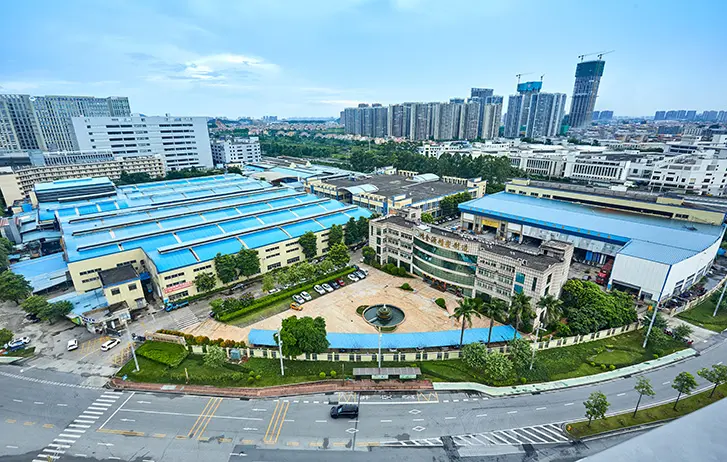
Why top architectural firms and industrial enterprises choose Foshan Golden Source as their long-term supply partner.
We melt the alloy in-house so that we can adjust the compositions to achieve the best physical properties of extrusion profiles, ensuring the highest purity of alloy for superior anodizing results.
Machining and surface treatments are executed entirely in-house. This ensures rigorous quality control and minimizes production overheads, guaranteeing premium quality at highly competitive prices.
Our complete one-stop manufacturing capability allows us to streamline operations, cut out logistics bottlenecks, and offer significantly faster turnaround times for our clients.
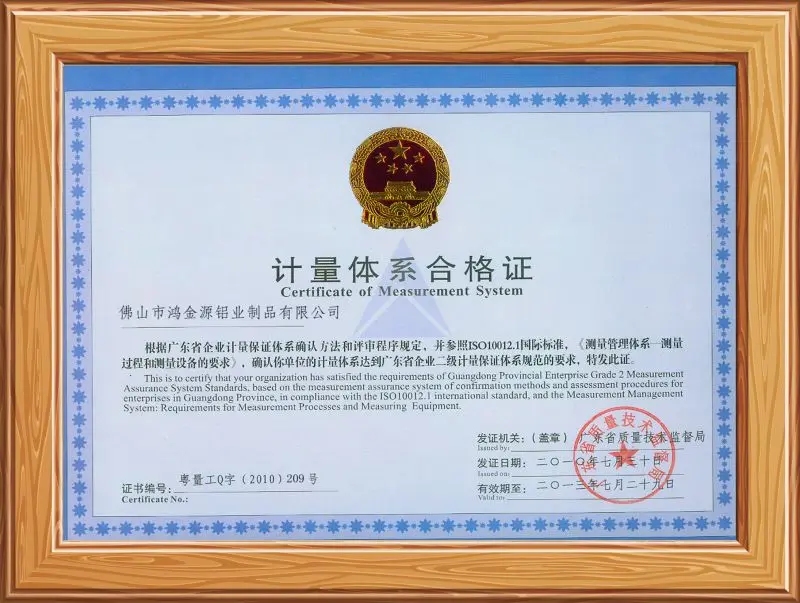
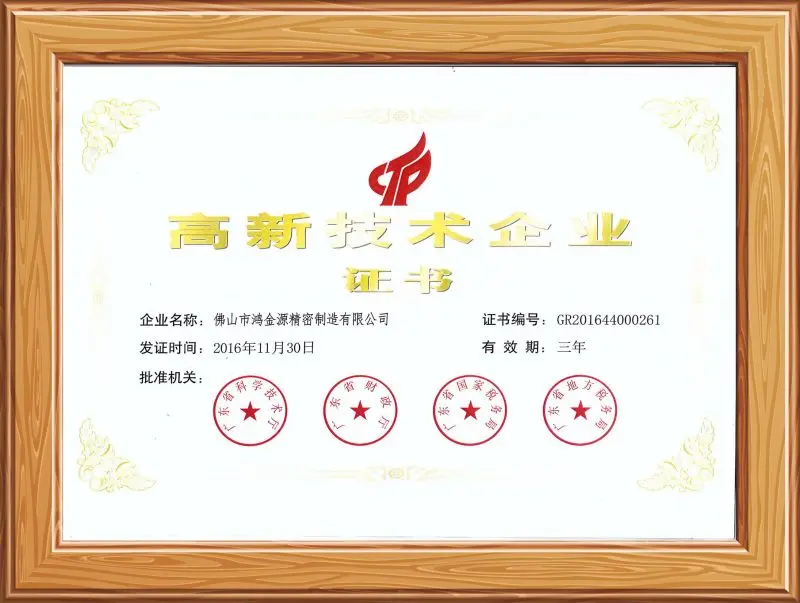
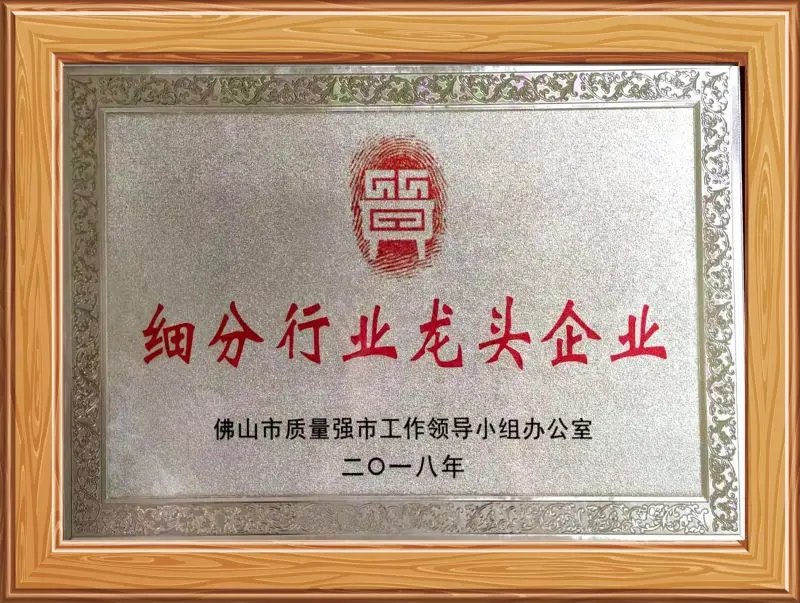
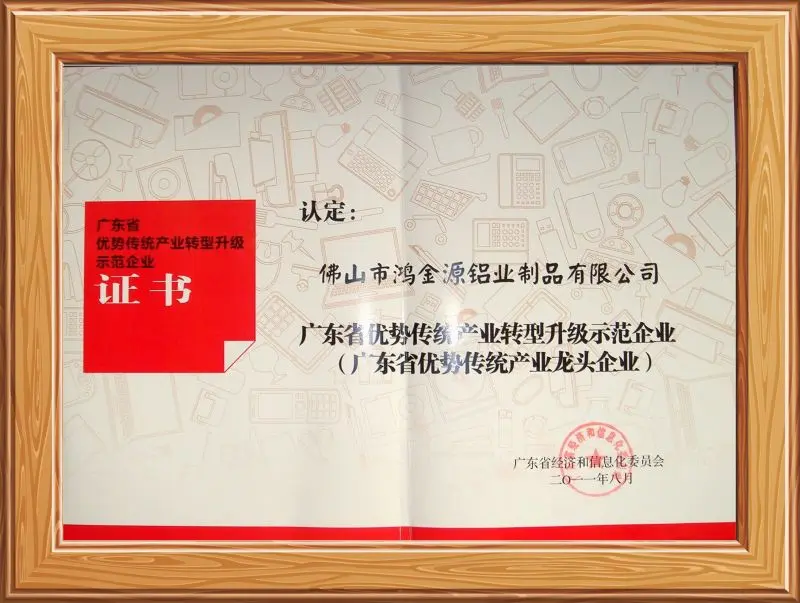
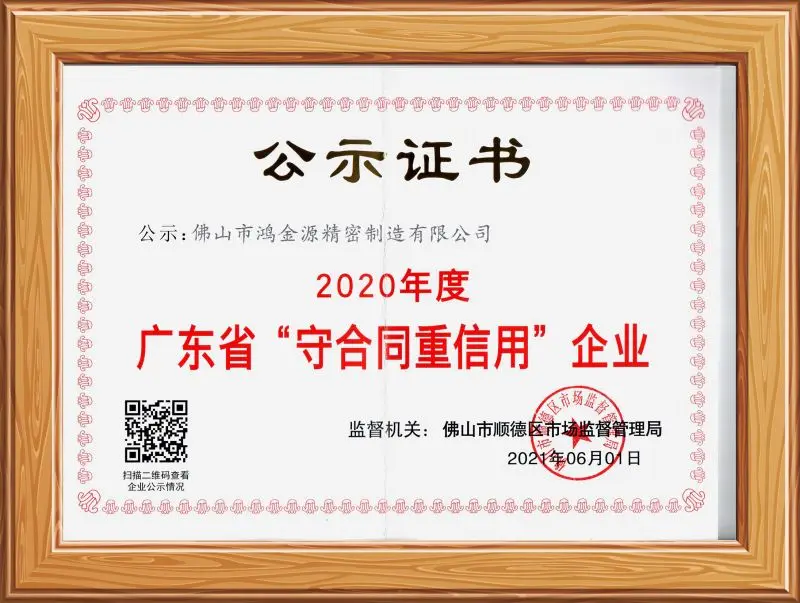
Our operations comply with the highest standards of safety, quality, and ecological responsibility. We are proud to hold ISO9001, ISO14001, ISO45001, GRS, and RCV certifications. Our products fully align with EU REACH and RoHS environmental protection mandates. Here are some of our typical credentials:
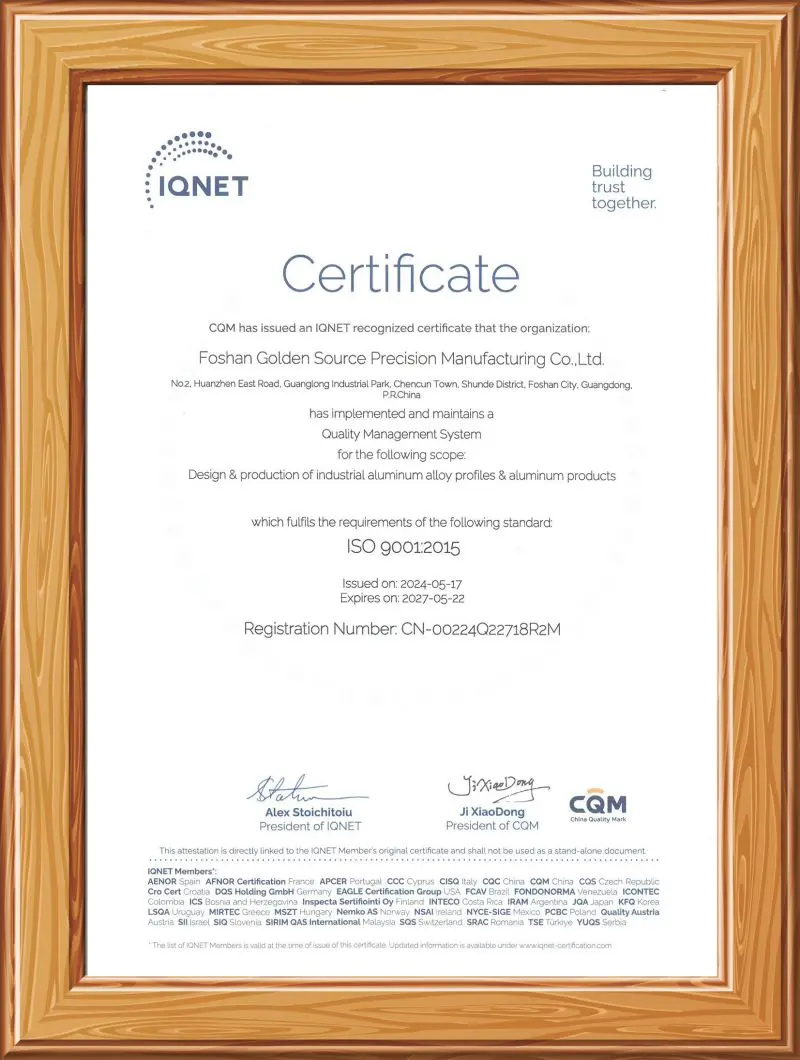
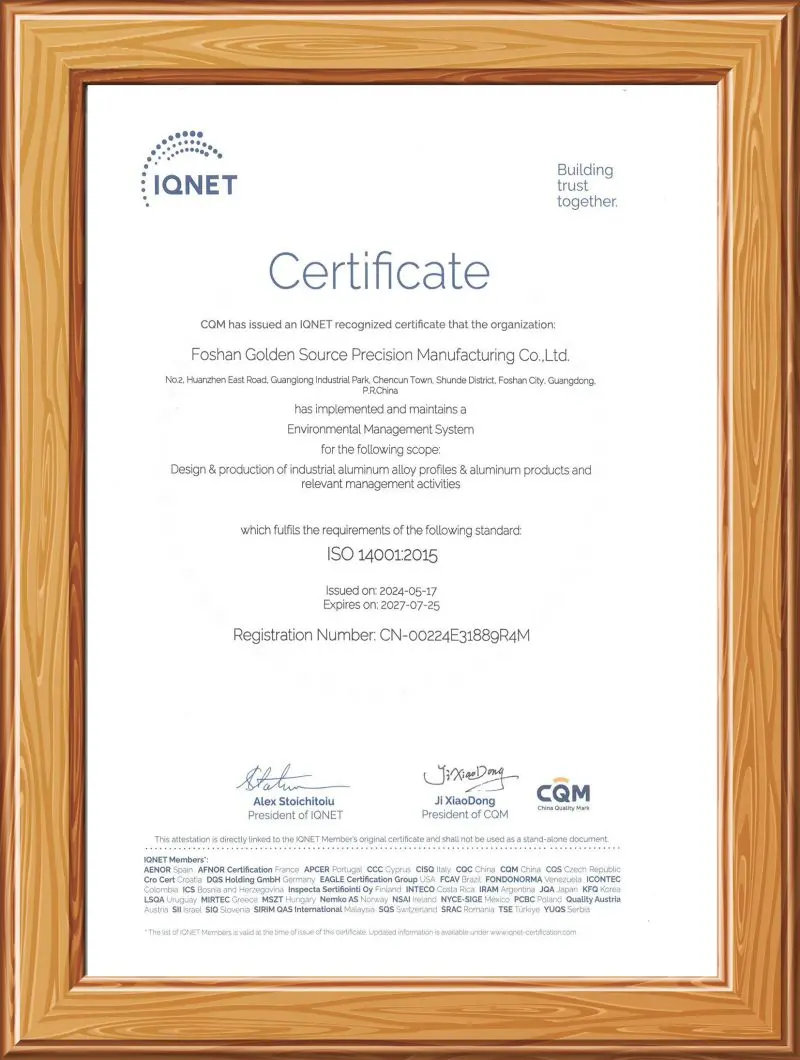
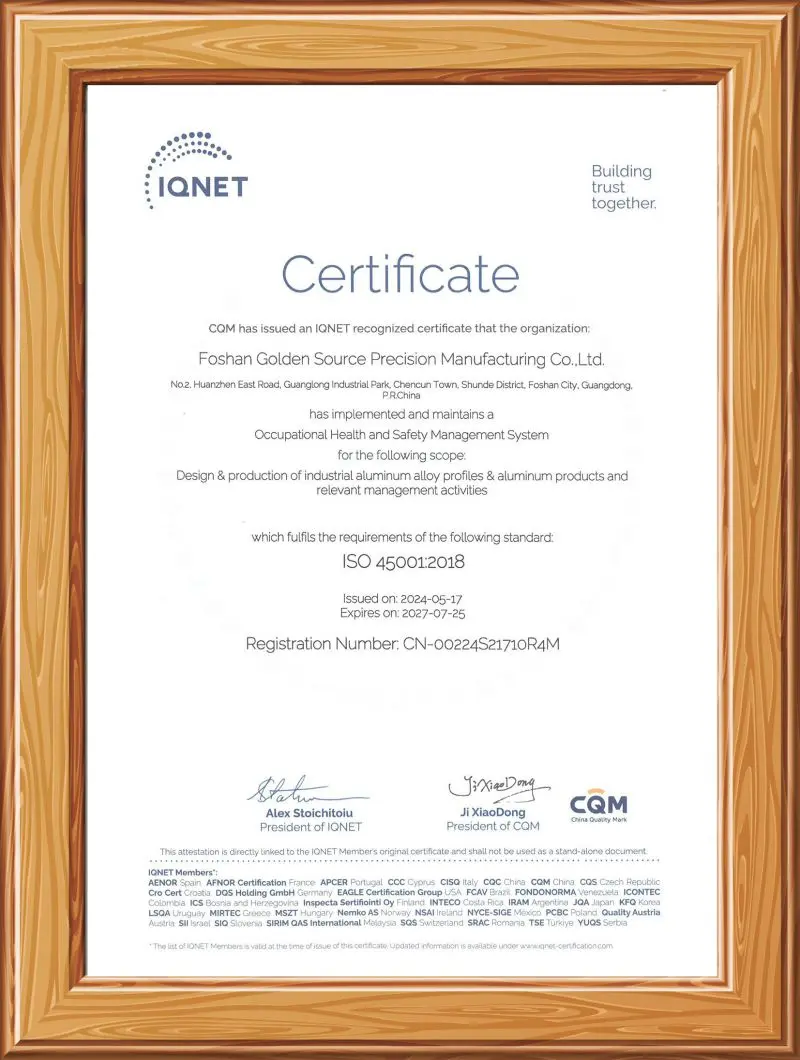
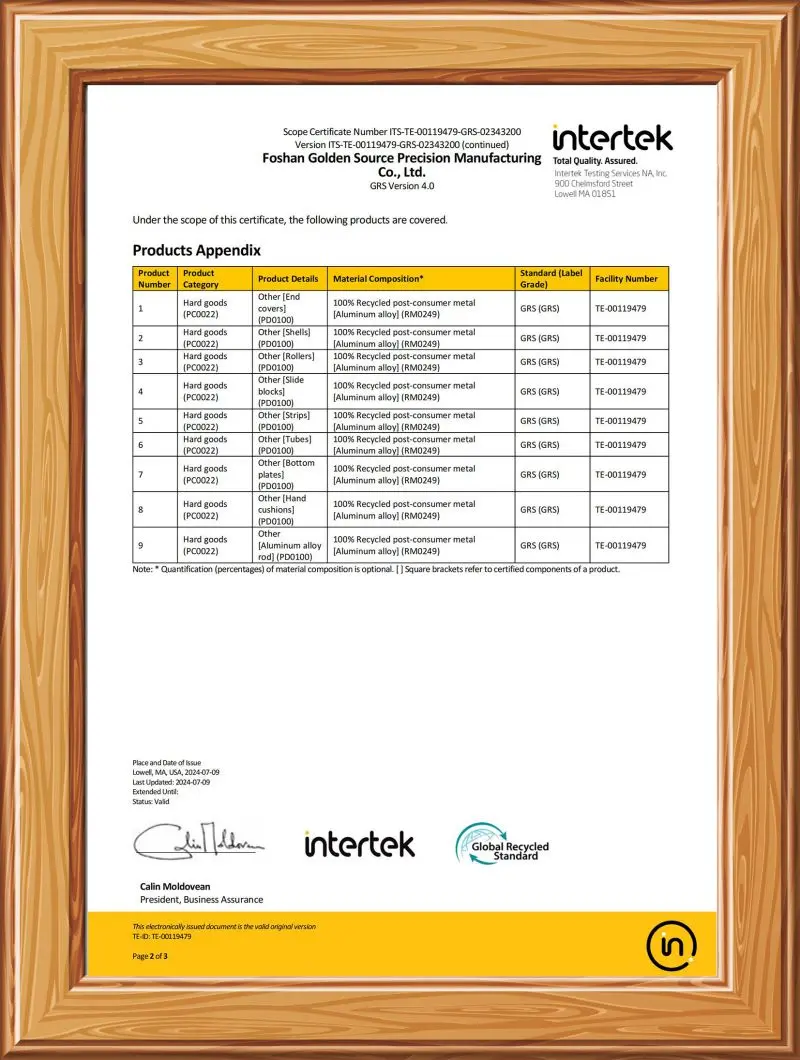
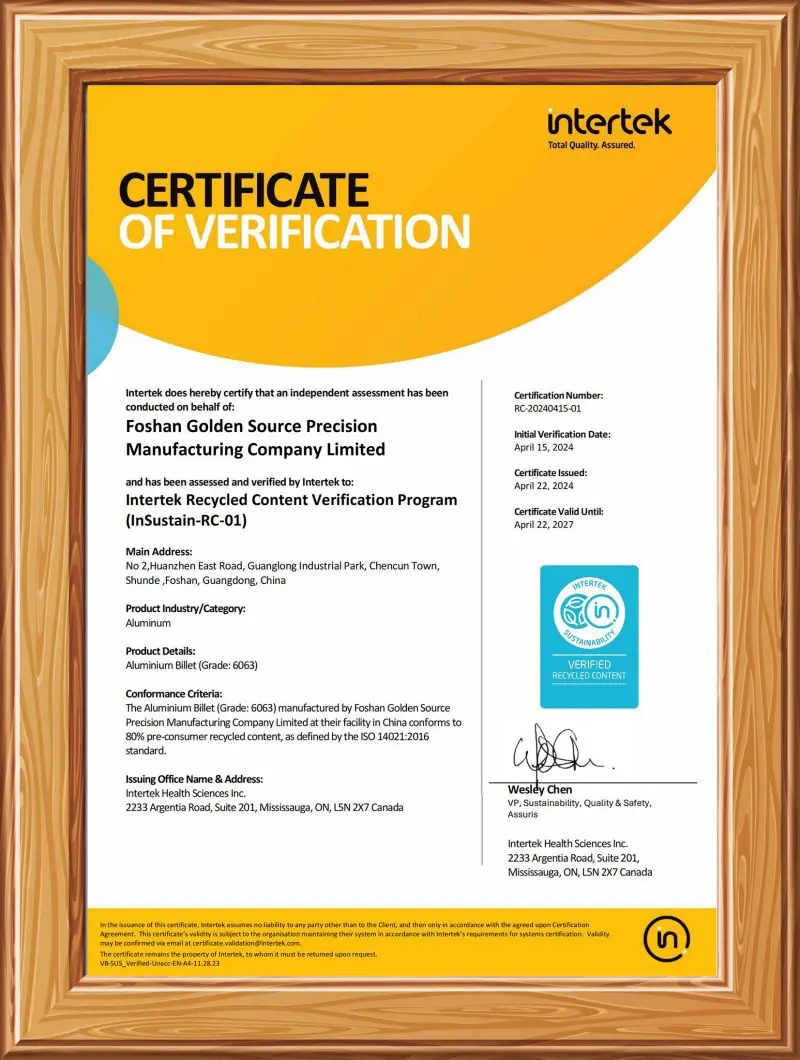
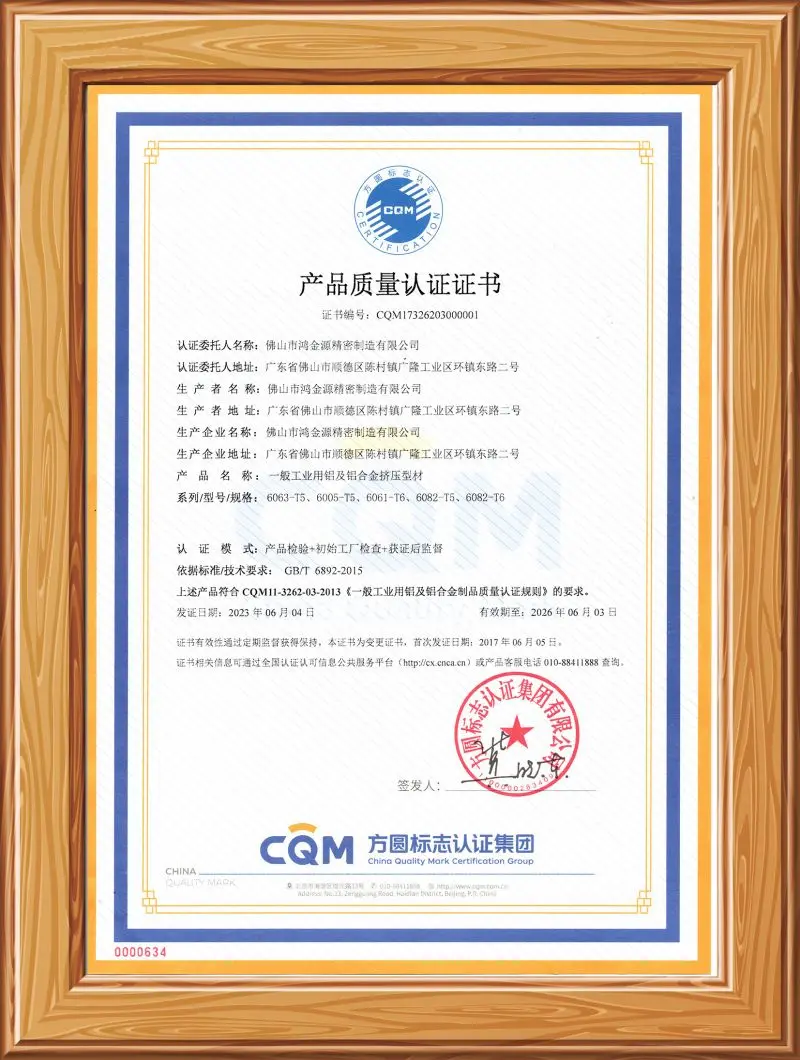
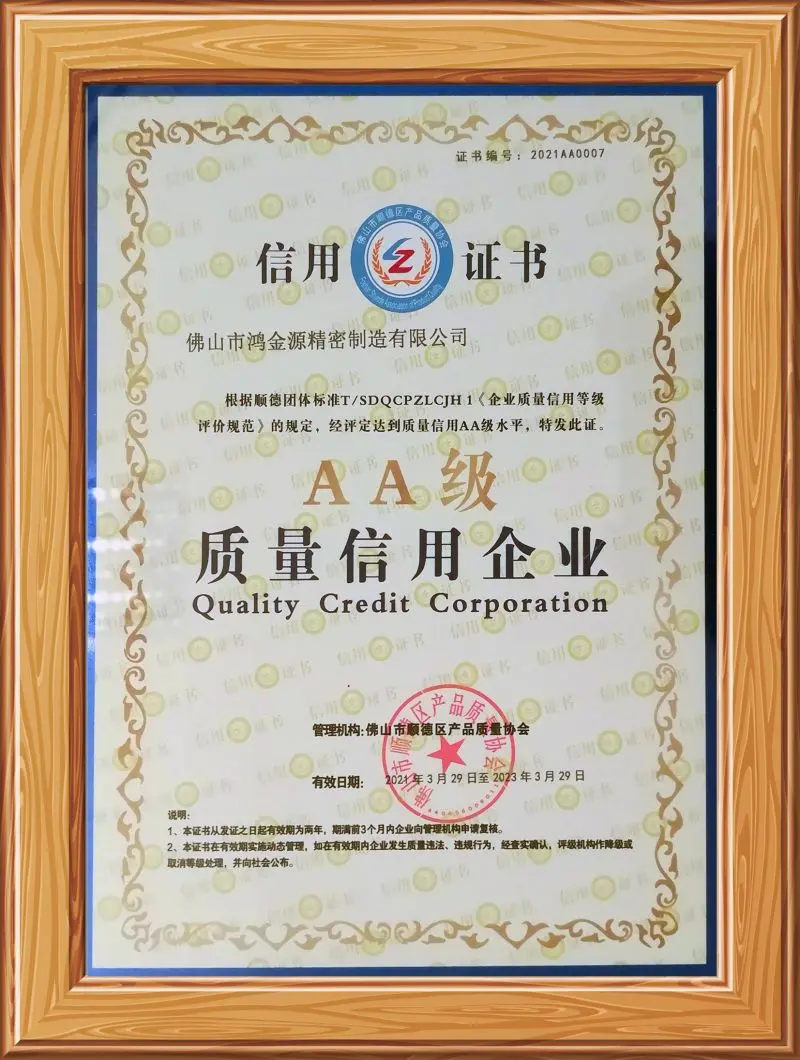
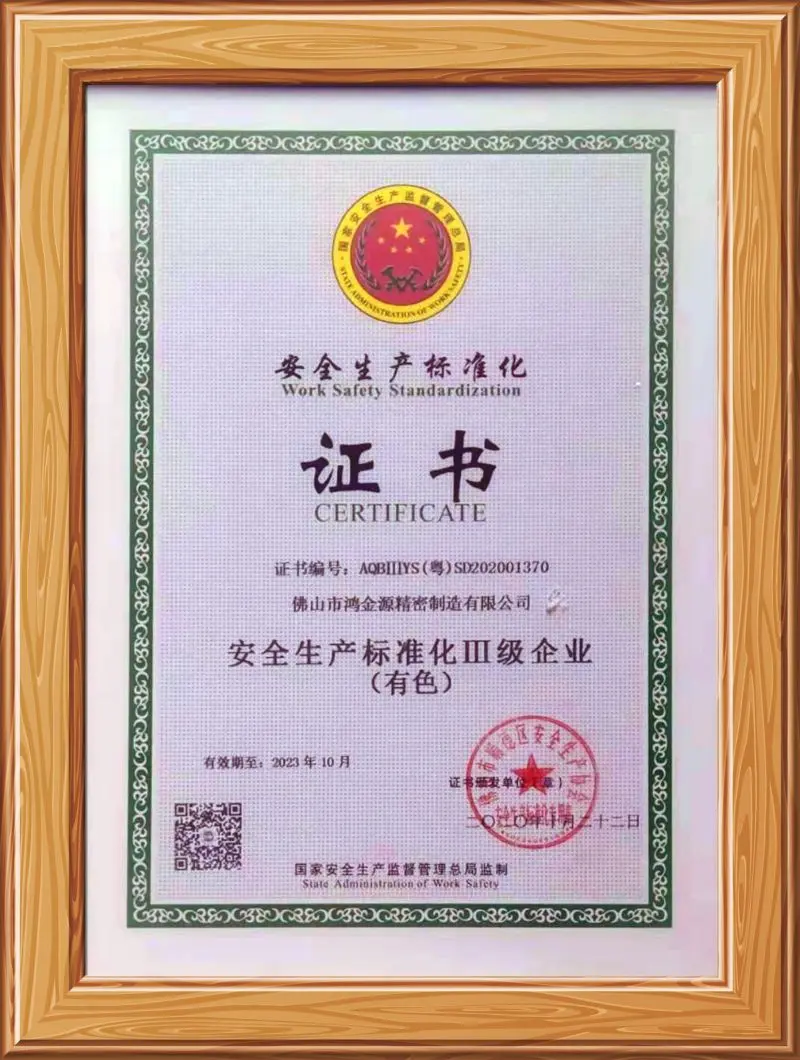
Recognized by provincial and national governments for clean production, high-credit standing, industrial upgrading, and technological innovation.
From heavy urban rapid transit systems to modern residential framing and extreme industrial environments.
Components engineered for public transit must withstand intense cyclic loading and environmental wear. Our ODM aluminum parts for metro doors utilize high-strength 6063-T6 alloy combined with specialized glass sandblasting and clear anodization. This creates an extremely hard outer oxide layer (exceeding 20 microns) that prevents surface wear, maintains micro-dimensional stability, and guarantees safety over millions of open-close cycles.
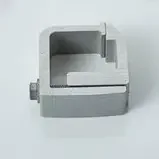
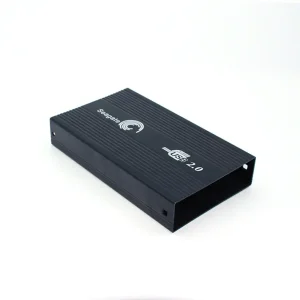
For applications such as truck-mounting clamps and battery cases for electric bicycles, structural integrity under high-frequency vibration is crucial. Utilizing 6063-T5 aluminum extrusions processed with specialized mechanical tumbling (vibratory finishing) stress-relieves the extruded profiles. This reduces micro-structural fissures, protecting battery tubes and mechanical clamps from fatigue failure under variable outdoor temperatures.
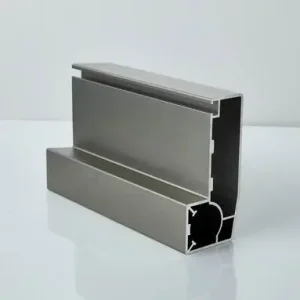
Visual quality is paramount in commercial office partitions, kitchen cabinetry, and premium furniture. Anodizing in colors like champagne and bronze requires absolute metallurgical control to prevent color deviations across production batches. Our in-house alloy casting maintains precise iron-to-silicon ratios, guaranteeing absolute color uniformity across thousands of extruded cabinet frames and structural furniture handles.
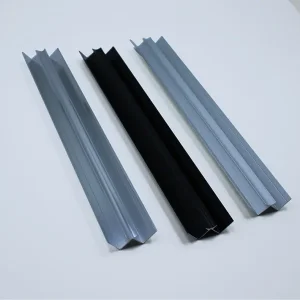
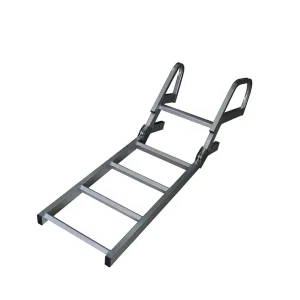
Our custom swimming pool ladders and architectural curtain wall angles must withstand constant moisture exposure and corrosive chemical environments. Engineered with 6063-T6 alloy and clear anodizing, these structural elements offer high shear strength and robust protection against localized pitting corrosion, ensuring safe operation and lasting structural integrity.
Get authoritative answers to technical questions about aluminum window profiles, custom extrusions, and sourcing logistics.
The main difference lies in the heat treatment process. 6063-T5 is cooled rapidly from the extrusion temperature and naturally aged, offering good mechanical properties, ease of machining, and excellent surface finish. 6063-T6 is artificially aged, which increases its yield strength and tensile strength. We recommend T6 for high-load structural curtain walls and T5 for standard residential window frames where complex designs and high surface finish are required.
Color variations in anodizing are often caused by raw billet contamination and variable silicon/magnesium ratios. Because we cast our aluminum alloys in-house, we control the chemical composition of the billets from the very beginning. During the electrochemical anodizing phase, we track current density, acid concentration, and bath temperature, ensuring that every batch—whether natural, red, or champagne—is identical.
The Global Recycled Standard (GRS) and Recycled Claim Standard (RCV) verify the presence and percentage of recycled aluminum content in our products. In many regions, particularly the EU and North America, buildings must meet strict environmental criteria (e.g., LEED, BREEAM). Utilizing GRS-certified aluminum significantly reduces the embodied carbon footprint of the project, helping developers qualify for government incentives and sustainability credits.
Our precision machining department features multi-axis CNC machines capable of holding dimensional tolerances as tight as ±0.05 mm, depending on profile dimensions and complexity. This precision ensures that structural connectors, hinge holes, and interlocking joints fit perfectly at the installation site, eliminating manual modification and reducing assembly labor costs.
Yes. Because we operate an in-house casting facility, we are not limited to standard off-the-shelf billets. We can modify the ratios of Silicon, Magnesium, Copper, and Manganese to optimize the profile for specific properties, such as enhanced ductility for post-extrusion forming, improved thermal conductivity, or maximum tensile strength for heavy-duty structural applications.
For new custom profiles, the tooling design and die manufacturing process typically takes 10 to 14 days. Once the sample is approved, bulk production is usually completed within 15 to 20 days. Thanks to our integrated "one-stop" manufacturing line, we can compress this timeline significantly compared to operations that outsource surface treatments and machining.
Explore additional specialized aluminum profiles and CNC-machined components manufactured in our certified facility.
 HG Precision