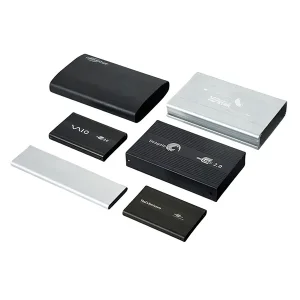
Explore our premium architectural, optical, and hardware aluminum profiles engineered to precise standards.
Understanding the critical intersection of metallurgy, aerospace tolerance, and high-performance optical engineering.
In modern optical engineering, the structural framework supporting lenses, mirrors, and imaging sensors is as vital as the optics themselves. Telescope tubes (often termed Optical Tube Assemblies or OTAs) serve as the primary containment that must guarantee absolute alignment under thermal fluctuations, mechanical stress, and geographic relocation. Globally, the demand for high-strength, lightweight materials has driven researchers and industrial manufacturers away from heavy carbon steels and fragile composites toward highly optimized aluminum alloys. Aluminum telescope tubes stand at the forefront of this revolution, balancing material toughness, ease of CNC machining, and superior resistance to corrosive oxidation.
From amateur astronomical rigs to complex scientific payloads housed on orbital satellites, the structural integrity of the tube determines the focal accuracy of the entire instrument. Any flexing, thermal contraction, or uneven expansion can degrade the imaging system's resolution. As a result, global telescope manufacturers and industrial optical system integrators require reliable OEM/ODM partners capable of delivering custom extrusion shapes, precise wall-thickness control, and certified structural grades such as 6061-T6 and 6063-T6 aluminum alloys.
Moreover, the industrial application of telescoping tubes spans beyond astronomical observatories. Today, they are deployed extensively in high-precision laser alignment apparatuses, military targeting systems, portable aerial observation booms, maritime optical arrays, and advanced geological surveying equipment. Meeting these demanding procurement demands requires deep expertise in custom extrusion die design and metallurgical precision.
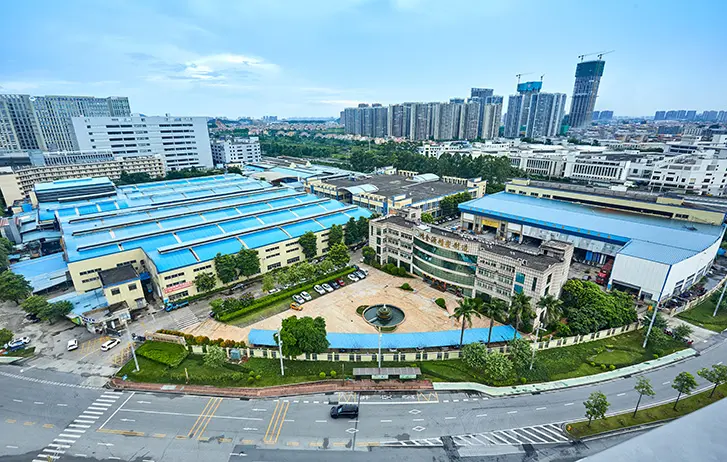
Established in 1991, Foshan Golden Source Precision Manufacturing Co., Ltd is a professional manufacturer of high-strength, high-precision, customized aluminum profiles and precise machining aluminum parts, welded parts, and assembled aluminum products.
With a modern and environmentally friendly production base covering an area of over 73,000 square meters, the company offers a comprehensive one-stop service. This includes alloy casting, mold research, design & building, aluminum extruding, precise CNC machining, structural welding, assembly, and advanced surface treatment.
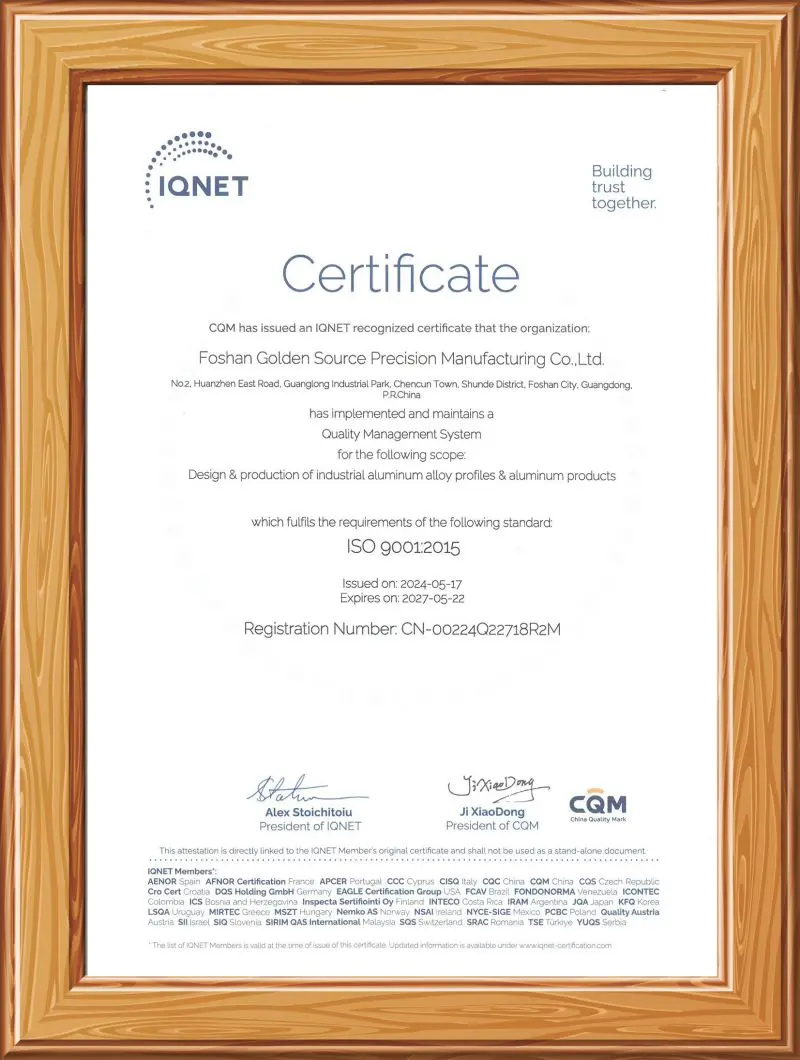
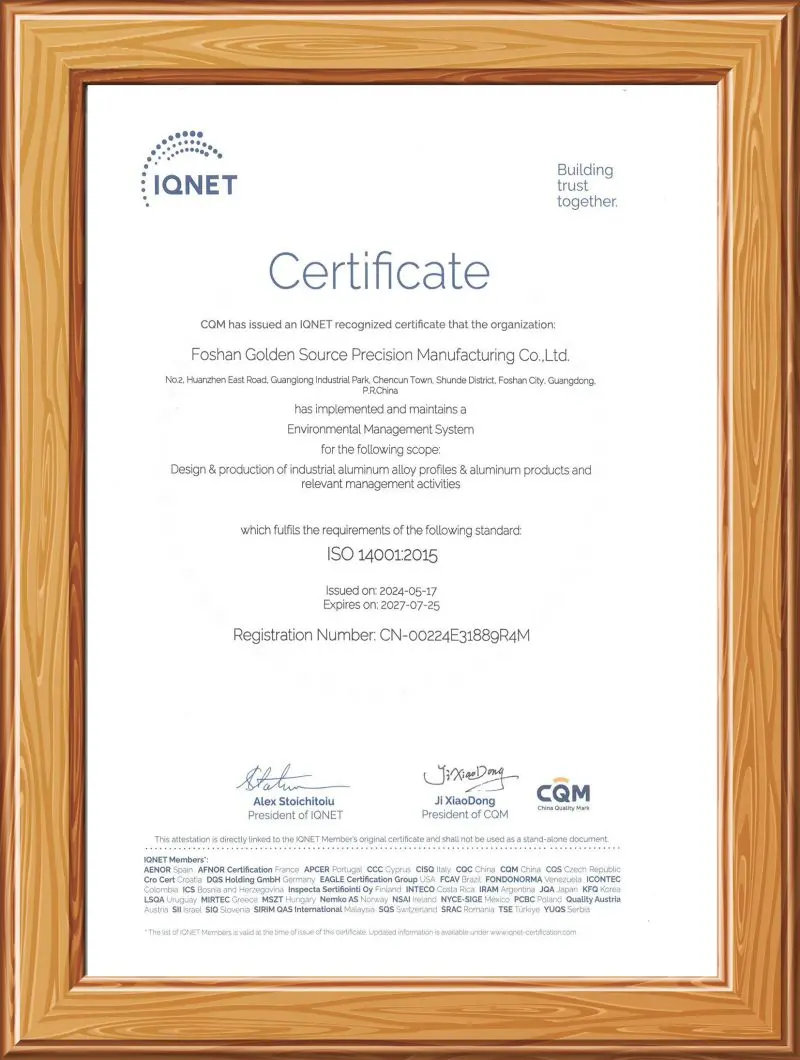
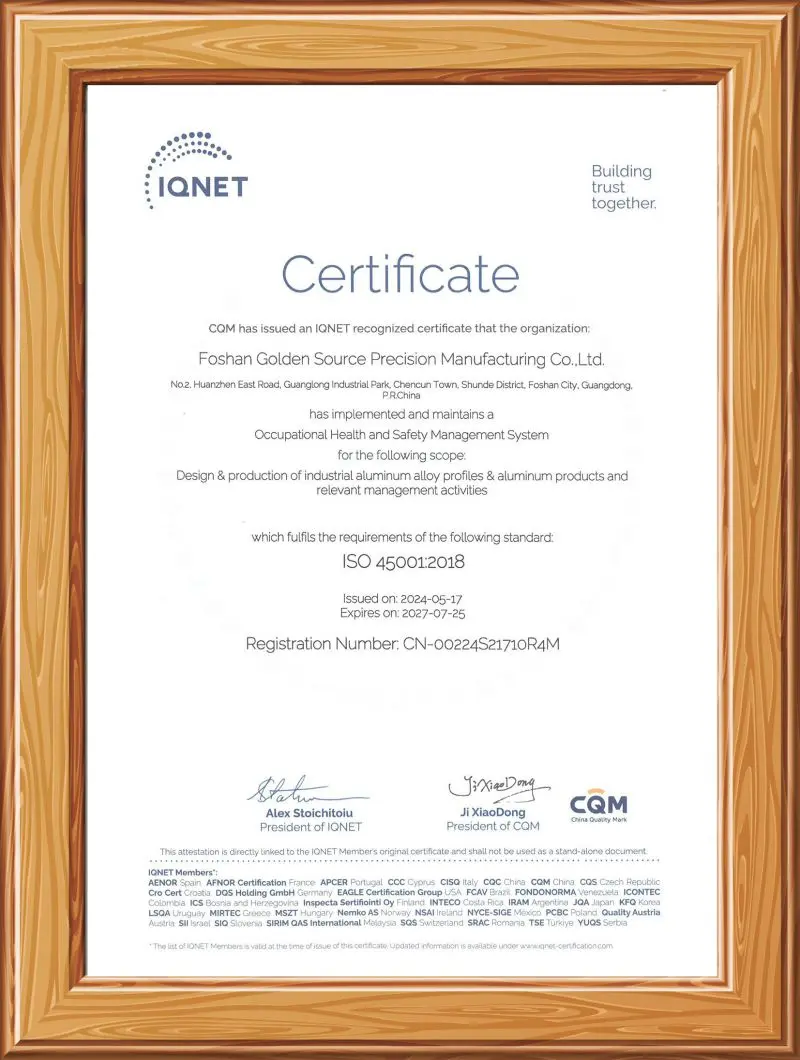
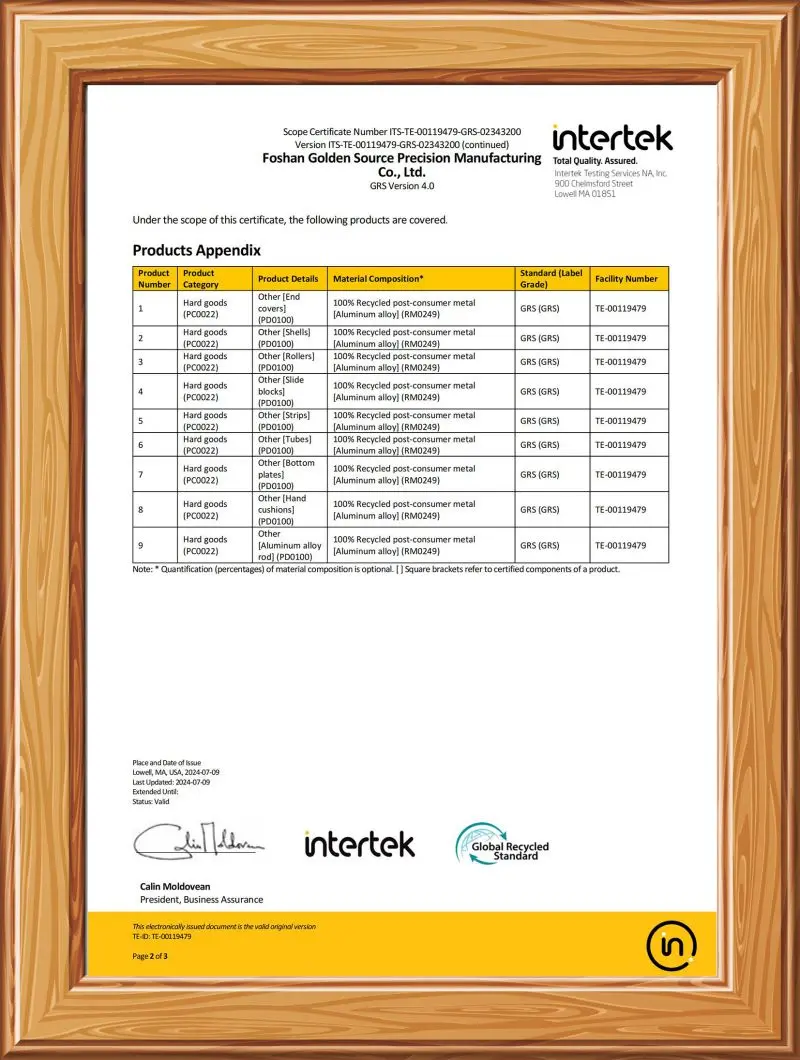
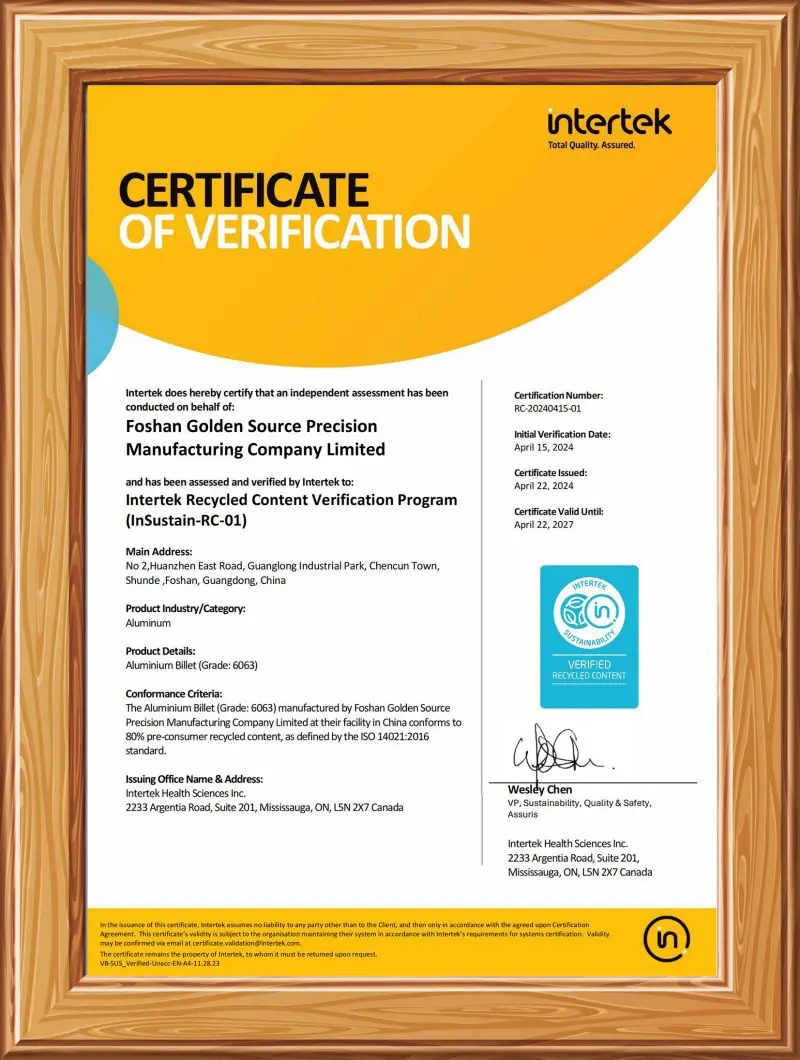
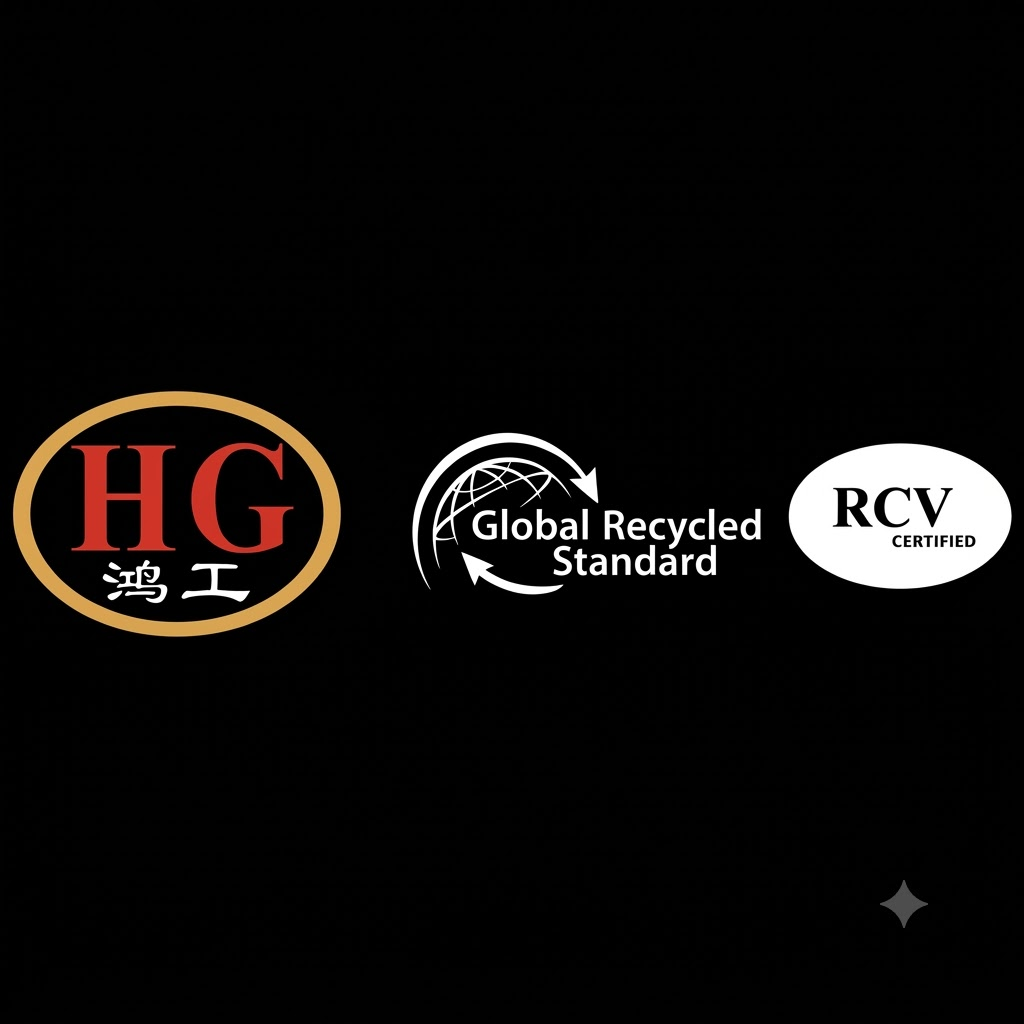
We hold certifications such as ISO9001, ISO14001, ISO45001, RCV, and GRS, ensuring that our products strictly comply with the environmental requirements of the EU’s REACH and RoHS regulations. A wide range of aluminum alloy series are available, including 1XXX, 3XXX, 5XXX, 6XXX, and 7XXX alloys, allowing us to meet the diverse demands of hardware tools, 3C products, automobiles, railways, furniture, decoration, and outdoor optical systems.
Established Year
Production Base Area
Alloy Series Range
In-House Quality Control
Our vertically integrated manufacturing capabilities translate to cost efficiency, material purity, and expedited delivery.
We melt and refine the alloy in-house. This gives us full control over elemental compositions, enabling us to adjust properties for structural rigidity, thermal stability, and anodizing quality.
By conducting extrusion, CNC precision machining, and advanced surface finish in-house, we eliminate sub-contractor markups. This ensures high-grade components at highly competitive rates.
Our complete "one-stop" production cycle accelerates lead times. From initial CAD drawing validation to shipping-ready packaged products, our logistics pipeline is streamlined for efficiency.
Designing telescope tubes requires a strict balance of mechanical rigidity, thermal stability, and low weight. When sourcing ODM aluminum telescope tubes, understanding these parameters is crucial for matching performance requirements.
Different applications require specific structural responses. We melt and formulate various alloys in-house to tailor performance:
A primary challenge in telescoping tube design is ensuring uniform wall thickness and minimizing deviation over long spans. Traditional extrusion processes can result in longitudinal twist or variable wall thickness. To counter this, Foshan Golden Source uses precision dies and automated drawing systems to achieve:
For global procurement managers, sourcing ODM components from a single integrated factory in China offers major logistical benefits. Rather than purchasing raw extrusions from one vendor and shipping them to a separate CNC shop and anodizer, Foshan Golden Source manages the entire sequence under one roof. This minimizes handling damage, guarantees consistent anodizing color matches across batches, and reduces transit lead times by up to 35%.
The external and internal finishes of telescope components must withstand outdoor exposure, humidity, and abrasion. Our surface treatment capabilities include:
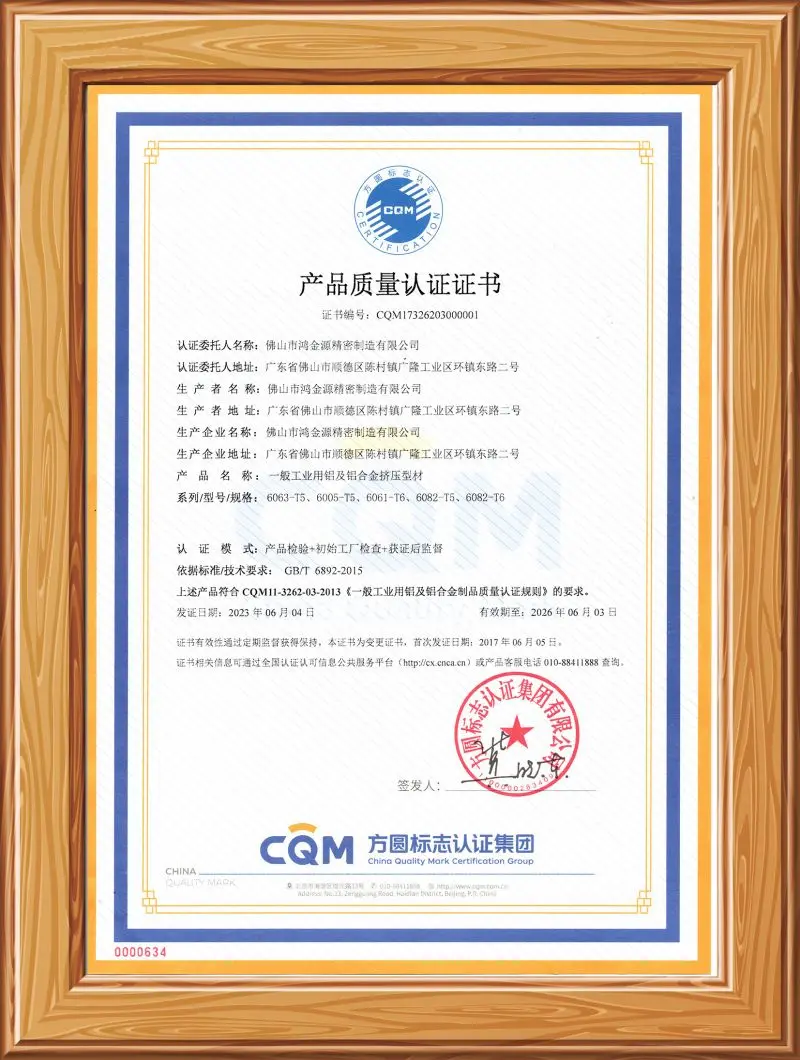
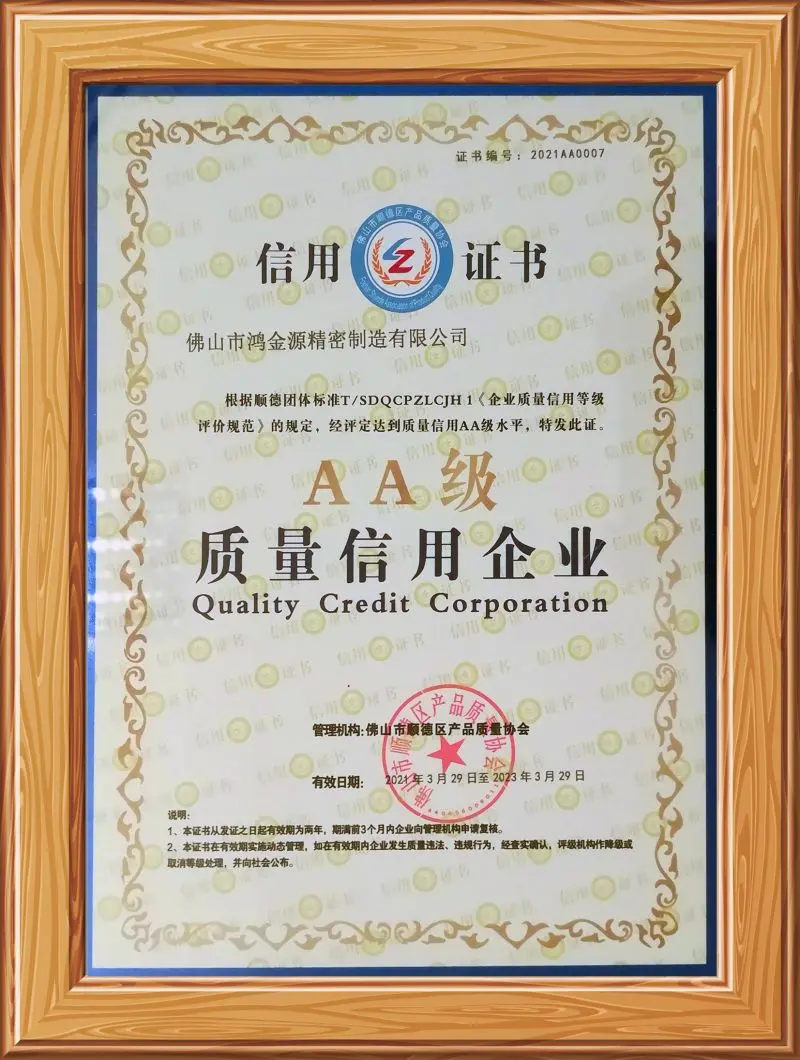
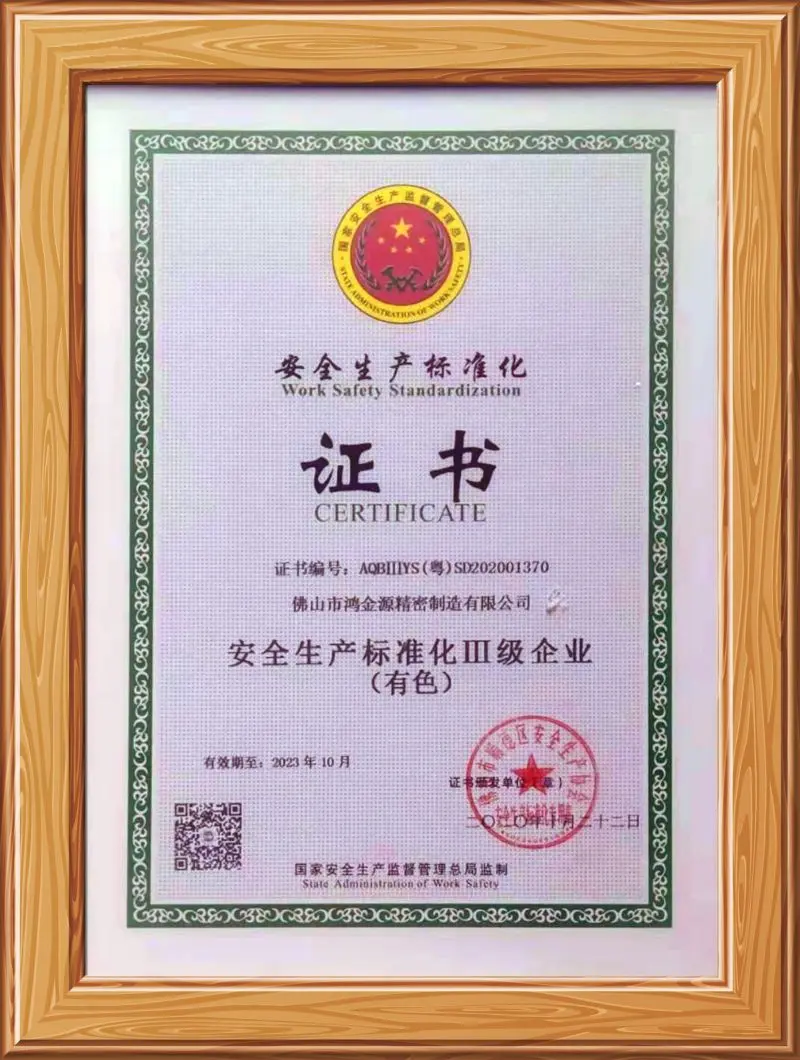
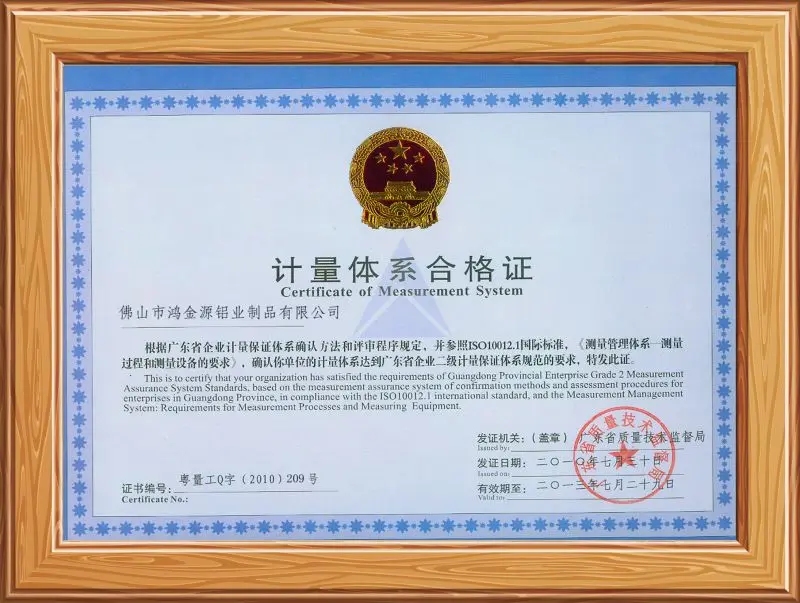
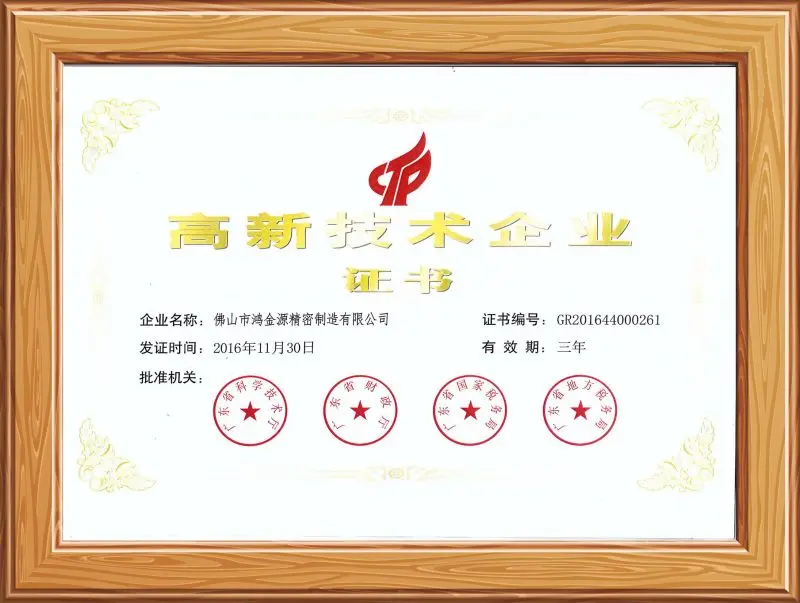
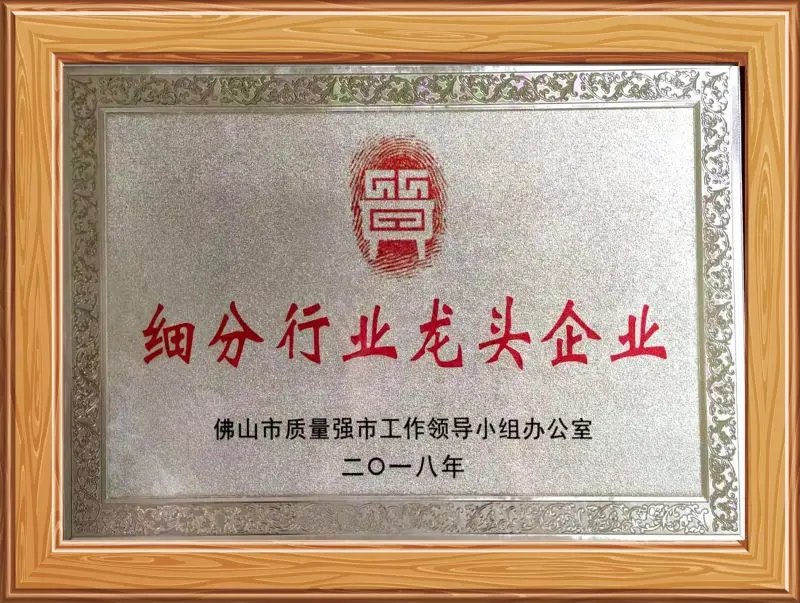
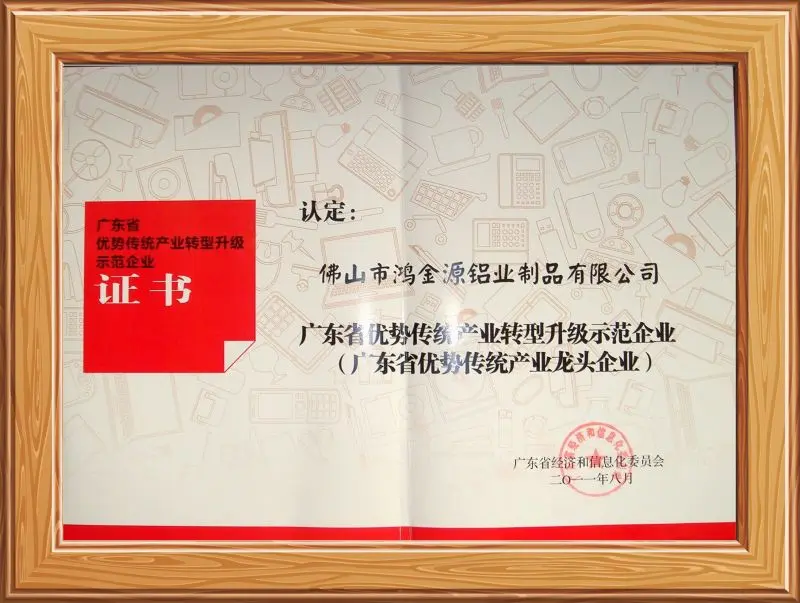
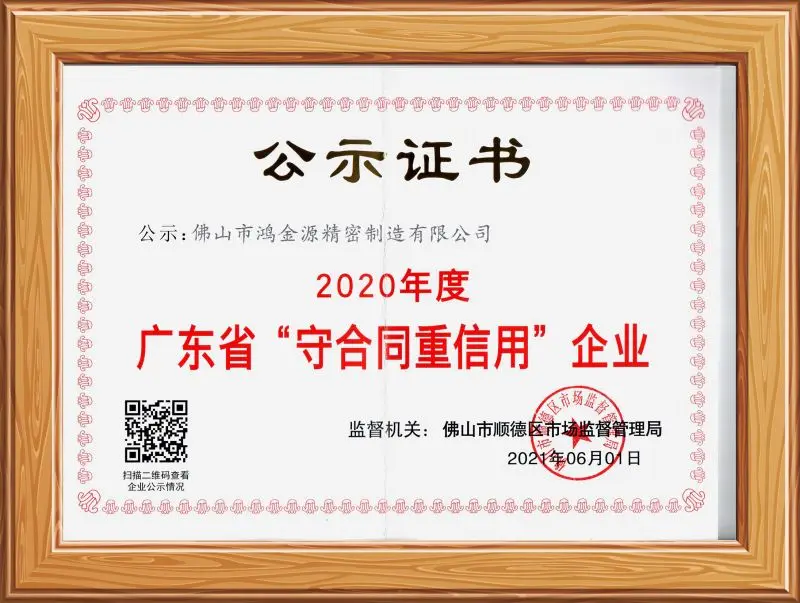
Our commitment to quality, health, and environmental sustainability is verified by leading international organizations.
Foshan Golden Source is certified under ISO9001:2015 (Quality Management), ISO14001:2015 (Environmental Management), and ISO45001:2018 (Occupational Health and Safety). To support environmental initiatives in North America and Europe, we hold active GRS (Global Recycled Standard) and RCV certifications, validating our use of recycled materials and compliance with EU REACH and RoHS environmental standards.
Detailed insights from our engineering and metallurgy teams regarding custom aluminum tube sourcing.
Explore our premium architectural, industrial, and hardware aluminum profiles engineered to precise standards.
 HG Precision