Established
Modern Facility
Alloy Grades
Global Green Certs
Aluminum stamping has evolved from simple mechanical processing into a highly complex material engineering science. As global industries accelerate toward lightweight structures, energy efficiency, and low-carbon footprints, aluminum stamping parts have become foundational components in critical sectors including electric vehicles (EV), high-speed rail, aerospace, consumer electronics (3C), and smart structural design.
This industry whitepaper explores the design requirements, engineering capabilities, cost dynamics, and green supply chain standards that define modern ODM aluminum stamping. In particular, we address the strict manufacturing protocols and high material standards required by multinational procurement departments to maintain high reliability and performance under harsh operating conditions.
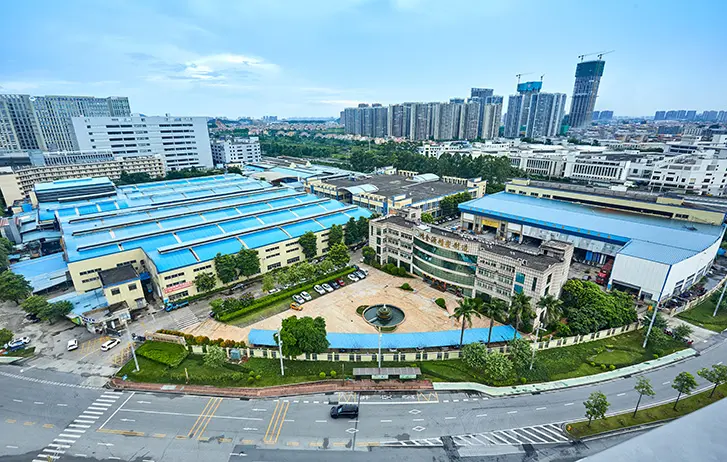
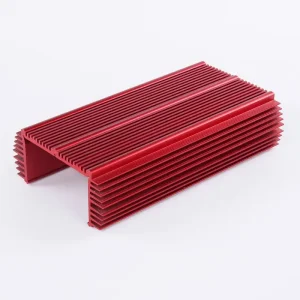
Foshan Golden Source Precision Manufacturing Co., Ltd, established in 1991, is a professional manufacturer of high-strength, high-precision, customized aluminum profiles and precise machining aluminum parts, welded parts, and assembled aluminum products. With a modern and environmentally friendly production base covering an area of over 73,000 square meters, the company offers a comprehensive one-stop service, including alloy casting, mold research & design & building, aluminum extruding, precise machining, welding, assembly, and surface treatment.
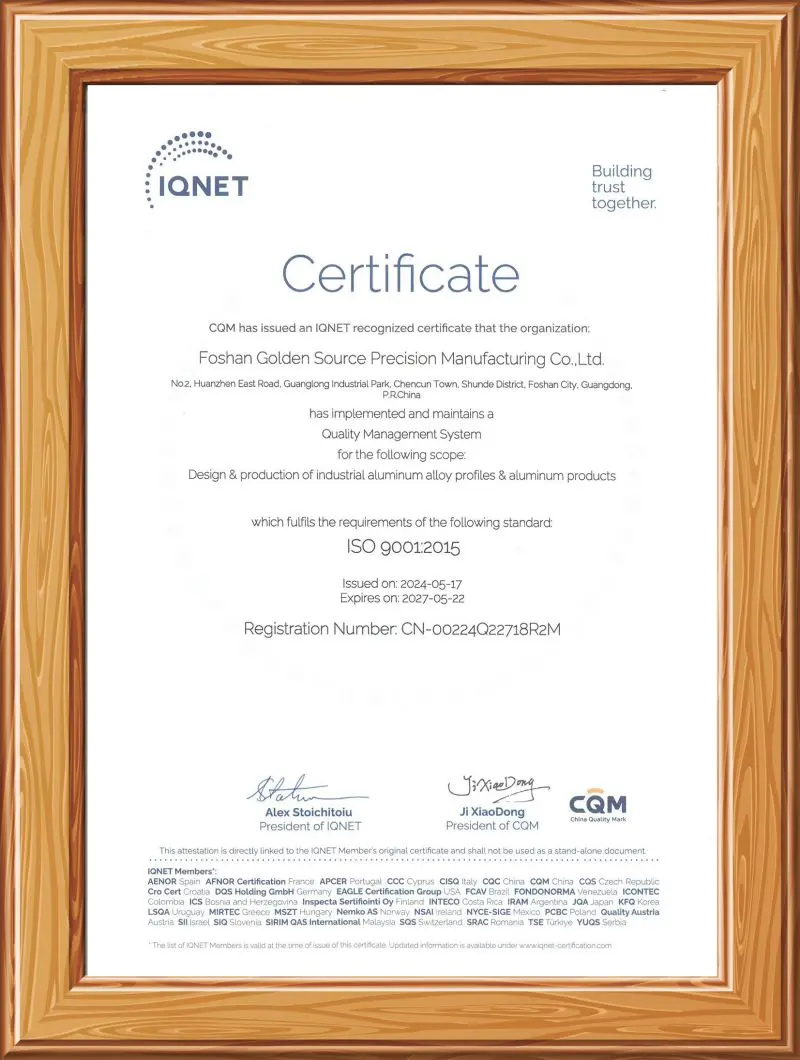
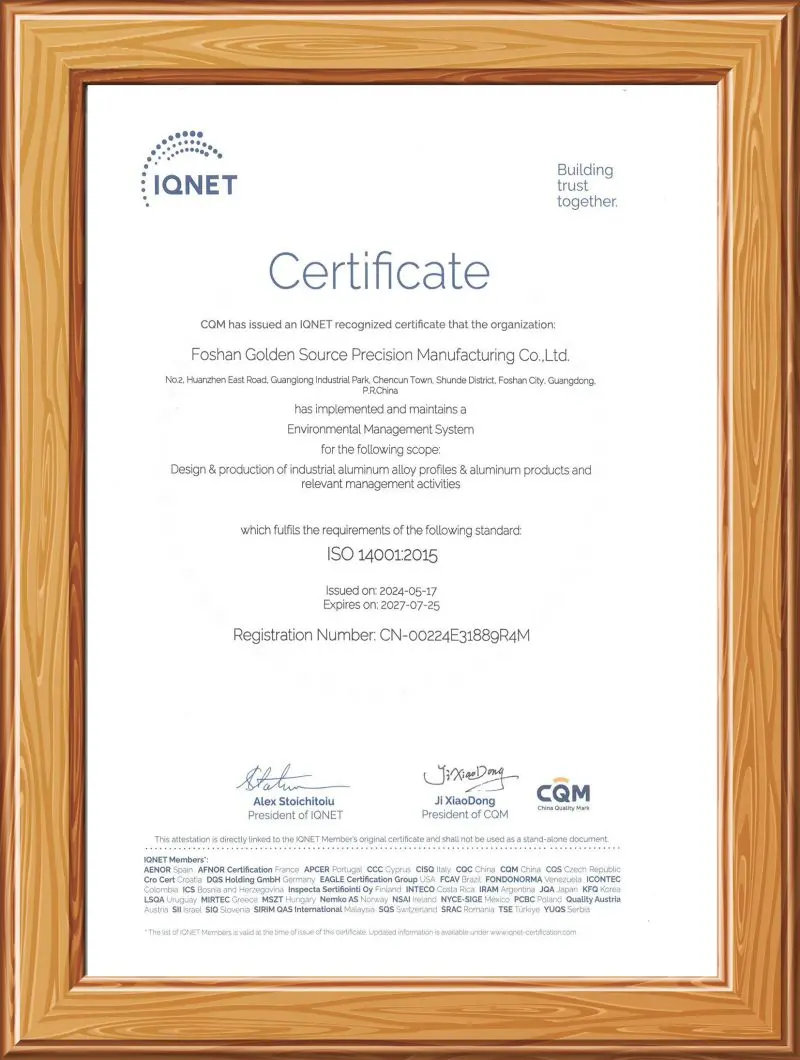
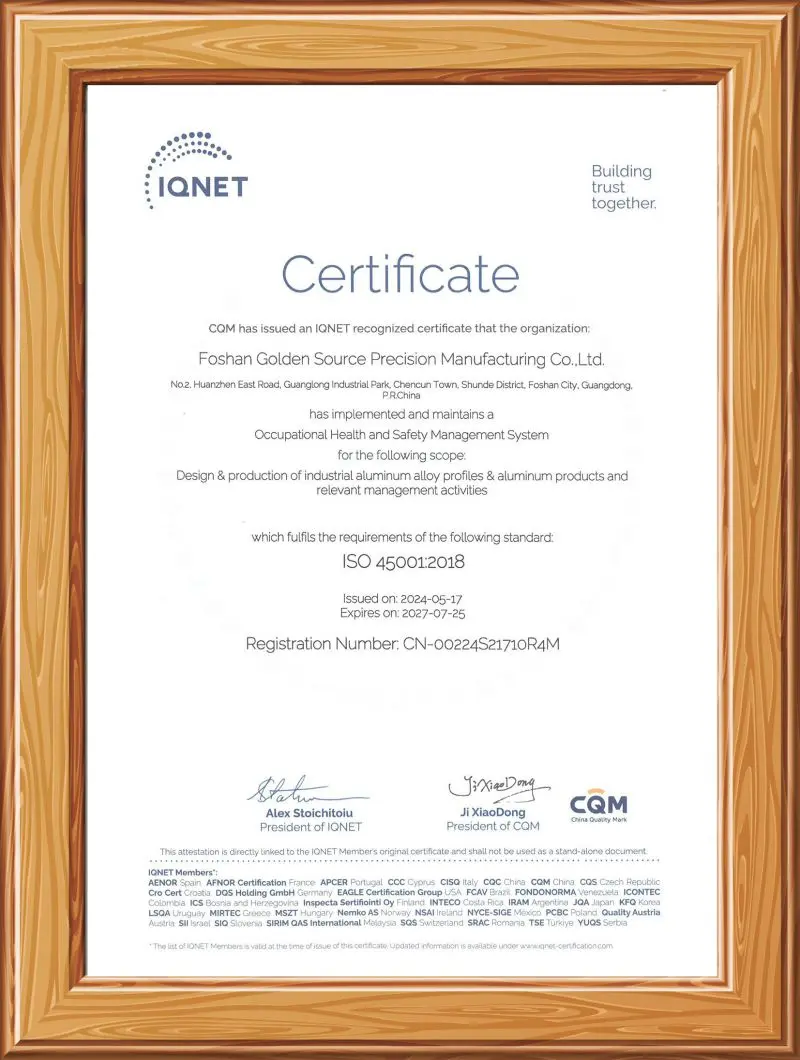
The company holds prestigious international certifications such as ISO9001, ISO14001, ISO45001, RCV, and GRS, ensuring that its products fully comply with the environmental requirements of the EU’s REACH and RoHS regulations. A wide range of aluminum alloy series are available, including 1XXX, 3XXX, 5XXX, 6XXX, and 7XXX alloys, which allow us to meet the diverse demands of various industries and fields, including hardware tools, 3C products, automobiles, railways, furniture, decoration, and outdoor gear.
We melt and refine the alloy in-house, enabling us to adjust chemical compositions precisely to achieve optimal physical properties, tensile strength, and metallurgical purity needed for flawless anodizing surfaces.
Precision stamping, CNC machining, and surface finishes are executed under a single roof, allowing for real-time dimensional inspections and lowering manufacturing costs. This guarantees top-tier quality at highly competitive prices.
Our completely integrated vertical production line from raw billet casting to final surface coating slashes lead times, allowing us to adapt rapidly to changes in global order volumes.
Modern industrial supply chains require manufacturers to combine agility, capacity, and precision. At Foshan Golden Source, we have upgraded our manufacturing floors with advanced Industry 4.0 automation systems, minimizing manual error while keeping throughput high.
Equipped with progressive stamping and transfer press lines ranging from 80T to 800T, we easily manage high-volume manufacturing of complex geometries while holding tolerances within ±0.05mm.
Our in-house mold tooling shop utilizes CAD/CAM/CAE systems to conduct structural simulations, predicting material flow and thinning before the physical dies are cut. This lowers overall mold development costs.
Located in the heart of Southern China's industrial manufacturing hub, we maintain strategic partnerships with regional raw material suppliers and global deep-water ports, protecting our clients from logistics disruptions.
Different industrial applications present distinct material and mechanical challenges. Our engineering team selects target alloys and post-processing treatments based on the end-use environment.
| Industry Sector | Common Alloys | Critical Engineering Focus | Key Applications |
|---|---|---|---|
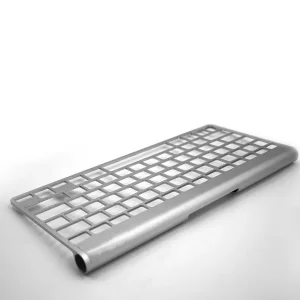
| Consumer Electronics (3C) | 6063-T6, 5052-H32 | High aesthetic quality, sandblasting, micro-dimensional control | Laptop chassis, mechanical keyboard bases, mobile phone internal framing |
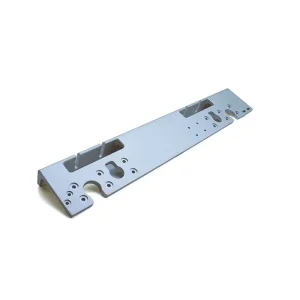
| Automotive & Transit | 6082-T6, 7075-T6 | High yield strength, crashworthiness, vibration resistance | Metro train door components, structural chassis parts, bumper brackets |
| Green Energy & Thermal | 6063-T5, 1060 | Excellent thermal conductivity, structural integrity | Optical module heatsinks, solar mounting assemblies, inverter covers |
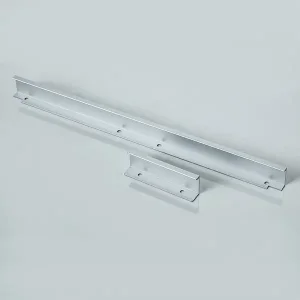
| Furniture & Architecture | 6063-T5, 6061-T6 | Corrosion resistance, architectural aesthetics, smooth finishes | Skylight frames, cabinet handles, sliding track profiles |
Today's procurement strategies look beyond simple unit prices. International buyers prioritize environmental sustainability, clear chain of custody, and regulatory compliance. Our plant supports these requirements with certified green practices:
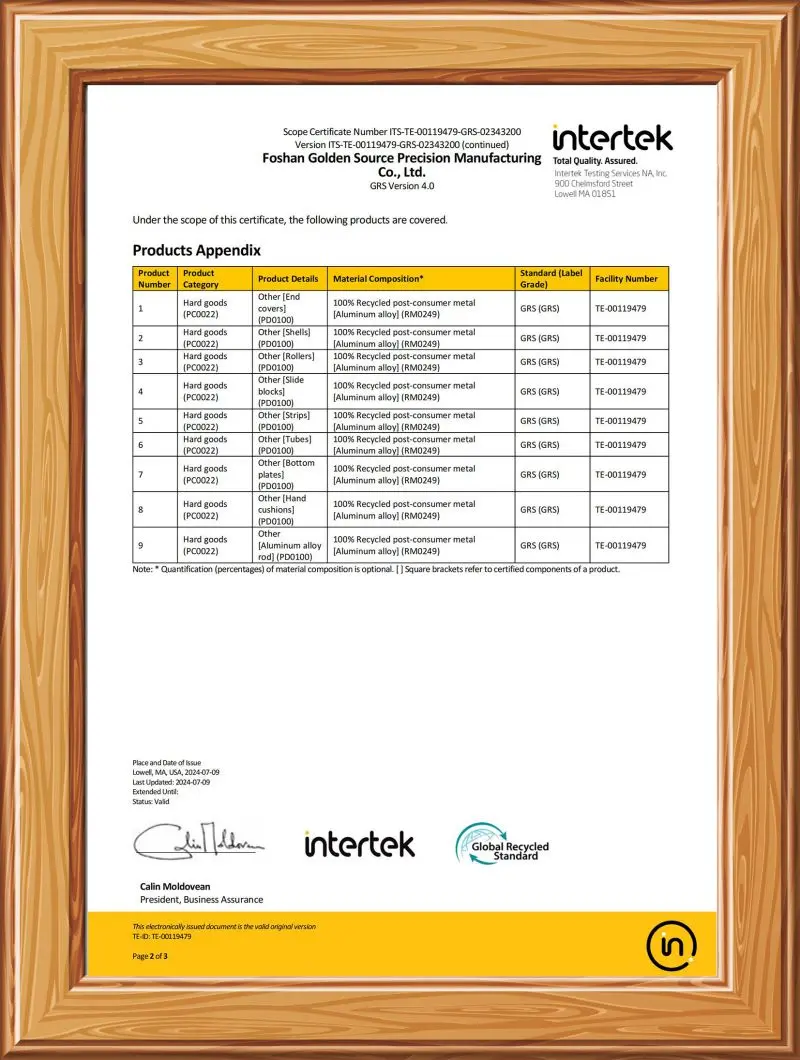
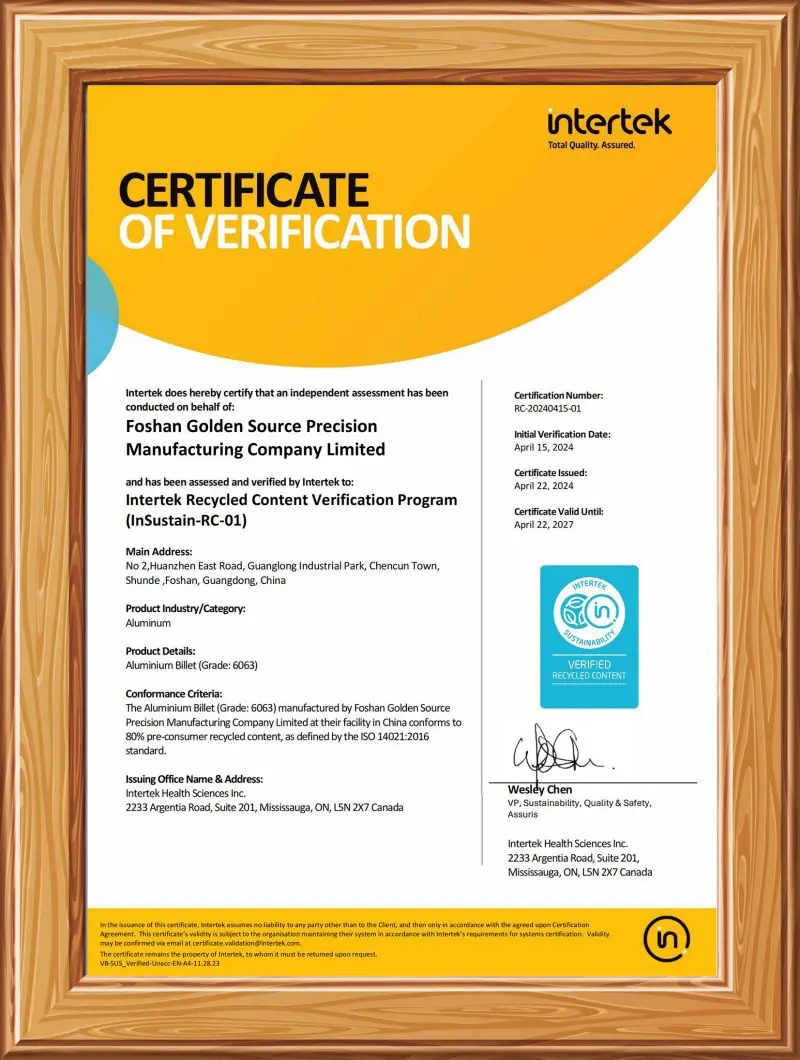
Our Global Recycled Standard (GRS) certification verifies the tracking and management of recycled materials throughout our melting shop. This helps buyers meet their internal ESG targets and carbon reduction commitments.
We test all raw materials and chemical coatings in house to confirm that all finished products are free of hazardous substances, ensuring smooth customs clearance into the European Union and North America.
Our operations are audited under ISO9001 (Quality Control), ISO14001 (Environmental Responsibility), and ISO45001 (Occupational Health & Safety), guaranteeing a stable and reliable production process.
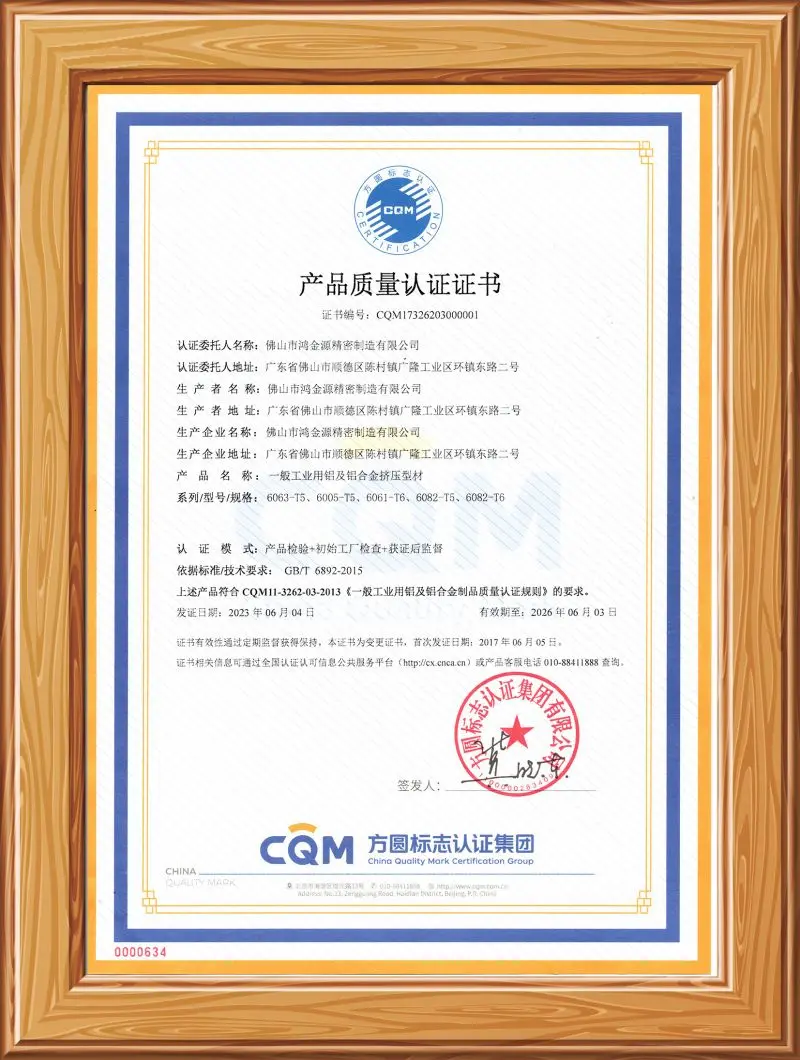
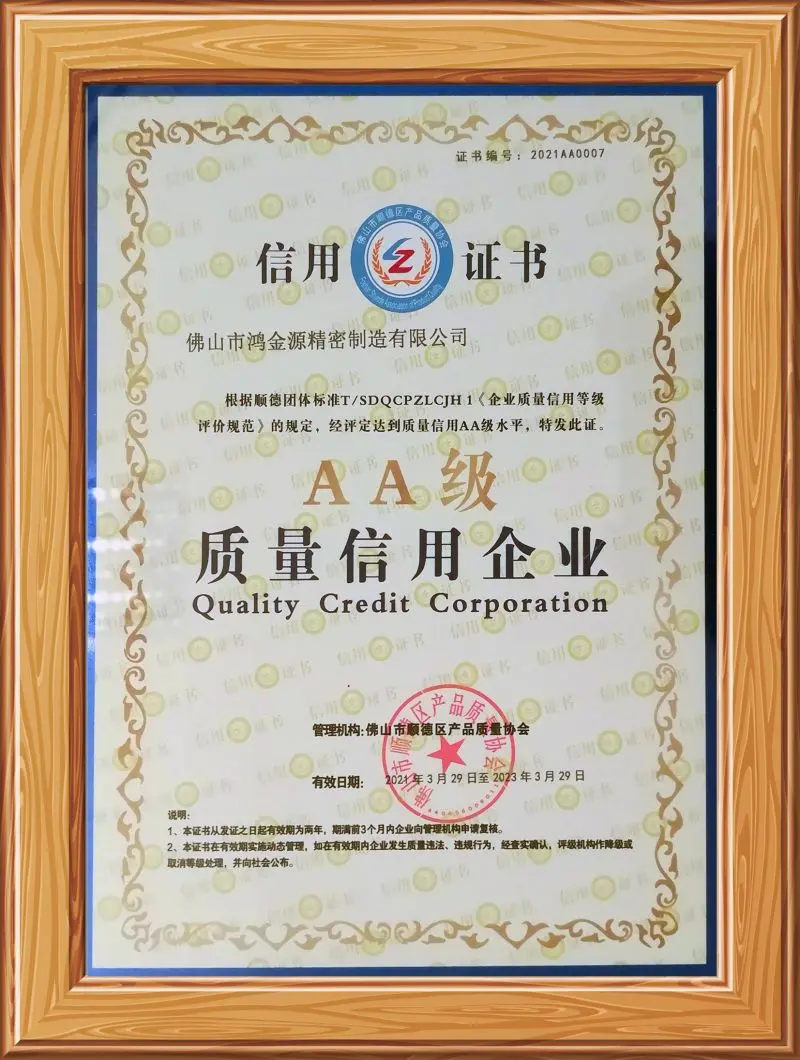
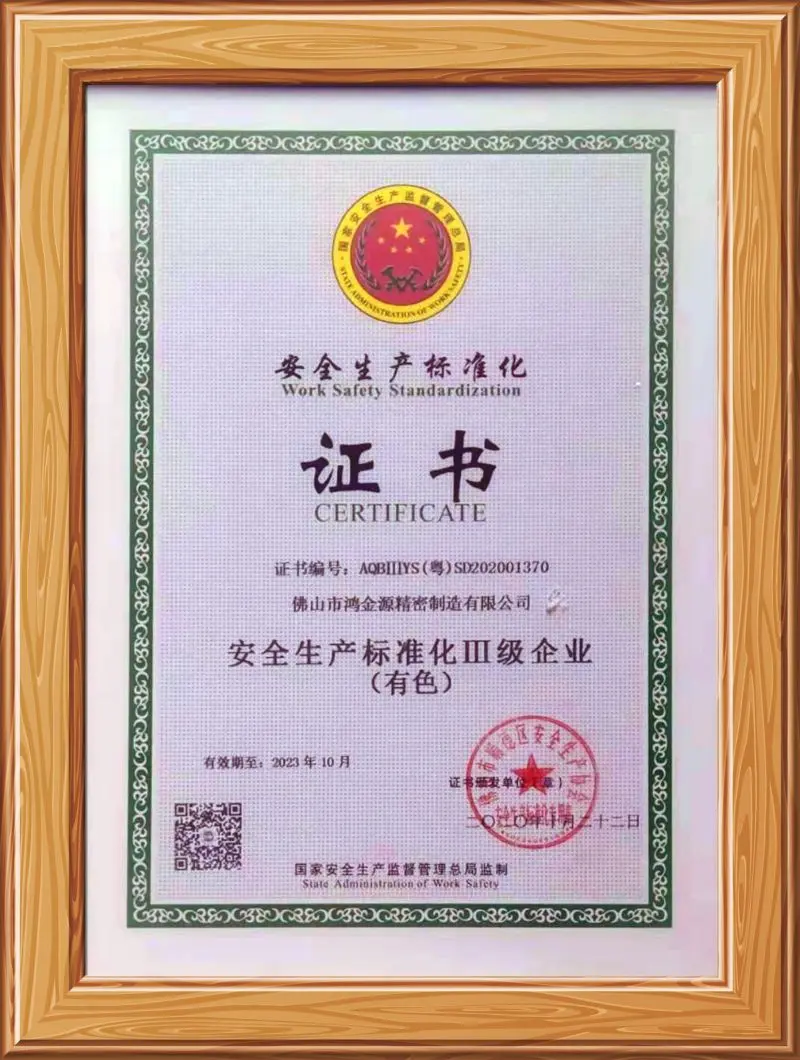
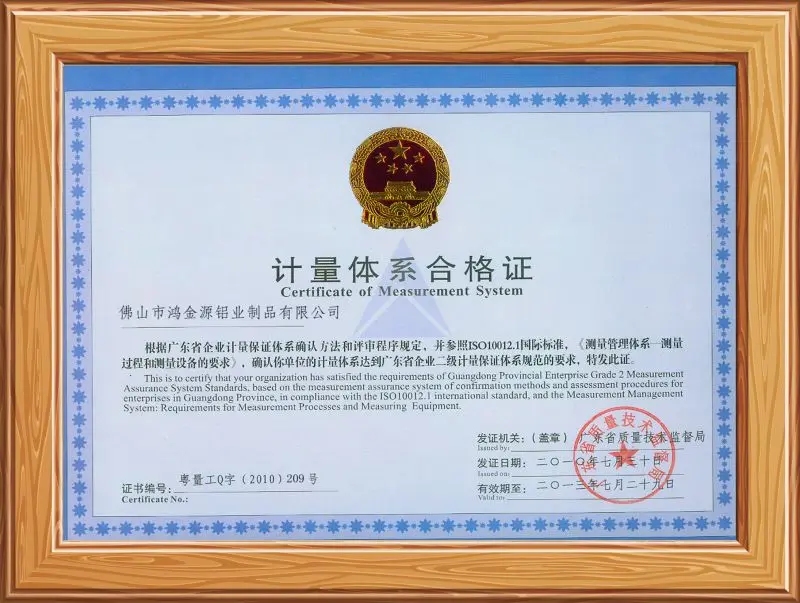
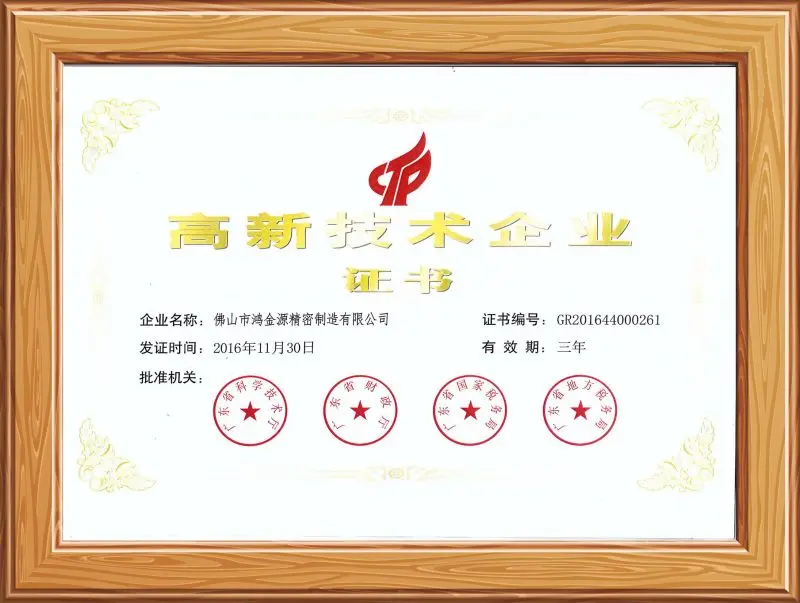
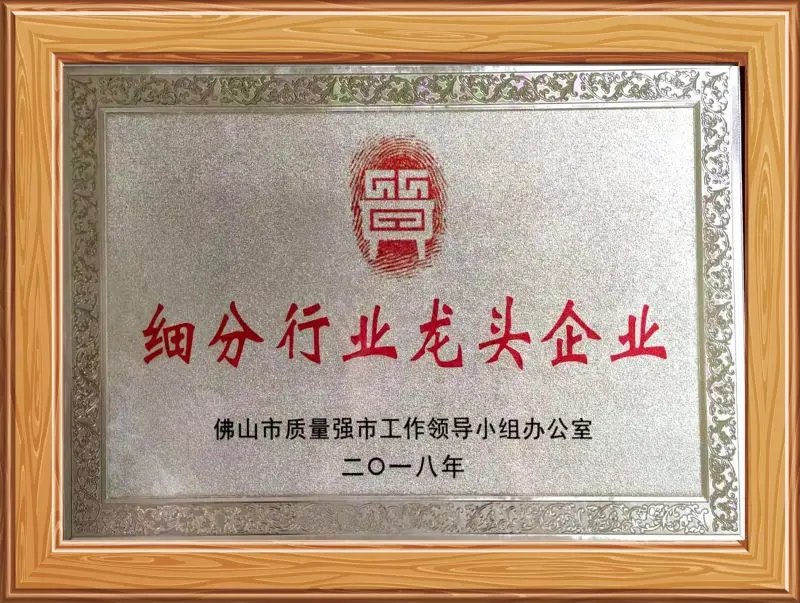
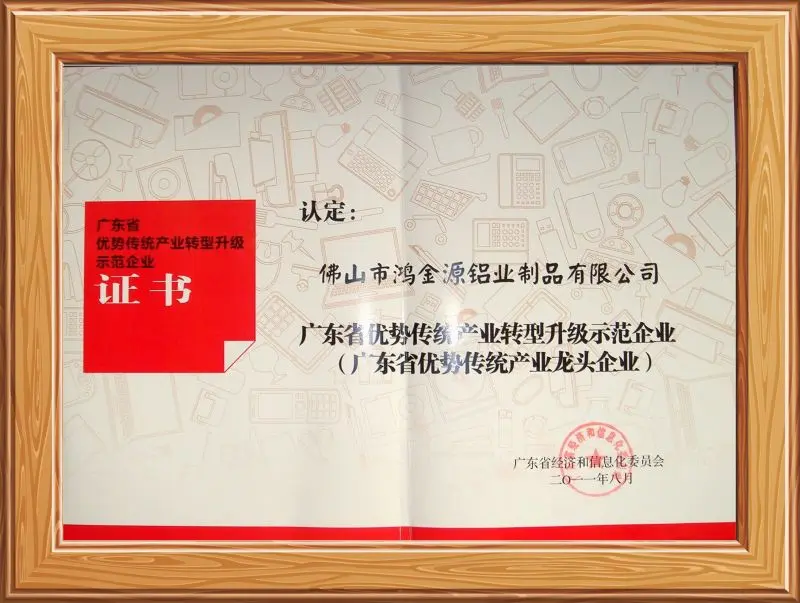
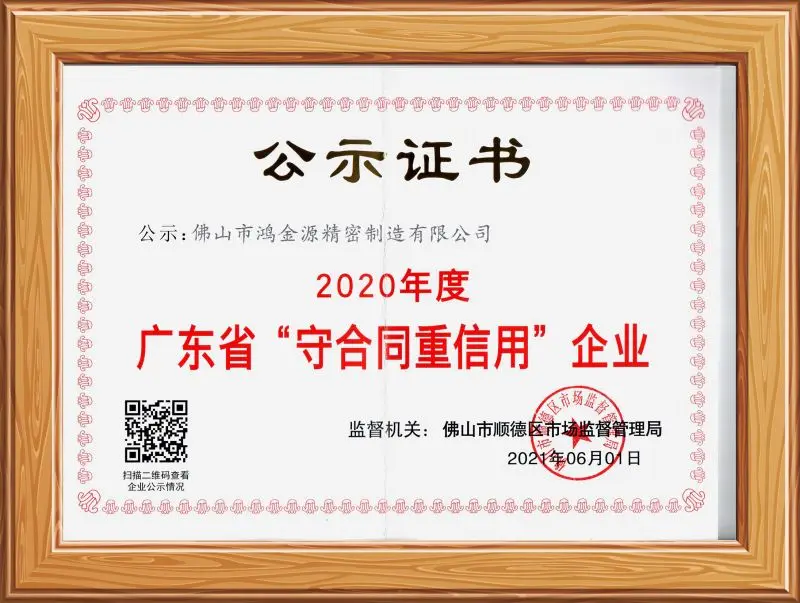
Foshan Golden Source is recognized by municipal, provincial, and national authorities for clean production, technological upgrading, and financial reliability. Below are some of our official certificates:
To support high-precision designs, we continue to research and deploy new metalworking techniques. Below are key focus areas of our technical roadmap:
We are refining hot stamping methods for high-strength 7075 and 7020 alloys. This approach allows us to form intricate shapes without risking material cracking, serving structural automotive and aerospace demands.
By integrating threading, nut insertion, and sorting directly into the progressive stamping die, we reduce post-processing steps and minimize mechanical assembly tolerances.
We are upgrading our chemical surface treatment lines to introduce zero-emission and chrome-free pretreatment options, keeping our products aligned with global environmental standards.
Industrial pricing for ODM aluminum stamping parts consists of two main components: One-off tooling development costs (non-recurring engineering) and the individual part unit price. We calculate these based on transparent, industry-standard metrics:
Tied directly to London Metal Exchange (LME) or Shanghai Metal Market (SMM) aluminum spot prices plus dynamic casting processing fees.
For long-term, high-volume programs, tooling costs can be amortized across the unit volume, lowering upfront capital expenditures.
Complex geometries requiring multi-stage progressive stamping or secondary CNC milling are optimized to minimize tool wear and cycle times.
Surface treatments (mechanical brushing, sandblasting, color anodizing, or chrome plating) are quoted based on target thickness and cosmetic requirements.
To help us prepare an accurate and competitive quotation, please provide the following details when submitting your RFQ:
In-house melting allows us to control the exact chemical composition of the billets. We can adjust elements like iron, silicon, and magnesium to minimize surface defects and impurities, which improves structural integrity and ensures a clean, uniform finish during color anodizing.
We use high-precision progressive dies paired with automated press sensors to monitor material feed and punching force. For demanding dimensions, we follow the stamping process with secondary CNC machining to keep key tolerances within ±0.01mm to ±0.05mm, depending on the drawing specifications.
We are certified under ISO9001:2015, ISO14001:2015, and ISO45001:2018. Crucially, our GRS (Global Recycled Standard) and RCV certifications track recycled content for environmental audits, and all our raw materials and finishes are fully compliant with EU REACH and RoHS environmental standards.
Typically, die design and tool manufacturing take 15 to 25 days depending on part complexity. Once tooling is finalized, we produce and deliver initial sample parts within 5 to 7 days for customer evaluation and approval.
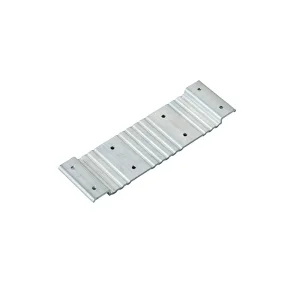
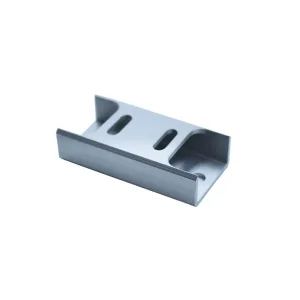
Yes. Our integrated production plant extrudes custom shapes and then uses progressive press dies to stamp holes, slots, or three-dimensional shapes. This reduces part handling and saves on production costs compared to outsourcing the individual steps.
 HG Precision