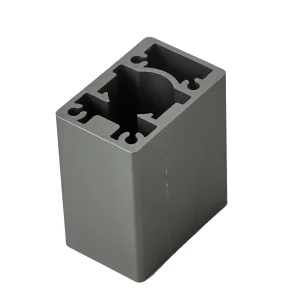
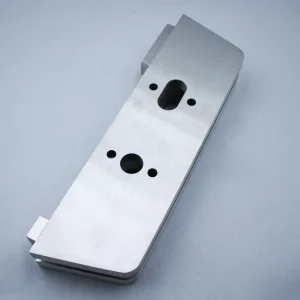
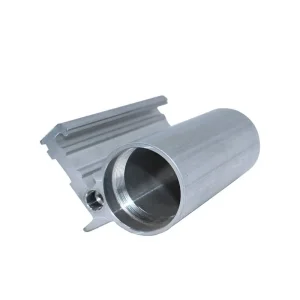
ODM Aluminum Profiles For Doors & Windows Suppliers & Products

Empowering Architectural Innovations through High-Precision Aluminum Metallurgy, Sustainable Extrusions, and Advanced Post-Processing Engineering.

Foshan Golden Source: Decades of Precision Metallurgy

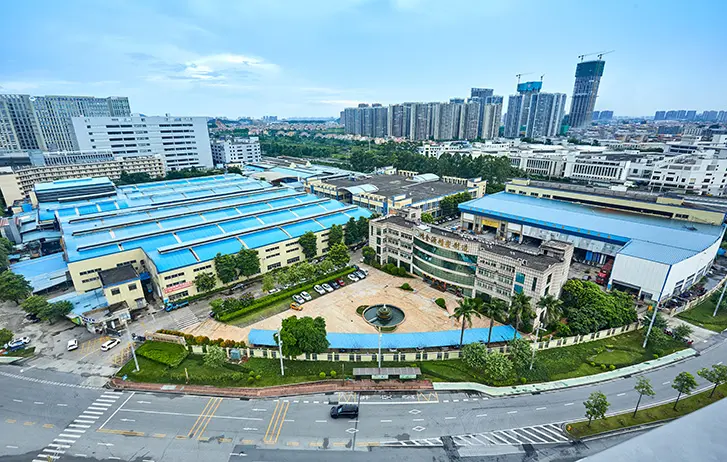
Established in 1991, Foshan Golden Source Precision Manufacturing Co., Ltd. has developed into a leading global manufacturer specializing in high-strength, high-precision, customized aluminum profiles. Operating from a modern, environmentally responsible 73,000 square meter production facility, our company provides a true "one-stop" engineering ecosystem.

By integrating alloy casting, mold research & structural design, tool building, extrusion, CNC high-precision machining, welding, surface finishing, and product assembly, we eliminate supply chain fragmentation. This comprehensive integration ensures structural components for doors, windows, curtain walls, and industrial applications comply with rigorous international standards, including the EU's strict REACH and RoHS regulations.

1991
Founded Year
73,000㎡
Production Base
1K-7K
Alloy Series

Advanced Material Properties & Manufacturing Advantages

Why engineered alloy customization yields superior mechanical performance and long-term structural integrity.

In-House Smelting & Casting

We control the chemical composition of our billets at the atomic level. By melting alloys in-house, we eliminate impurities, optimize grain boundaries, and guarantee excellent surface quality for architectural anodizing.

One-Stop Post-Machining

Equipped with advanced multi-axis CNC machining centers, stamping machines, and automated welding stations, we deliver component tolerances down to micron-level accuracy, lowering structural assembly friction.

Strict Certification Standards

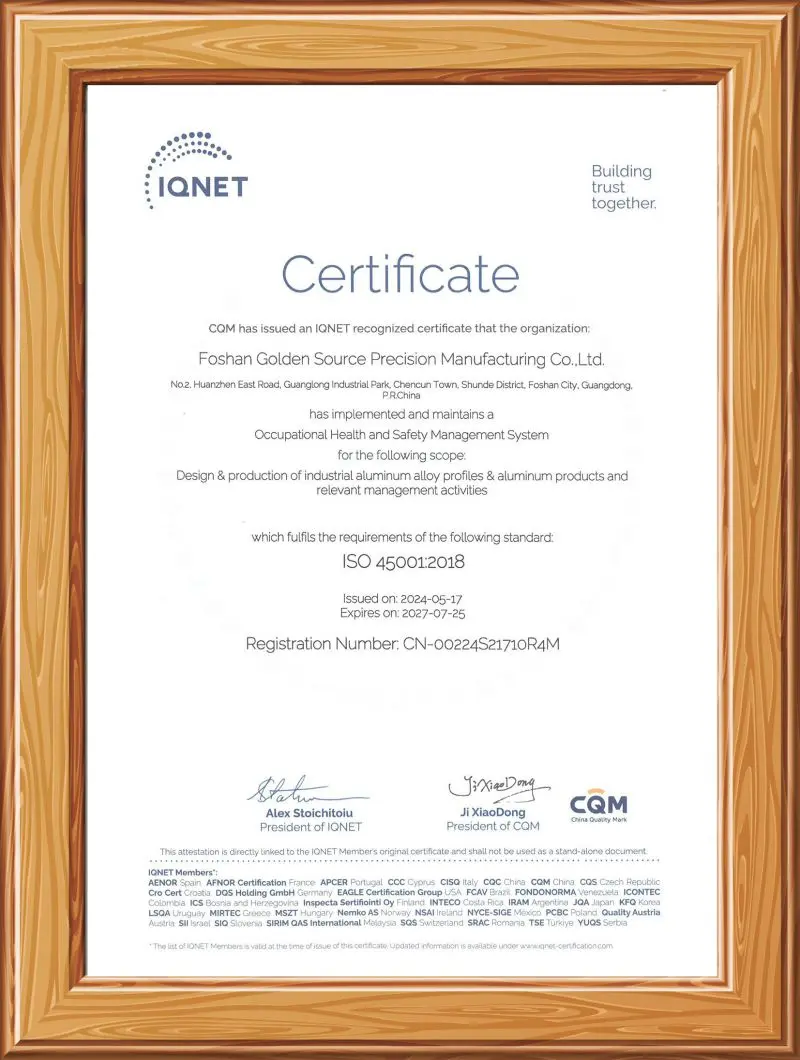
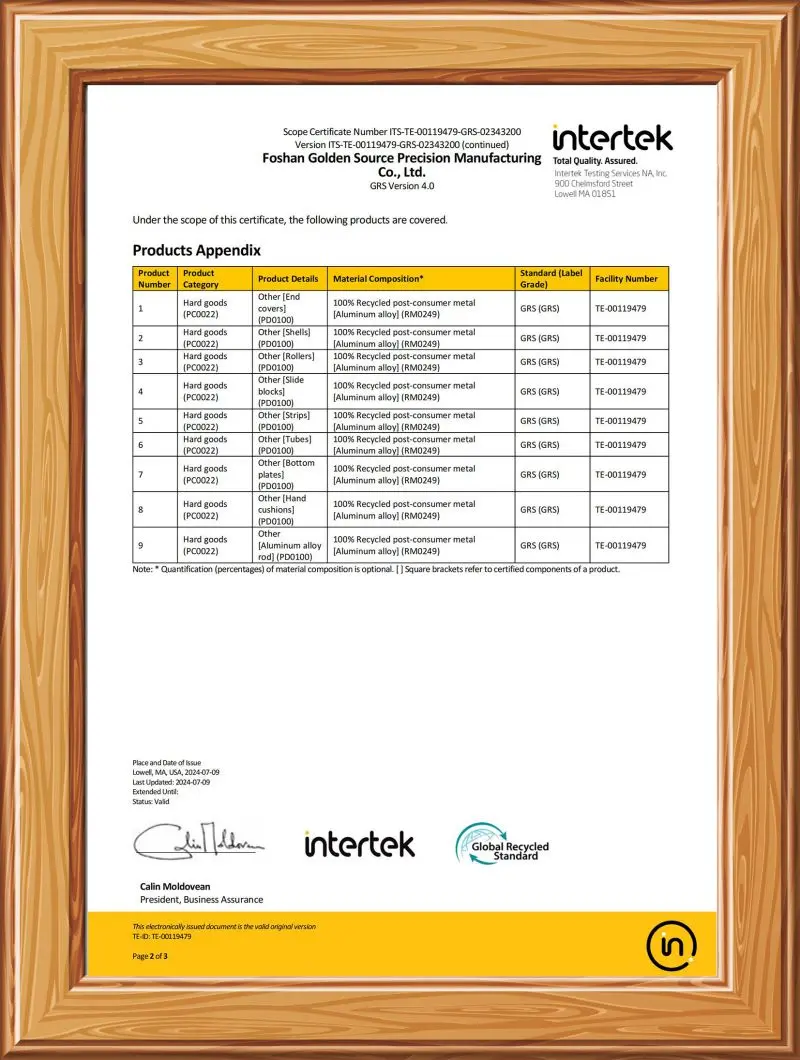
Certified to ISO9001, ISO14001, and ISO45001. We maintain modern GRS (Global Recycled Standard) and RCV certifications to satisfy global green procurement mandates and ESG compliance goals.

Understanding Alloy Designations: 1XXX to 7XXX

Selecting the correct aluminum alloy series is critical to achieving target mechanical behaviors. Our facility provides tailored alloy formulations to meet specific architectural and industrial engineering needs:

  • 1XXX Series (Pure Aluminum): Offers exceptional electrical conductivity and thermal dissipation properties, plus maximum corrosion resistance for non-structural cladding.
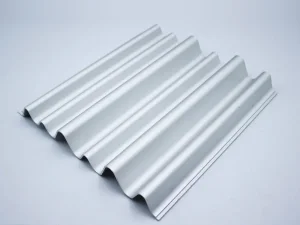
  • 3XXX Series (Manganese-alloyed): Delivers moderate mechanical strength with superb workability. Excellent for deep-drawn panels and structural architectural wave boards.
  • 5XXX Series (Magnesium-alloyed): Notable for its high corrosion resistance in marine and highly industrial environments. Frequently selected for coastal building envelopes.
  • 6XXX Series (Silicon-Magnesium-alloyed): The standard for architectural extrusions. Alloys such as 6063-T5, 6063-T6, and 6061-T6 provide high yield strength, excellent responsiveness to heat treatment, and clear anodizing properties.
  • 7XXX Series (Zinc-alloyed): Ultra-high-strength profiles. Typically reserved for heavy-duty structural frames, gate systems, and components subjected to severe load stresses.

Strategic Advantages of the Chinese Aluminum Supply Chain

China remains the world's most robust industrial ecosystem for aluminum extrusion and precision manufacturing. By sourcing from a vertically integrated facility in Foshan, global architectural specifiers, contractors, and OEMs gain access to significant strategic advantages:

Complete Spatial Clustering: The concentration of raw bauxite processing, die tooling specialists, anodizing facilities, and logistics hubs in Guangdong ensures fast turnarounds. We transition custom designs from initial 3D CAD modeling through extrusion simulation, die creation, and prototype testing in days rather than weeks.

Global Environmental Stewardship (GRS & RCV): Forward-thinking manufacturers are decoupling from carbon-intensive smelting. Through our GRS (Global Recycled Standard) certification, we supply profiles manufactured with circular, recycled aluminum scrap, lowering the embodied carbon footprint of modern high-rise envelopes and assisting developers in earning LEED and BREEAM building points.

Future-Proofing Architectural Openings: Doors, Windows, and Curtain Walls

The construction industry is shifting toward high-performance building skins that actively manage thermal loads, weather infiltration, and structural wind loads.

  • Thermal Break Integration: Modern structural framing utilizes multi-cavity polyamide insulating strips (PA66-GF25) co-extruded with custom profiles to achieve lower U-values, reducing cooling and heating costs in extreme climates.
  • Anodic Oxidation and Marine-Grade Coatings: For high-rise coastal projects, we apply thick anodizing layers (Class II, 20+ microns) and PVDF coatings. These prevent filiform corrosion, salt spray degradation, and UV fading over decades of exposure.
  • Slim-Frame Minimization: Modern architectural preferences favor minimal profiles with hidden sashes and maximum glazing areas. Executing this requires high-strength alloys (such as 6061-T6 or 6063-T6) to handle wind loads with thinner structural profiles.

Industrial Scale and Sustainable Logistics

Navigating international supply chains requires reliable, verified manufacturers. With our ISO9001 and ISO14001 certified production lines, Foshan Golden Source addresses the risks of overseas sourcing. We guarantee chemical composition traceability with alloy melt certificates and perform automated 3D dimensional inspections to ensure parts fit together smoothly during on-site construction.

We provide custom packaging solutions—including protective film layers, seaworthy wooden crates, and heavy-duty steel racks—to protect anodized surfaces from abrasions during sea transport and port handling.
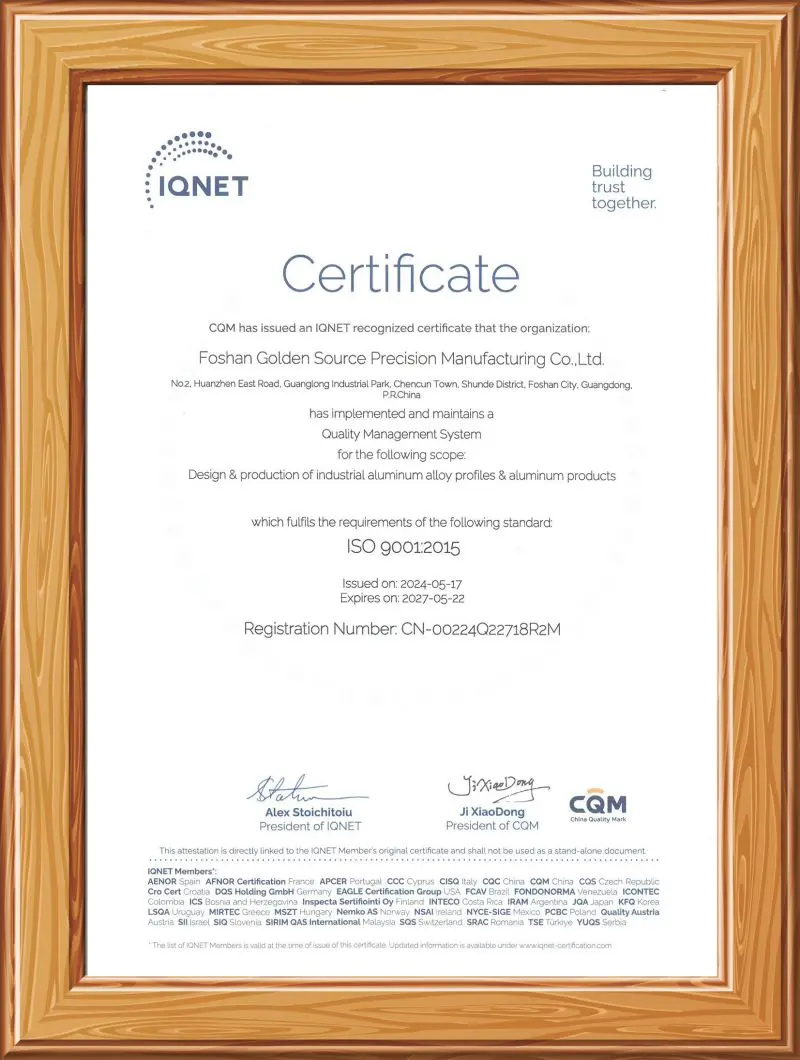
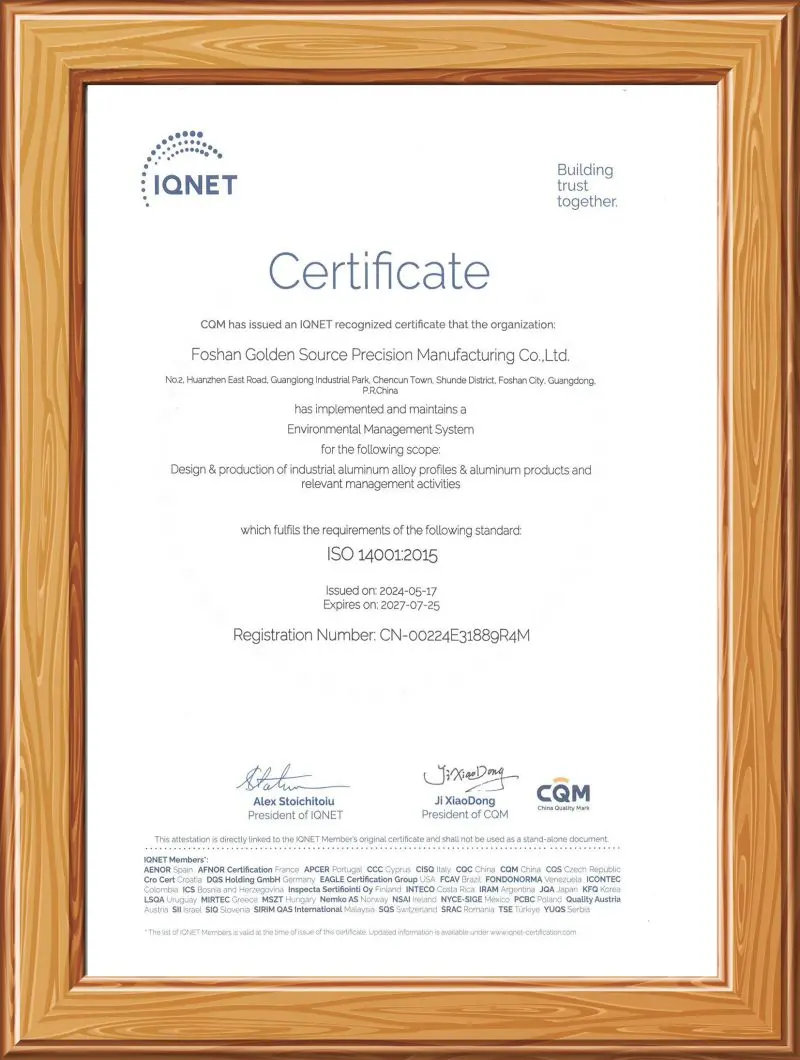
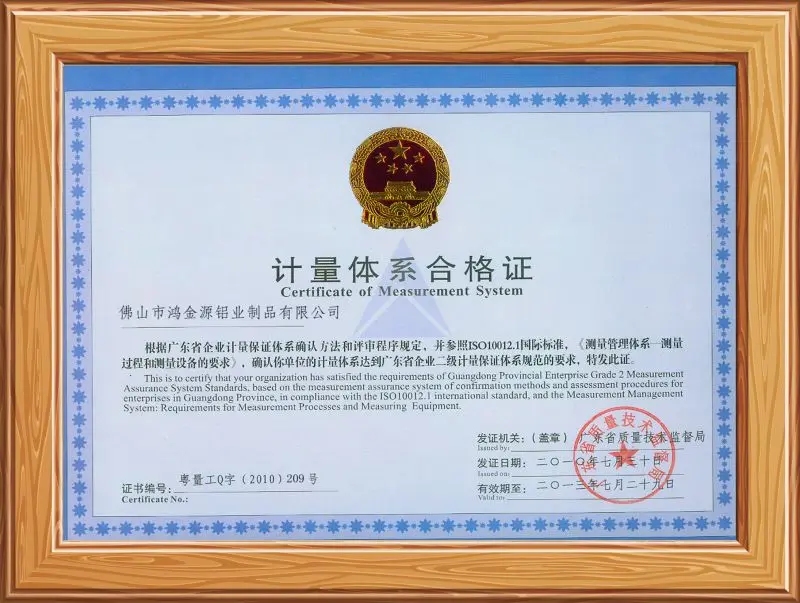
ISO Certification 1
ISO Certification 2
ISO Certification 3
ISO Certification 4
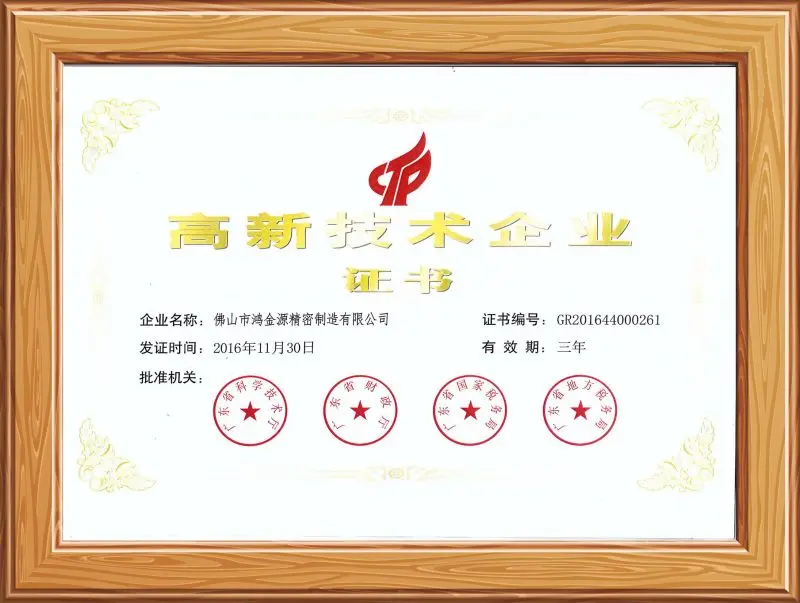
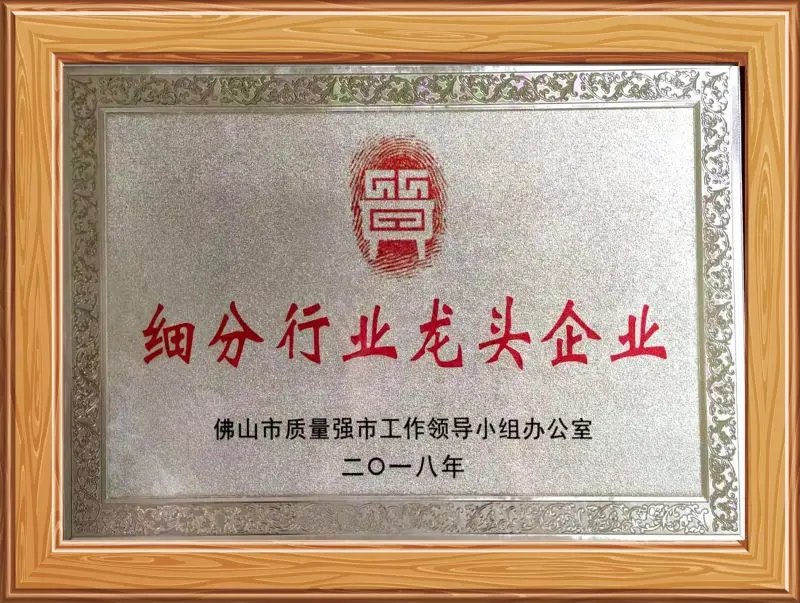
Award 1
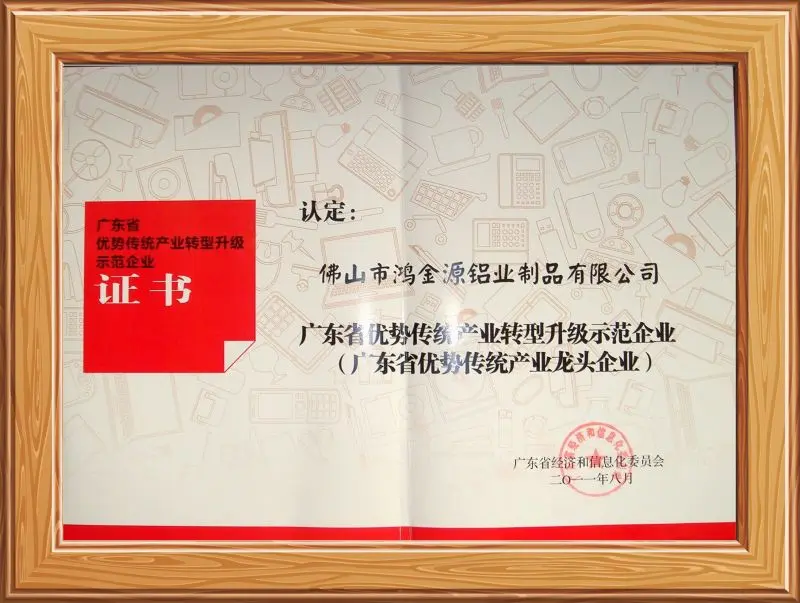
Award 2
Award 3
Award 4

Engineering FAQ & Deep-Dive Technical Answers

Expert insights on alloy properties, custom tooling, surface finishing parameters, and supply chain logistics.

Q1: What is the main difference between 6063-T5 and 6063-T6 alloys for doors and windows?
The difference lies in their heat treatment and cooling pathways. 6063-T5 profiles are cooled rapidly from an elevated temperature shaping process and then artificially aged. 6063-T6 profiles are solution heat-treated and artificially aged. This results in higher tensile strength and yield strength for T6, making it suitable for structural window spans, high wind pressure tolerances, and structural glazing.
Q2: Why are GRS and RCV certifications important for global procurements?
GRS (Global Recycled Standard) and RCV (Recycled Content Verification) prove that the aluminum material contains verified post-consumer or pre-consumer recycled content. This aligns with green building standards (like LEED or BREEAM) and helps international buyers meet ESG compliance goals and Carbon Border Adjustment Mechanisms (CBAM) in markets like Europe.
Q3: How does in-house smelting improve product quality and yield rates?
Smelting in-house allows us to adjust trace elements (like iron, silicon, and magnesium) before extrusion. Controlling chemistry limits impurities, ensuring uniform grain structure, consistent mechanical properties, and high-quality anodizing results free from streaks or color variations.
Q4: What anodizing thicknesses are typical for architectural versus industrial products?
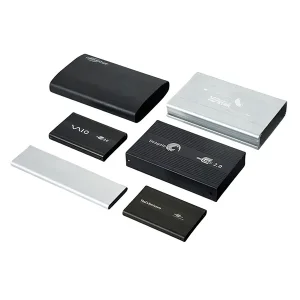
Architectural profiles for exterior doors and windows exposed to weathering typically require 15 to 25 microns (Class I or Class II) of protective coating. Interior components or protected consumer goods (like keyboard frames or shelves) generally use 5 to 12 microns to prioritize aesthetic finish quality.
Q5: Can you provide customized structural engineering for unique glass connectors?
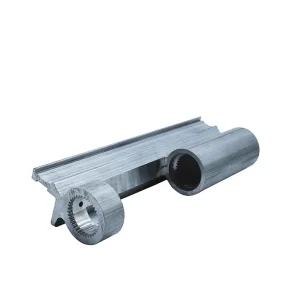
Yes. We design and build tooling to manufacture specialized custom structural brackets, connectors, and hinges. Our engineers analyze mechanical designs using CAD and FEA simulations to ensure components meet safety standards for curtain walls and structural glazing.