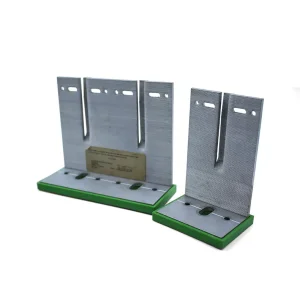
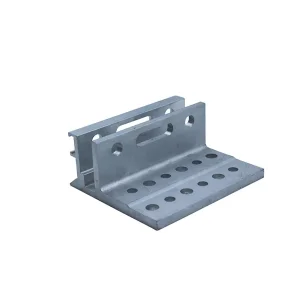
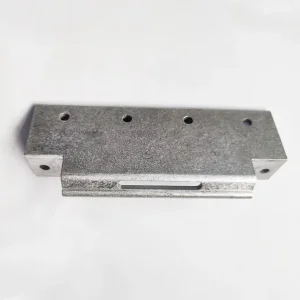
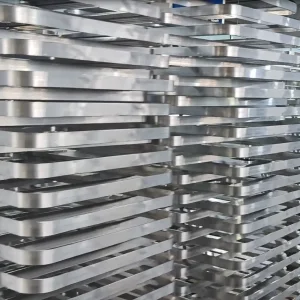
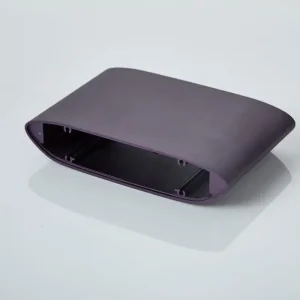
Explore our custom OEM & ODM precision-extruded and CNC machined profiles built to rigorous mechanical and structural tolerances.
Established Year
Production Base
In-House Melting & Casting
Global Green Certified
Leading manufacturer of customized aluminum profiles, structural poles, and complex assemblies for global enterprise supply chains.
Established in 1991, Foshan Golden Source Precision Manufacturing Co., Ltd. has grown to become a cornerstone manufacturer of high-strength, high-precision customized aluminum profiles, structural tubes, poles, and intricately machined components. Spanning an expansive, environmentally state-of-the-art production base of over 73,000 square meters, we deliver true one-stop solutions. Our end-to-end workflow covers raw alloy casting, mold research, development and tooling fabrication, advanced aluminum extrusion, precision multi-axis CNC machining, structural welding, assembly, and architectural-grade surface finishes.
By operating our own in-house smelting and casting facilities, we maintain total control over chemical composition and microstructures. This allows us to satisfy rigorous mechanical demands across industries like modern telecommunications, smart city infrastructure, hardware tools, automotive transport, renewable energy, and commercial furniture.
Custom chemistries in 1XXX, 3XXX, 5XXX, 6XXX, and 7XXX series alloys.
Fully compliant with EU REACH, GRS, RCV, and RoHS environmental directives.
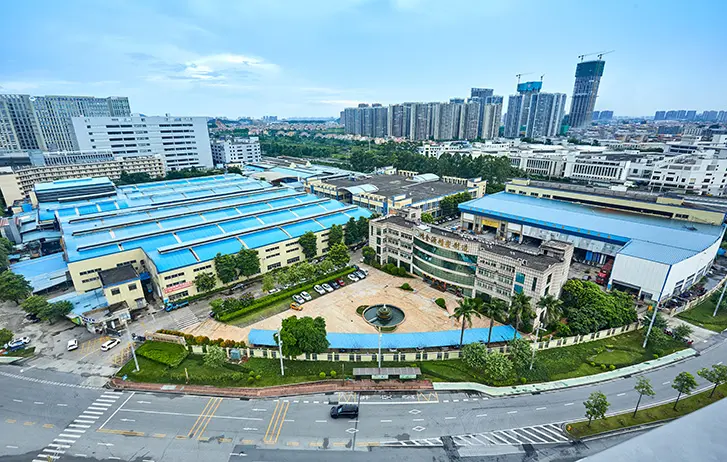
Why structural engineers and procurement heads choose Foshan Golden Source for critical projects.
We adjust alloy elements directly in our furnace. This guarantees unmatched physical properties, optimal grain structures, and exceptional purity required for high-aesthetic anodizing and extreme load-bearing configurations.
By running casting, tooling, extrusion, multi-axis CNC milling, and complex surface finishing under one roof, we eliminate intermediate handling fees, protect part integrity, and lower overall production costs.
Our unified factory layout ensures transitions from CAD drawing approvals to custom profile tooling and extrusion runs occur within accelerated timeframes. We mitigate regional shipping bottlenecks with optimized freight networks.
Leveraging advanced metallurgical properties to engineer systems capable of surviving extreme atmospheric and structural demands.
High-strength 6000-series structural frames and mounting supports provide high torsional resistance. This preserves PV panel integrity under sustained snow and wind loads, while specialized anodizing prevents localized galvanic corrosion.
Modern lighting columns and smart poles must support 5G small cells, cameras, and IoT sensors. Our seamless structural poles offer integrated internal wire management, access ports, and high lateral load capacity.
By shifting from steel to custom structural profiles, rail and commercial fleet builders achieve substantial lightweighting. This improves overall fuel efficiency and load capacities without compromising crash-test safety limits.
Our custom aluminum profiles support expansive glass structures. They balance sharp visual geometries with excellent mechanical performance, handling seismic shifts and expansion cycles smoothly.
Foshan Golden Source operates in strict alignment with worldwide industrial expectations. We hold ISO 9001:2015 (Quality Management), ISO 14001:2015 (Environmental Stewardship), and ISO 45001:2018 (Occupational Health & Safety) certifications.
To address rising environmental requirements in Europe, America, and beyond, we have secured advanced GRS (Global Recycled Standard) and RCV (Recycled Content Verification) designations. This allows us to supply high-reclaimed-content billet configurations, minimizing the Scope 3 carbon footprint for green-building developers.
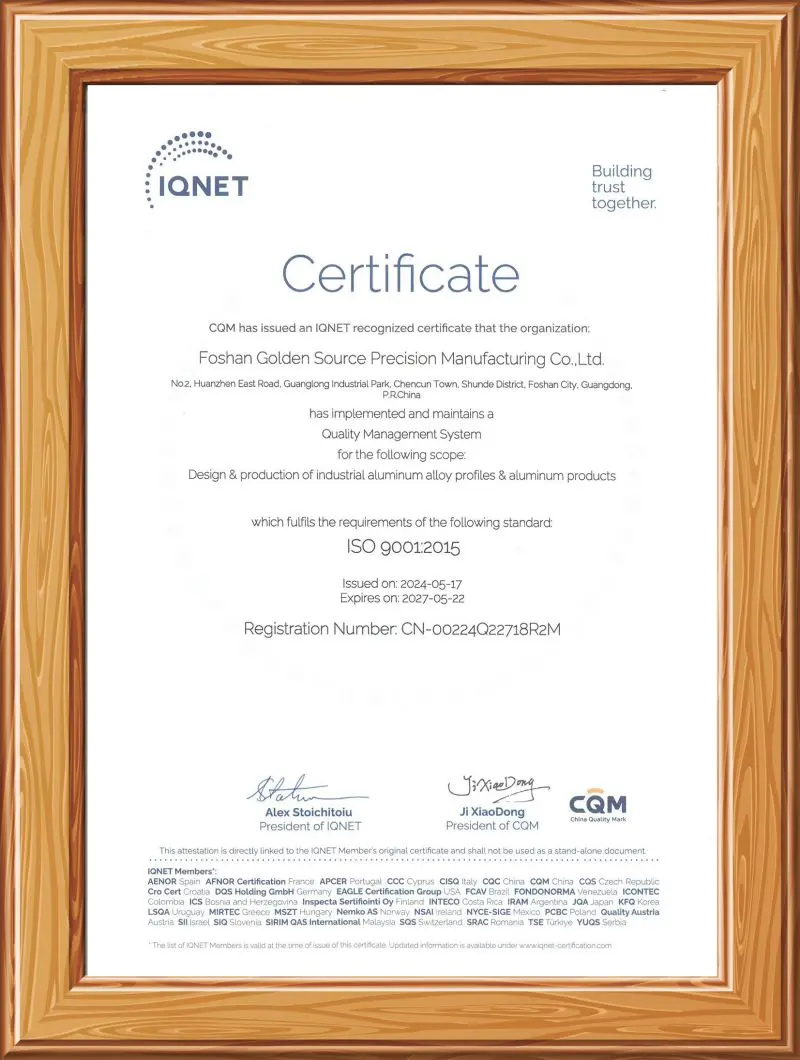
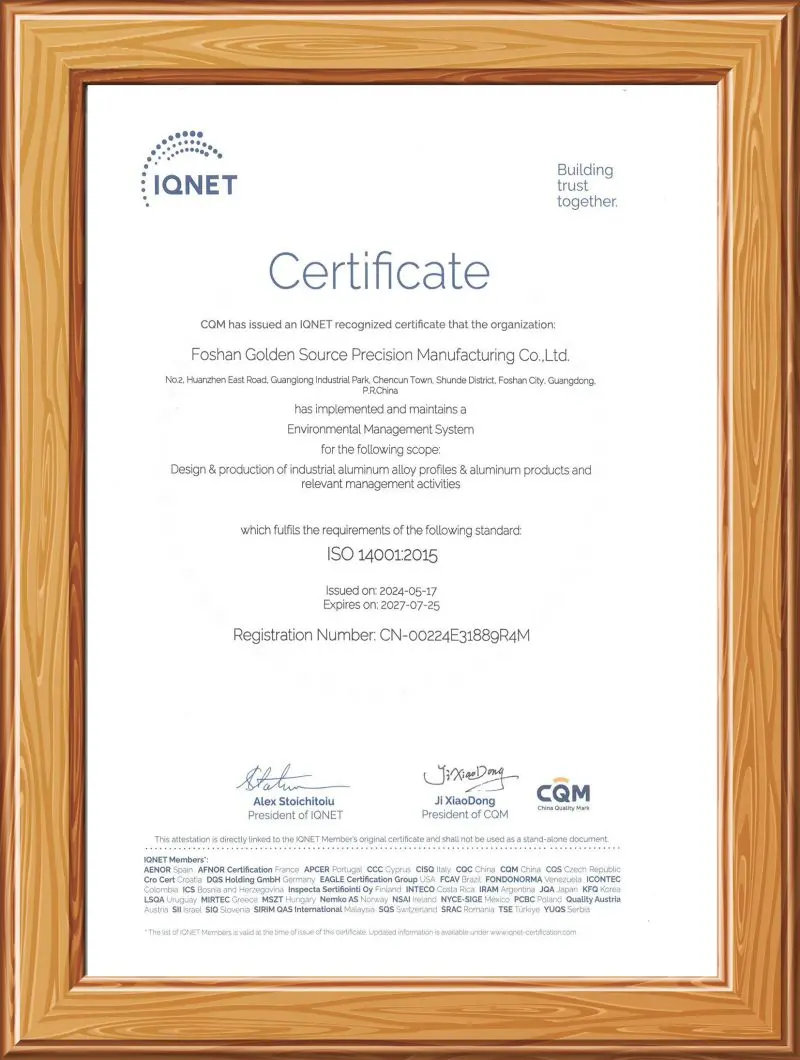
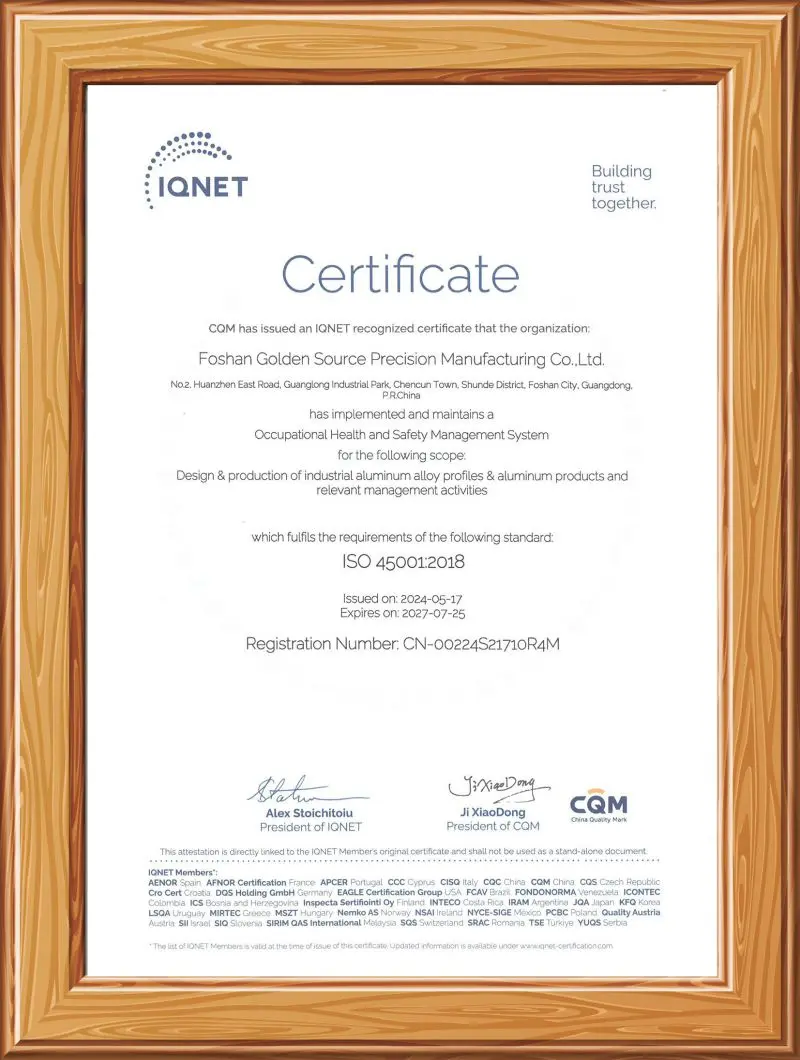
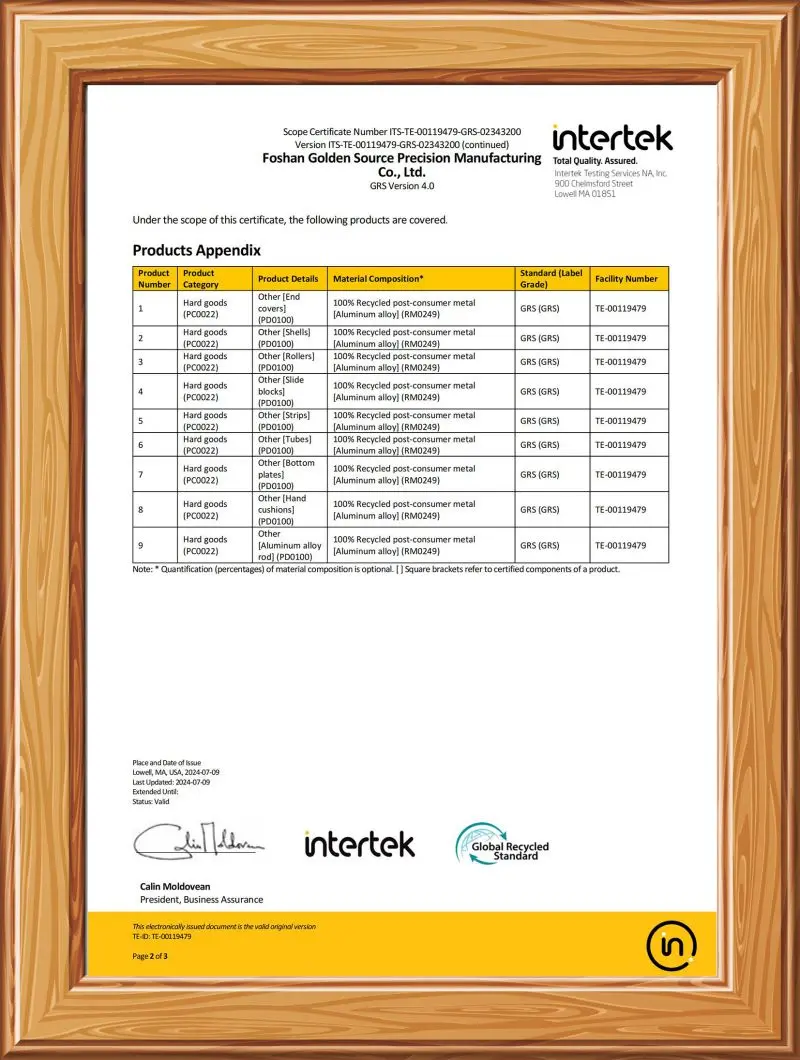
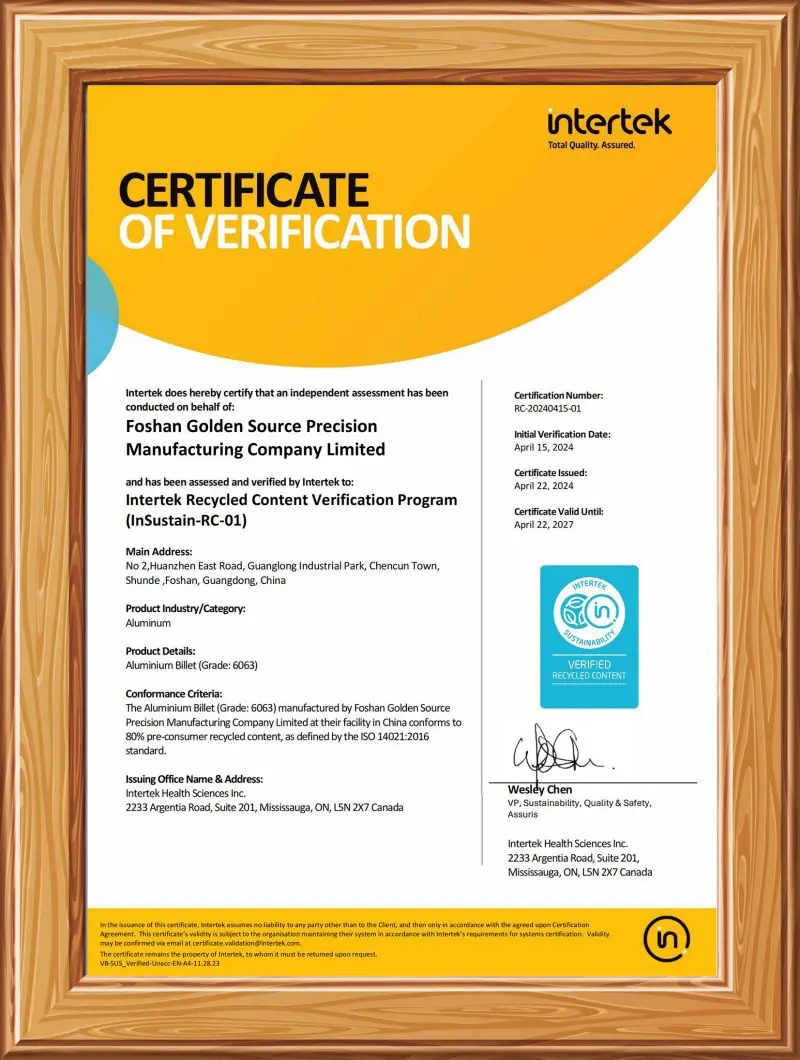
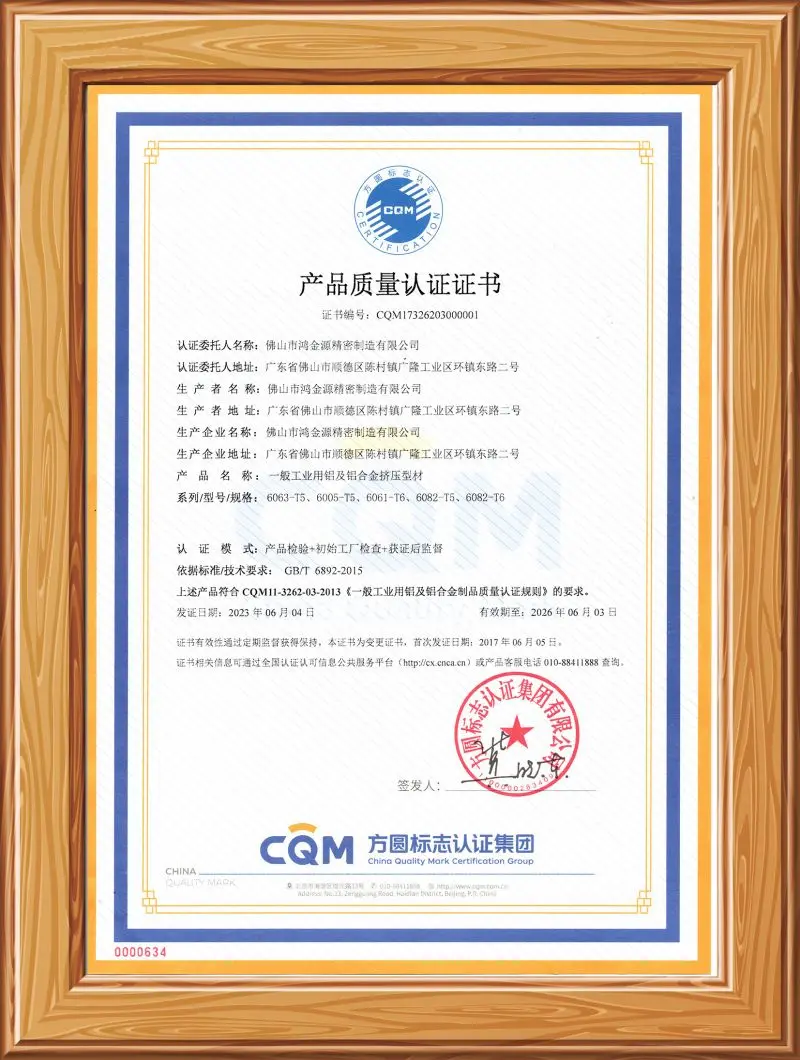
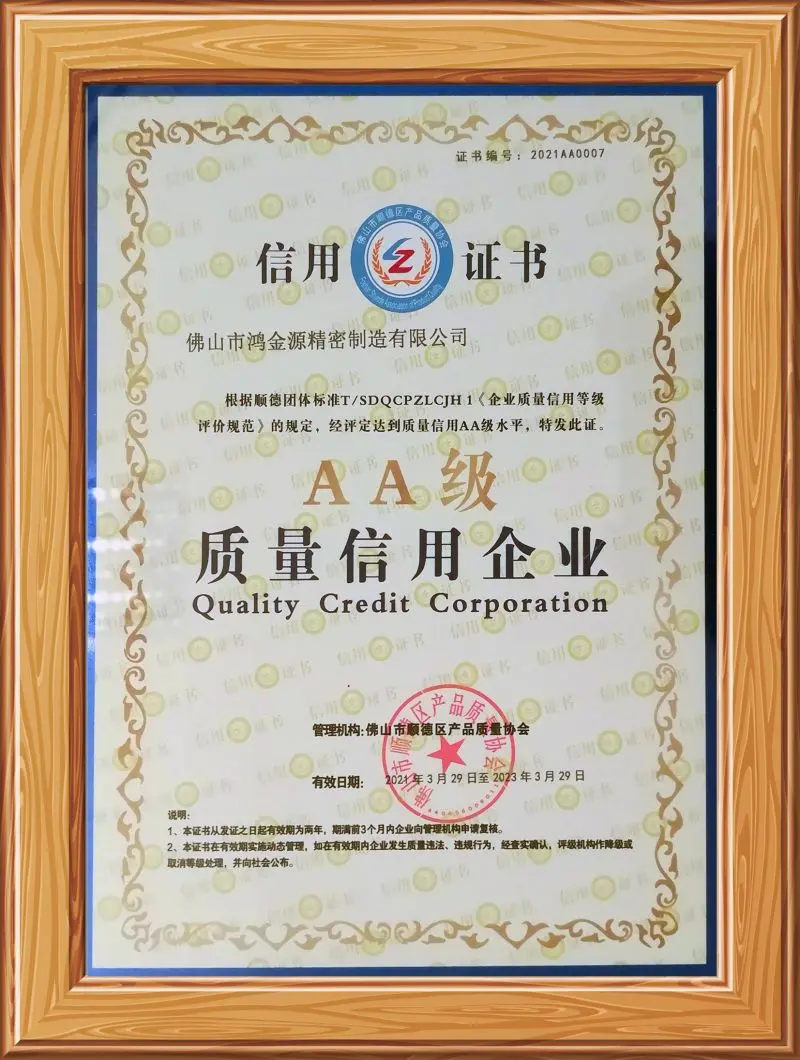
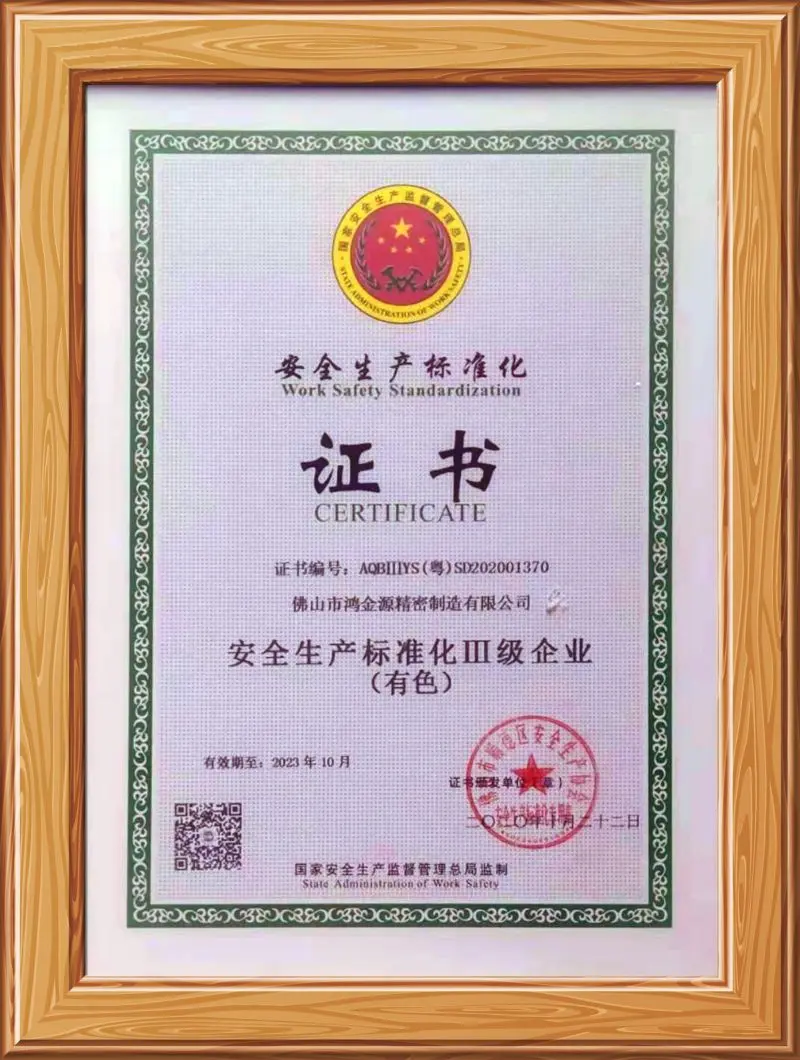
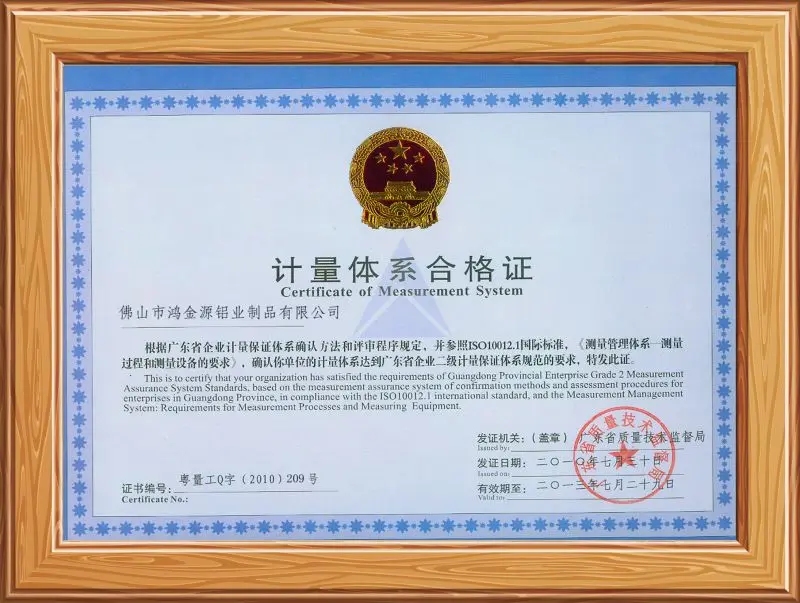
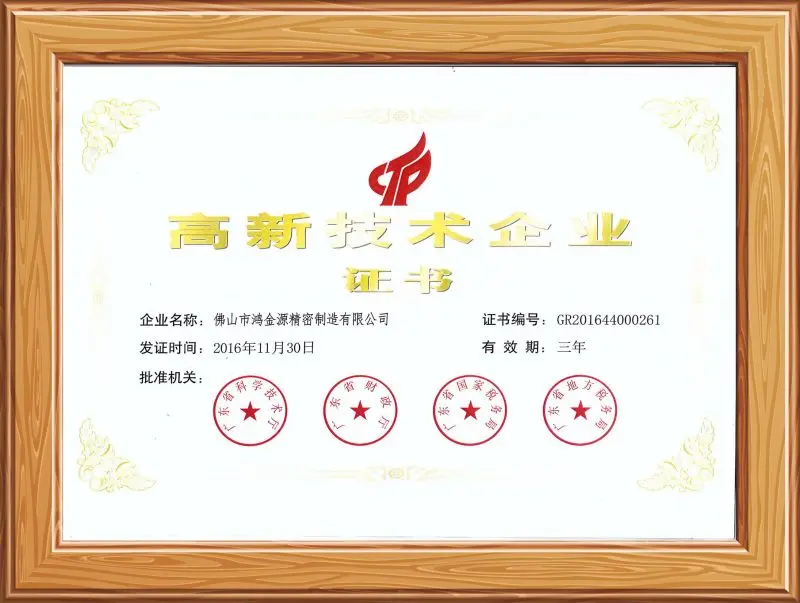
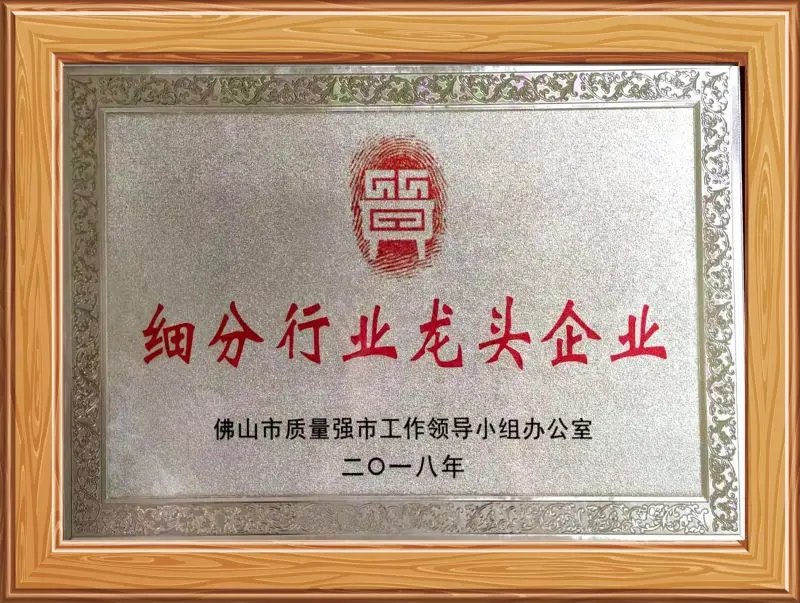
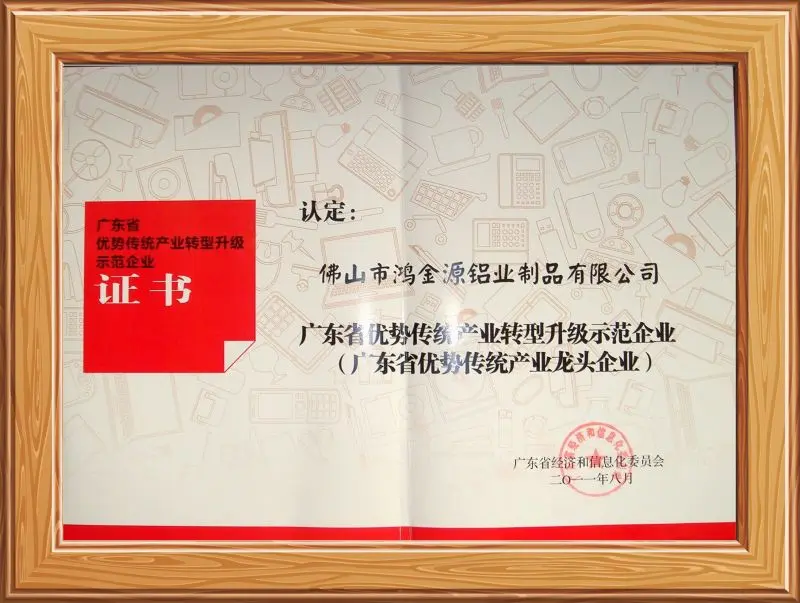
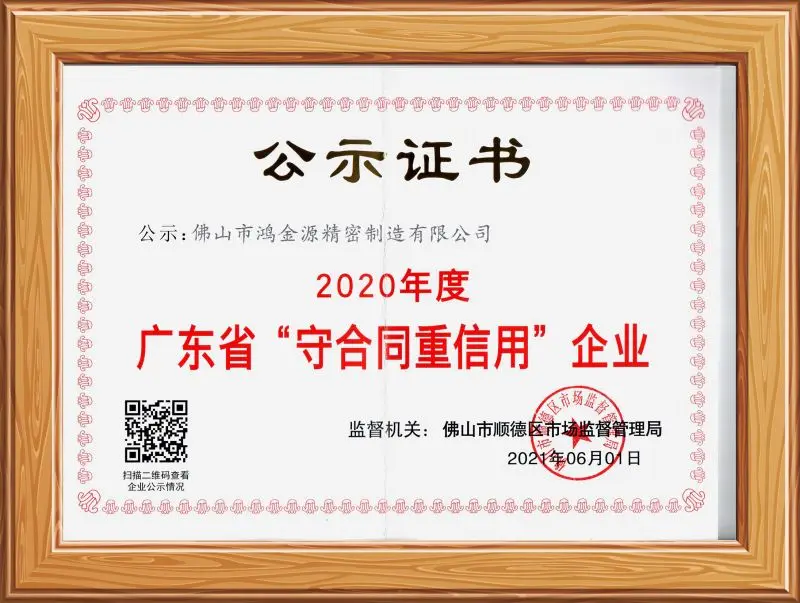
Our commitment to manufacturing efficiency, cleanliness, and quality has earned us numerous municipal, provincial, and national honors.
Understanding the technical journey from raw alloy formulation to finished structural poles.
We adjust alloy elements directly in our furnace. This guarantees unmatched physical properties, optimal grain structures, and exceptional purity required for high-aesthetic anodizing and extreme load-bearing configurations.
Our tooling engineers utilize state-of-the-art CAD/CAM modeling software to design custom extrusion dies. This allows us to extrusion-form profiles with intricate inner chambers, varying wall thicknesses, and strict dimensional tolerances.
Extruded tubes are cut to length, straightness-corrected, and processed through our modern multi-axis CNC milling centers. Operations include precision drilling, punching, slotting, and structural robotic welding.
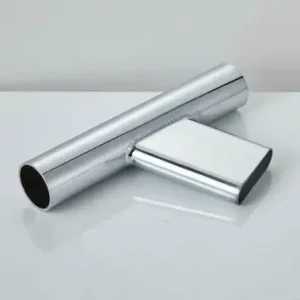
Depending on application needs, poles undergo chemical cleaning, sandblasting, mechanical brushing, bright chrome plating, protective powder coating, or multi-color protective anodizing to maximize wear and weather resistance.
An engineering review of alloy selections, wind-loading principles, and corrosion mitigation techniques.
Specifying the appropriate aluminum alloy requires balancing load-bearing capacity, corrosion resistance, and post-machining workability. For architectural trim, standard light poles, and window frame extrusions, Alloy 6063 (typically tempered to T5 or T6) is favored. It offers a smooth surface finish, excellent anodizing response, and moderate tensile strength.
When structural integrity is paramount (e.g., roof racks, utility poles, or industrial light brackets), Alloy 6061-T6 is the industry standard. It features a yield strength of roughly 276 MPa, which is significantly higher than 6063, making it highly resistant to bending and shearing stresses. For specialty high-stress assemblies, such as climbing apparatuses or defense hardware, Alloy 7075 delivers high yield strengths matching those of structural steels, though it requires specialized tooling and protective finishes to prevent stress-corrosion cracking.
Large outdoor installations must withstand localized wind currents. The maximum deflection ($y$) of a cantilevered pole is determined by its geometry, wall thickness, material elasticity, and wind drag profile:
Where $W$ represents wind force per unit length, $L$ is pole height, $E$ is the Modulus of Elasticity ($69 \text{ GPa}$ for typical aluminum alloys), and $I$ represents the Area Moment of Inertia. By using custom-extruded internal ribbing, designers can increase the Moment of Inertia ($I$) without adding excessive weight, ensuring optimal deflection performance.
Unprotected aluminum can corrode in high-salinity marine environments or chemical processing plants. To prevent pitting and oxide breakdown, we offer three main finishes:
Frequently asked technical questions regarding custom tool development, ordering procedures, and specifications.
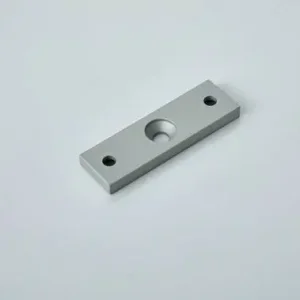
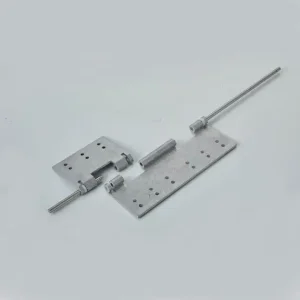
Discover additional high-precision fittings, customized brackets, hinges, and wear-resistant tracks.
 HG Precision