Global Engineering Solutions, Precision Thermal Dynamics, and Advanced Metallurgical Production
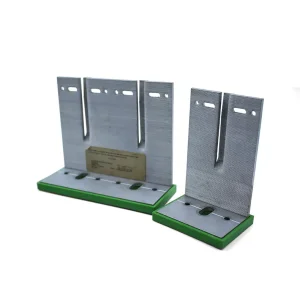
Established in 1991, Foshan Golden Source Precision Manufacturing Co., Ltd. has grown to become a global leader in high-strength, high-precision custom aluminum profiles, precise machining components, welded structural systems, and assembled aluminum products.
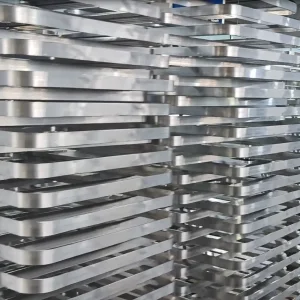
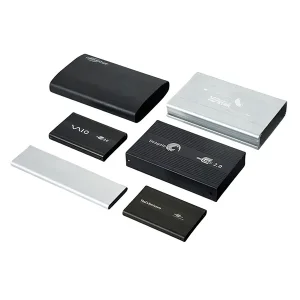
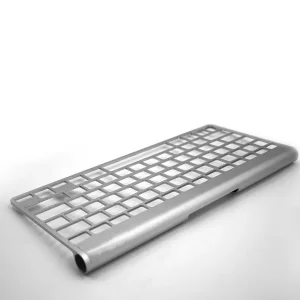
Spanning a modern, environmentally conscious manufacturing facility of over 73,000 square meters, the company offers an integrated, end-to-end "one-stop" production sequence. This includes in-house alloy casting, mold research, design and fabrication, advanced aluminum extrusion, precise multi-axis CNC machining, structural welding, comprehensive surface treatments, and final product assembly.
Our operational systems comply with global benchmarks, holding certifications for ISO9001, ISO14001, and ISO45001. Additionally, our commitment to green manufacturing is backed by RCV and GRS (Global Recycled Standard) certifications, guaranteeing that all processes and materials strictly comply with the stringent environmental protocols of the European Union's REACH regulation. We deliver customized architectural, mechanical, thermal, and electrical aluminum components utilizing an extensive alloy portfolio, ranging from 1XXX, 3XXX, 5XXX, to high-performance 6XXX and 7XXX series alloys.
Download Corporate Catalogue
In modern power electronics, efficient thermal management is no longer just a structural requirement; it is a critical driver of system reliability and operational lifespan. Industrial buyers across North America, Europe, and the Asia-Pacific region are shifting away from off-the-shelf cooling components. Instead, they are prioritizing custom-engineered aluminum profile heatsinks designed for specific thermodynamic conditions.
This shift is driven by the rapid growth of high-output applications. High-power telecommunication nodes (including 5G remote radio heads and optical transceivers), electric vehicle (EV) traction inverters, solar photovoltaic central inverters, and high-density computing servers produce massive heat fluxes. As silicon-carbide (SiC) and gallium-nitride (GaN) semiconductors shrink packaging sizes while increasing power density, thermal components must deliver lower thermal resistance ($R_{th}$) and higher surface area efficiency. Specialized custom extrusions allow engineers to optimize fin geometry, draft angles, and baseplate thickness. This optimization minimizes thermal boundaries while ensuring the structural integrity of the entire chassis.
To address diverse industrial requirements, custom aluminum heatsinks must be designed alongside the system's aerodynamics and electronics:
Developing an optimized custom thermal solution requires precise control over raw materials and manufacturing processes:
Alloy Chemical Customization: While standard 6063 alloys are popular for their excellent extrudability and thermal conductivity (~200 W/m·K), applications requiring structural load-bearing capacity often use 6061 or 7075 alloys. At Foshan Golden Source, we melt and cast our billets in-house. This allows us to adjust trace elements (such as iron, silicon, and magnesium) to optimize mechanical strength, maximize thermal conductivity, and prevent structural cracking during high-temperature extrusion.
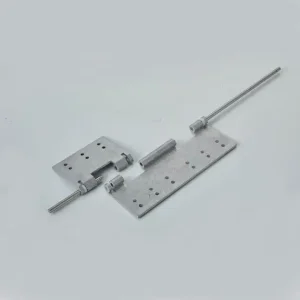
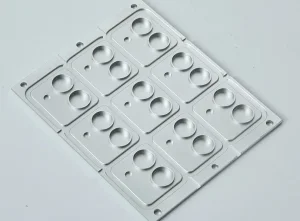
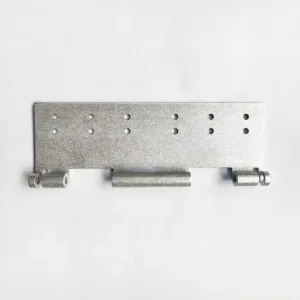
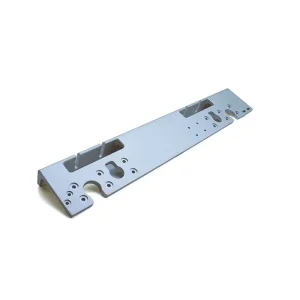
Precision CNC Fabrication: Extrusion creates the profile, but precision CNC machining turns it into an engineered component. Our multi-axis CNC machines handle complex tasks, including milling baseplate flatness to tolerances under 0.02mm, drilling mounting patterns, and tapping threads. Minimizing surface roughness ($Ra$) at the interface between the semiconductor and the heatsink baseplate is critical for lowering contact resistance.
Advanced Surface Finishing: Anodization does more than prevent corrosion; it enhances surface emissivity. Matte black and natural clear anodizing increase radiative heat transfer, while specialized powder coatings provide high dielectric strength (electrical insulation) for sensitive electronics.
The future of thermal design focuses on lightweight structures and high efficiency. Emerging technologies combine aluminum extrusions with embedded vapor chambers, copper heat pipes, or phase-change materials (PCMs) to handle high localized heat loads. Additionally, sustainable manufacturing is becoming a priority. By utilizing GRS-certified recycled aluminum, we help global OEMs reduce the carbon footprint of their products. This supports sustainable procurement without compromising the purity, thermal capacity, or mechanical performance of the alloy.
We cast our alloys in-house, adjusting trace elements to optimize thermal conductivity, structural integrity, and anodizing performance.
Extrusion, CNC machining, welding, and surface treatment are handled entirely in-house. This ensures strict quality control and cost efficiency.
Our integrated production sequence shortens lead times, moving projects quickly from initial tooling design to final container dispatch.
Our production processes comply with global environmental, safety, and quality standards, including ISO9001, ISO14001, ISO45001, GRS, and RCV certifications. These credentials verify our compliance with EU REACH regulations and highlight our commitment to sustainable, low-carbon manufacturing.


 HG Precision