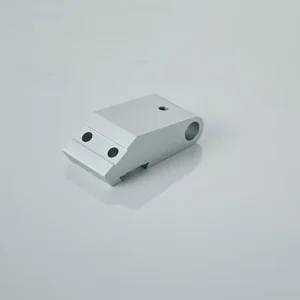
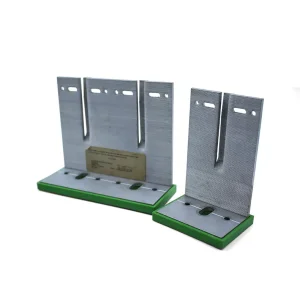
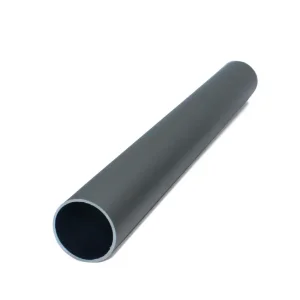
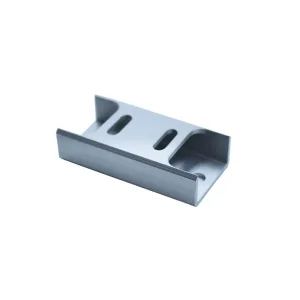
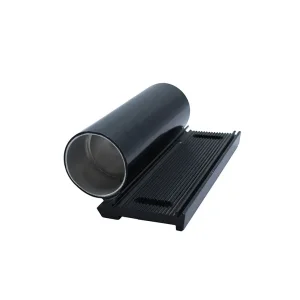
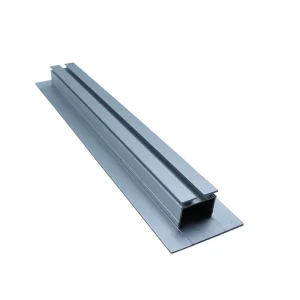
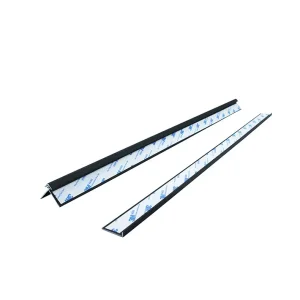
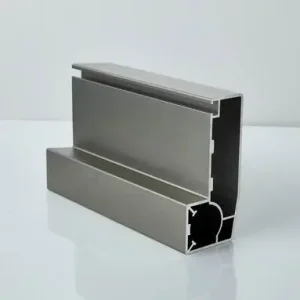
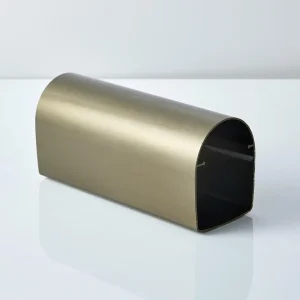
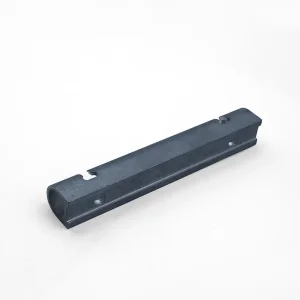
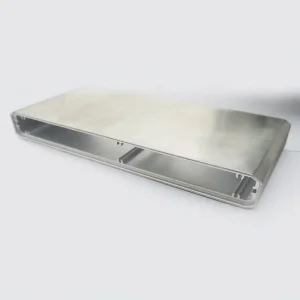
Explore our engineering capabilities through some of our flagship components, featuring customized surface treatments and high-strength alloys.
Analyzing industrial trends, material transitions, and supply chain strategies for modern manufacturing.
Advanced industries (EVs, 5G base stations, aerospace components) require materials that balance thermal dissipation, lightness, and structural integrity. Aluminum remains the premium engineering choice.
As components become more compact, the demand for CNC tolerances down to ±0.01mm has shifted from niche to baseline. Achieving this consistently requires sophisticated thermo-regulated machinery and stable extrusion properties.
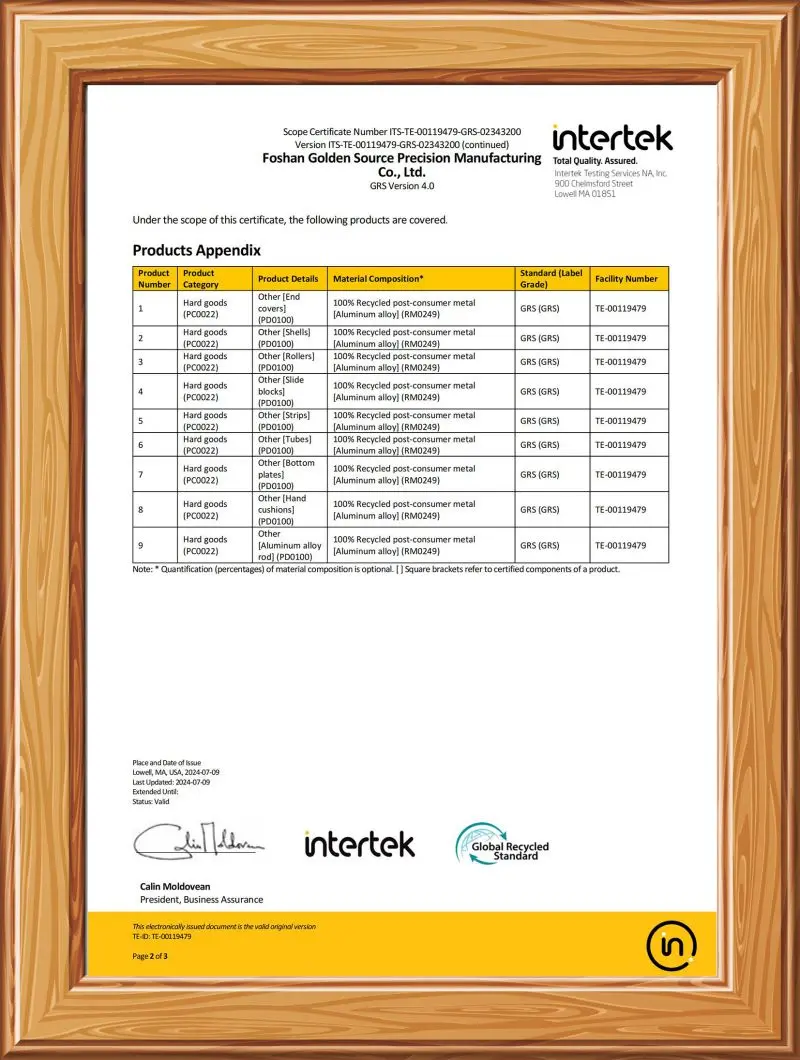
EU and North American regulatory environments demand proof of ethical, circular-economy compliance. Certifications like the Global Recycled Standard (GRS) are now a required credential for strategic global sourcing partners.
The global demand for custom aluminum parts continues to experience strong growth. Sectors like EV battery enclosures, structural frames, telecommunications cooling assemblies, and precision medical instruments rely on high-precision custom aluminum machining. In today's market, success is determined not just by raw machining capabilities, but by vertical capability integration: custom alloy compounding, structural tool design, rapid extrusion, sub-micron secondary machining, and robust surface protection.
Why domestic industry hubs remain the standard for high-volume, precision-critical custom aluminum parts.
Foshan, China serves as a leading global cluster for aluminum processing. The localized supply chain ecosystem brings together deep expertise in die tooling, chemical surface finishing, and metallurgy. When partnering with a domestic manufacturer like Foshan Golden Source Precision Manufacturing Co., Ltd., global purchasing departments realize key logistical advantages:
By executing casting, extrusion tool engineering, precision CNC milling/turning, surface treating, and compliance testing under a single roof, we eliminate intermediate transport times and third-party markup fees, passing the savings to our clients.
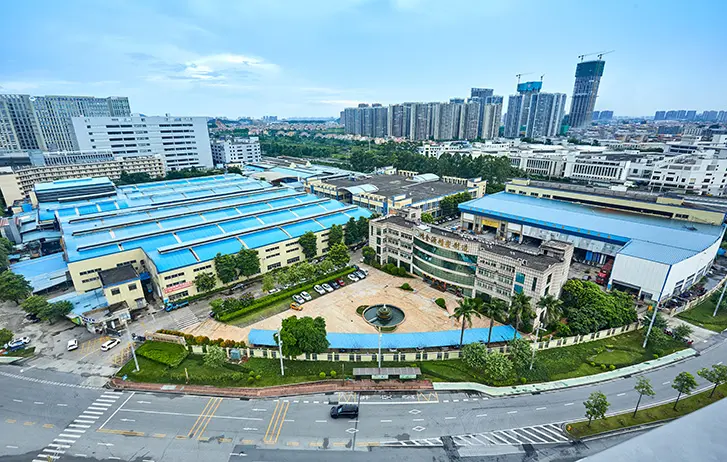
Operating a modernized, eco-conscious base of over 73,000 square meters allows us to easily pivot from micro-lot industrial prototyping to large-scale, high-volume production runs without compromising dimensional quality.
Our localized engineers provide early-stage Design for Manufacturability (DFM) support, suggesting minor profile modifications that simplify tool building, prevent weld line visibility, and optimize material yield.
Precision Engineering, Quality Certification, and Industrial Expertise Established in 1991.
Foshan Golden Source Precision Manufacturing Co., Ltd., established in 1991, is a professional manufacturer of high-strength, high-precision, customized aluminum profiles and precise machining aluminum parts, welded parts, and assembled aluminum products. With a modern and environmentally friendly production base covering an area of over 73,000 square meters, the company offers a complete one-stop service, including alloy casting, mold research & design & building, aluminum extruding, precise machining, welding, assembly, and surface treatment.
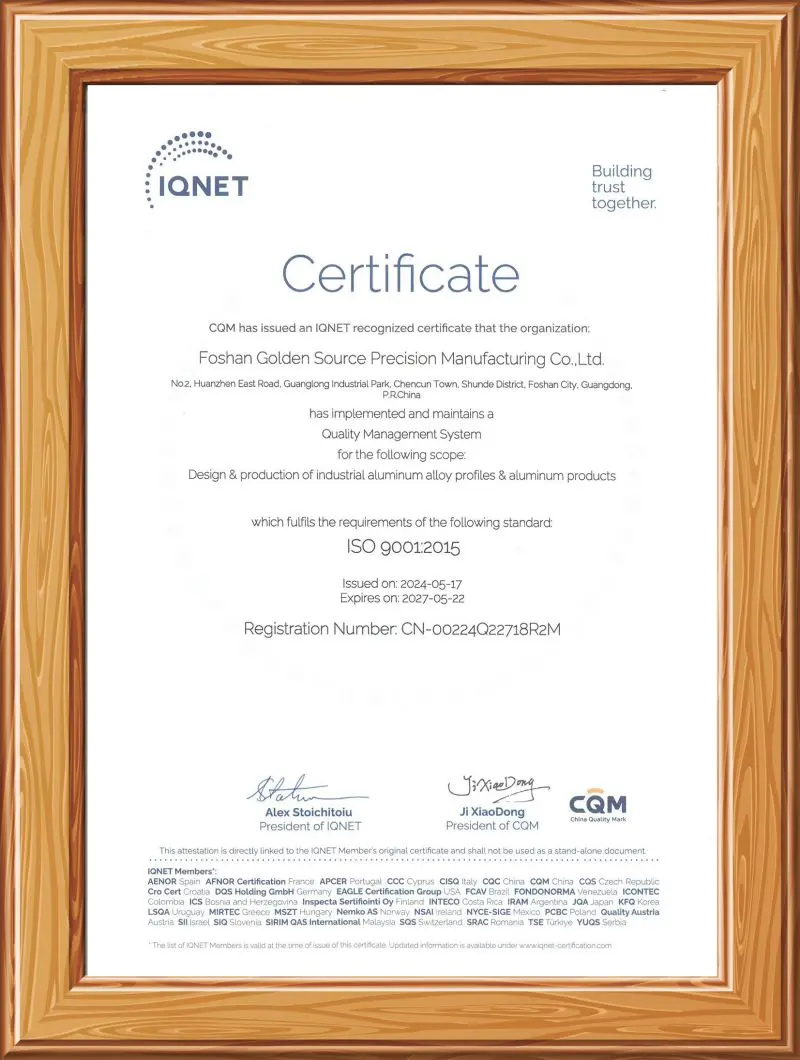
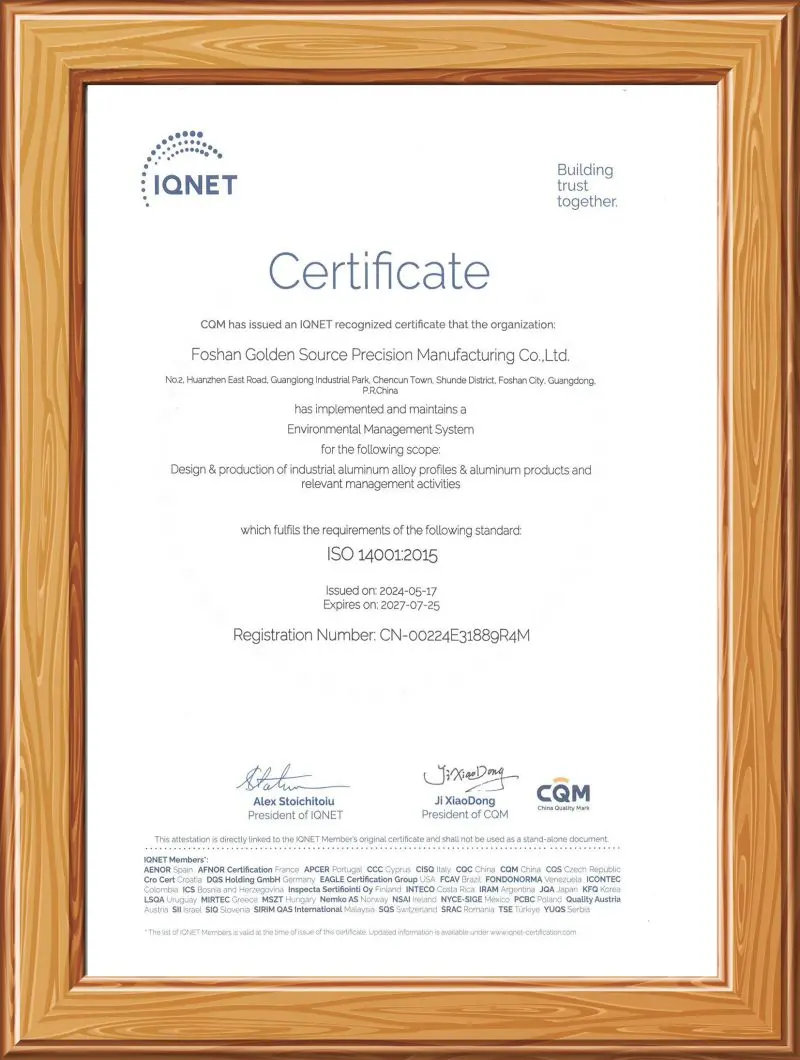
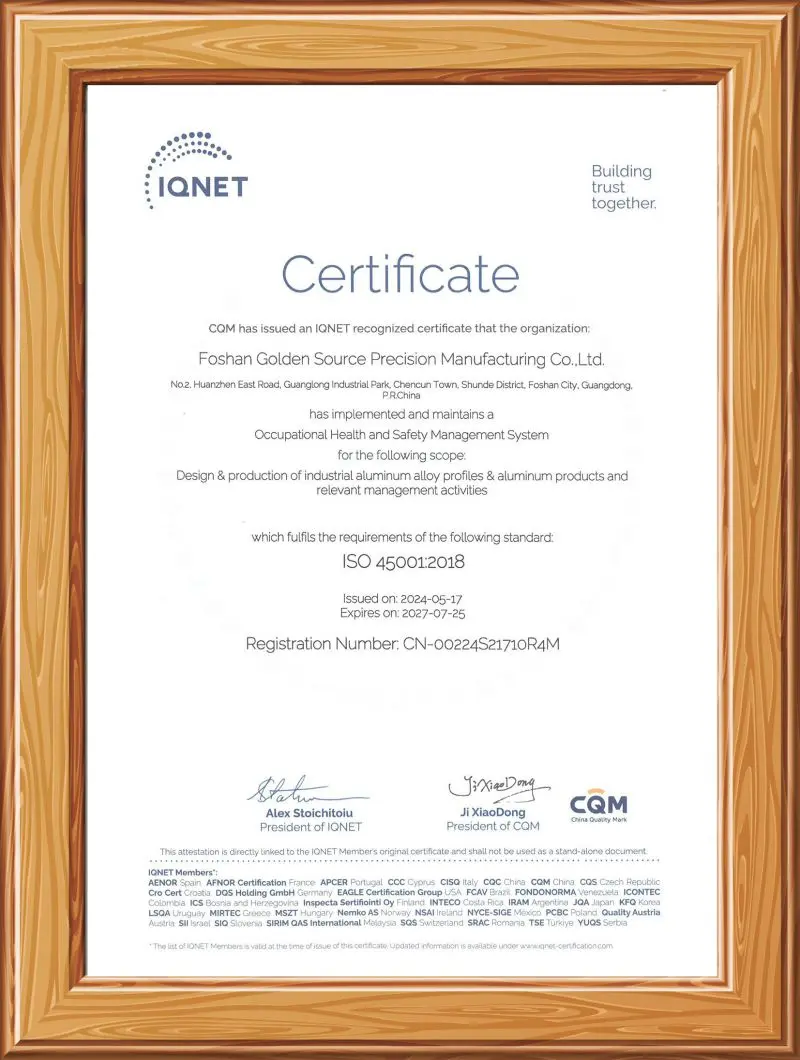
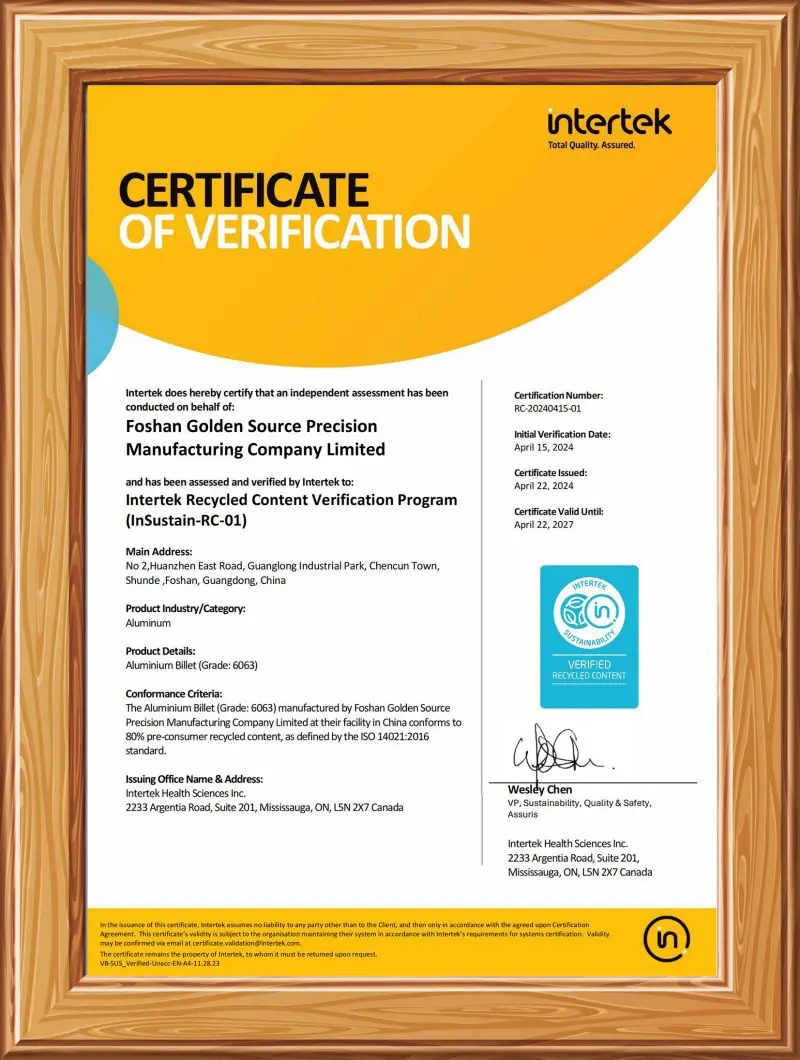
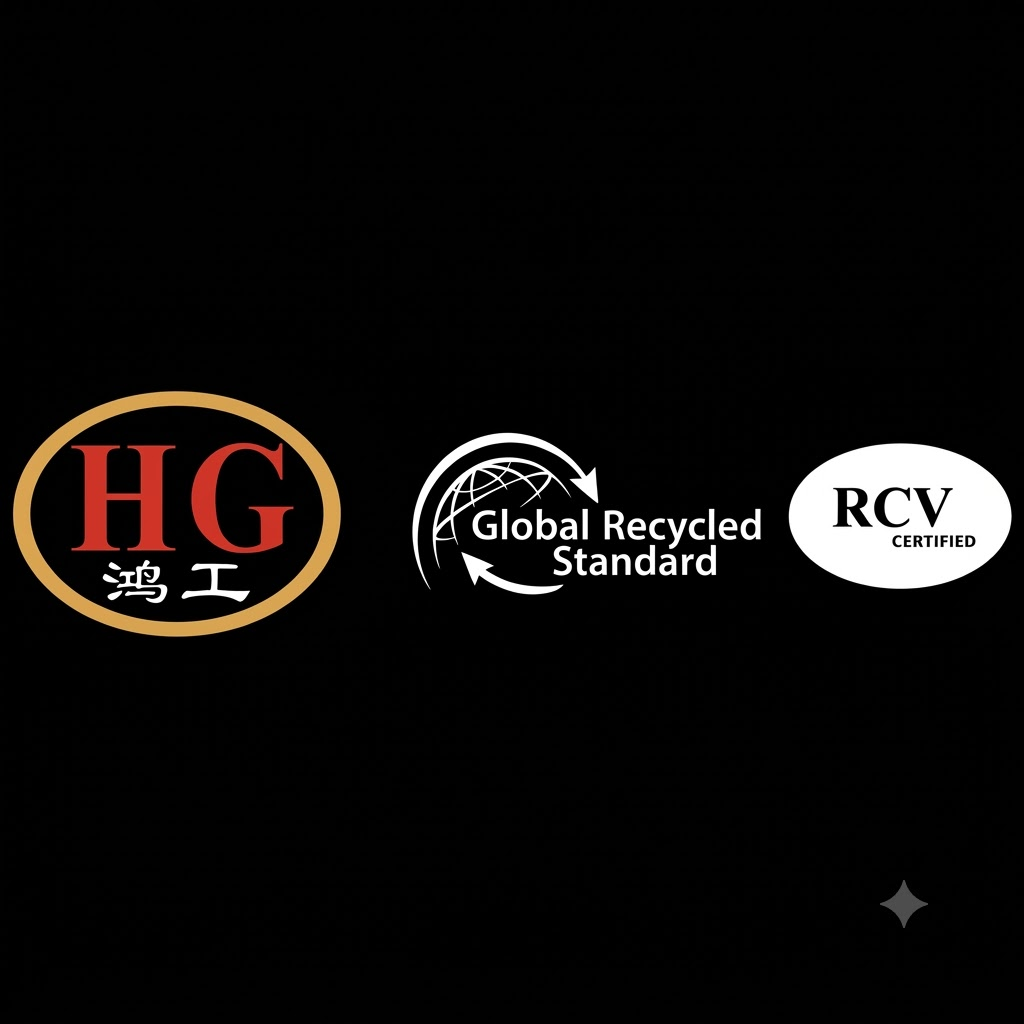
We hold certifications such as ISO9001, ISO14001, ISO45001, RCV, and GRS, ensuring that all products comply with the environmental requirements of the EU’s REACH regulation. A wide range of aluminum alloy series are available, including: 1XXX, 3XXX, 5XXX, 6XXX, and 7XXX alloys. This diversity allows us to meet different demands across various industries and fields, including hardware tools, 3C products, automobiles, railways, furniture, decoration, and outdoor products.
Delivering quality through in-house control, custom alloy formulation, and integrated processing.
We melt the alloy in-house, allowing us to adjust the chemical compositions to achieve the best physical properties of extrusion profiles. This guarantees the purity of the alloy, which is essential for high-quality anodizing results and precise grain structure control.
Machining and surface treatment are done in-house. This enables better quality control and lowers production costs, allowing us to offer highly competitive unit pricing. Even at equivalent market prices, our internal oversight yields superior surface uniformity and tighter tolerance hold.
Our true "one-stop" manufacturing capacity eliminates coordination and transport delays between extrusion plants, CNC machine shops, and finishing lines. This integrated workflow results in significantly shorter lead times for our global clients.
Ensuring absolute compliance with international quality, environmental, and occupational safety standards.
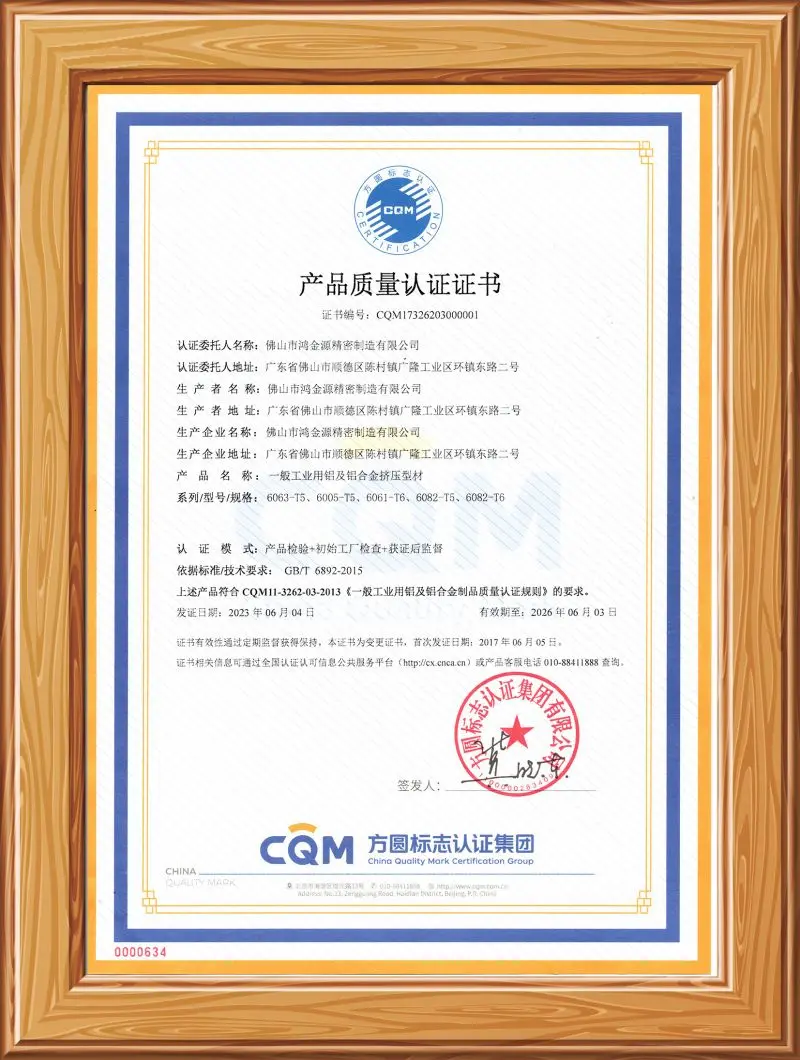
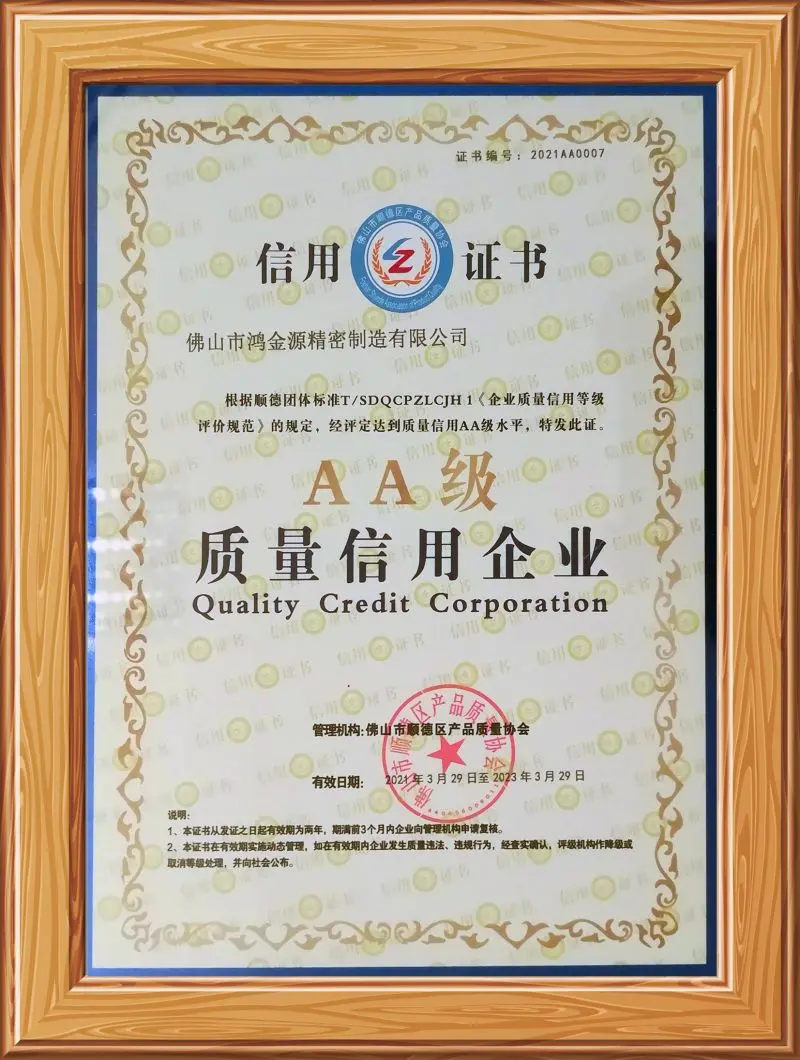
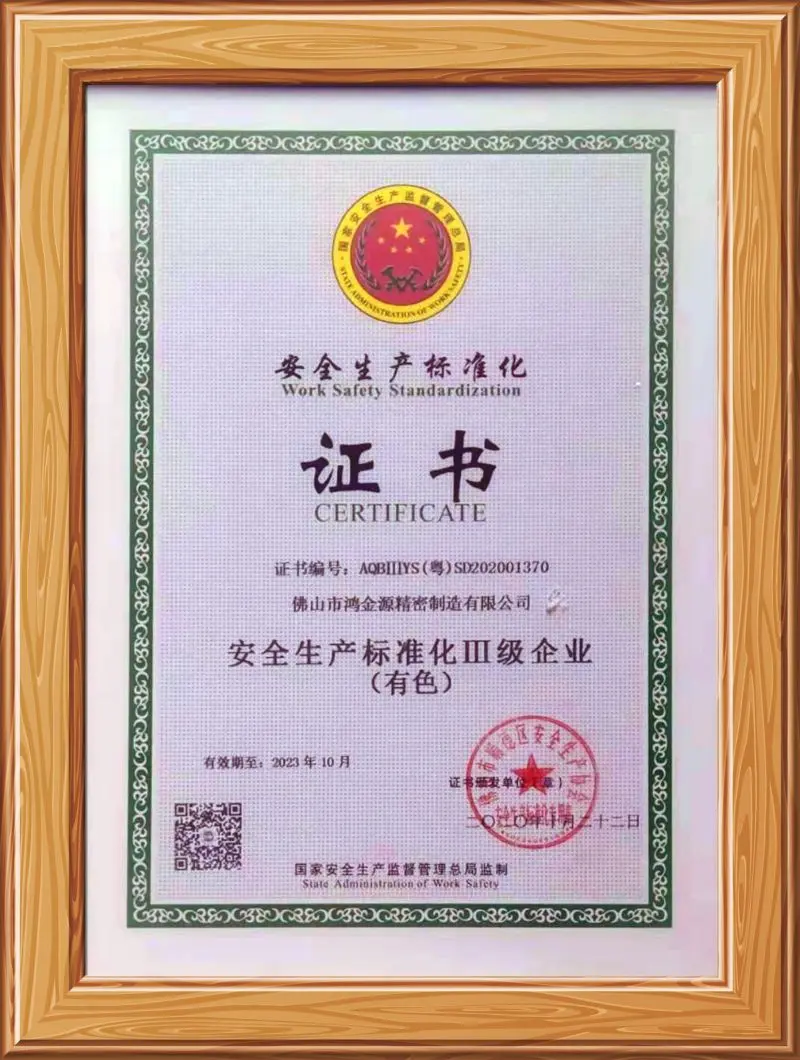
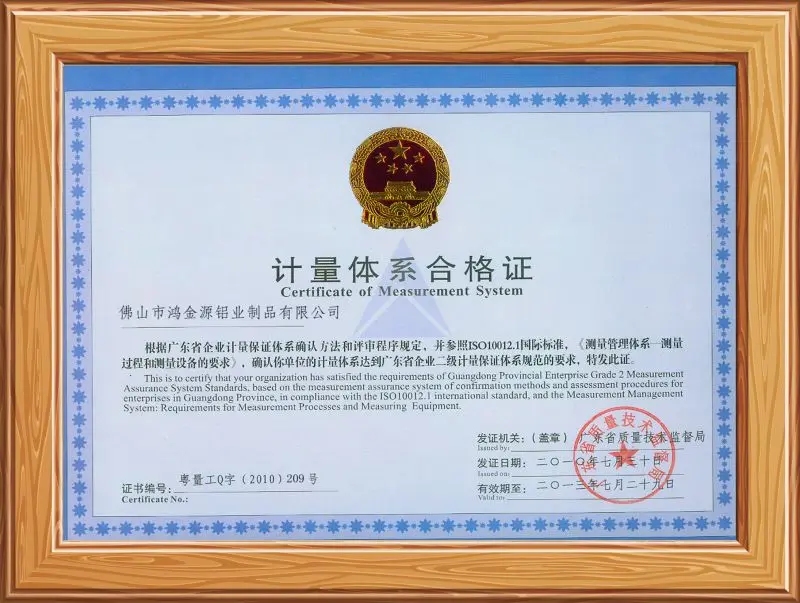
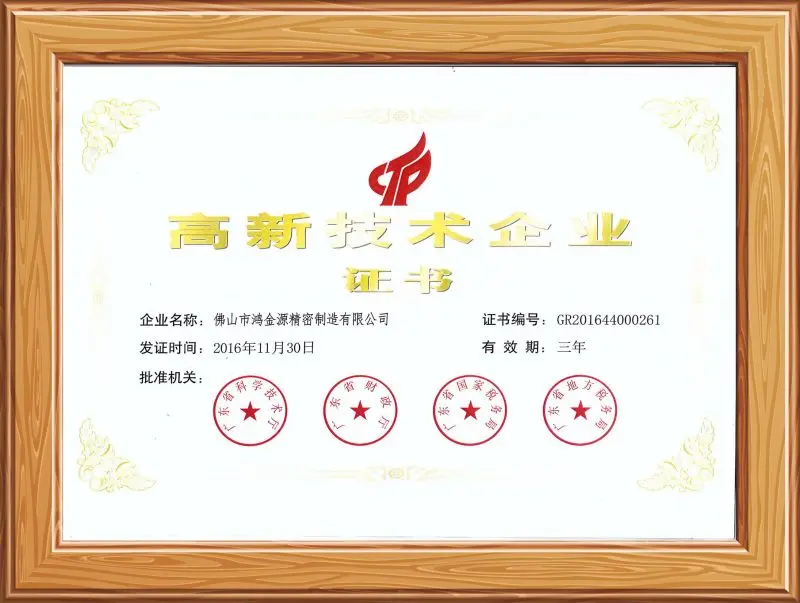
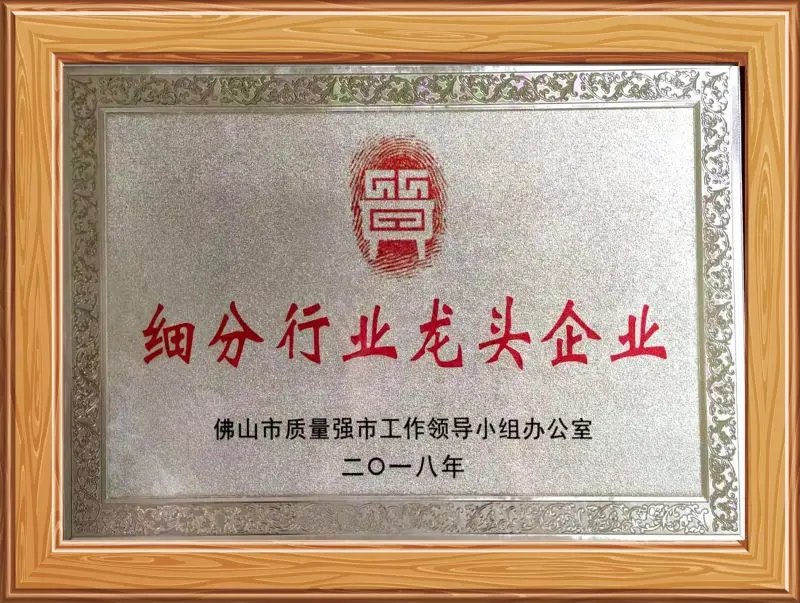
Our facility is certified under ISO9001, ISO14001, ISO45001, GRS, and RCV. Notably, GRS (Global Recycled Standard) and RCV are very new certifications designed to meet the strict environmental regulations of the EU. Additionally, we have received numerous awards and honors from municipal, provincial, and central government organizations for clean production, solid credit ratings, industry upgrading, and technology leadership. Below is a selection of our primary credentials:
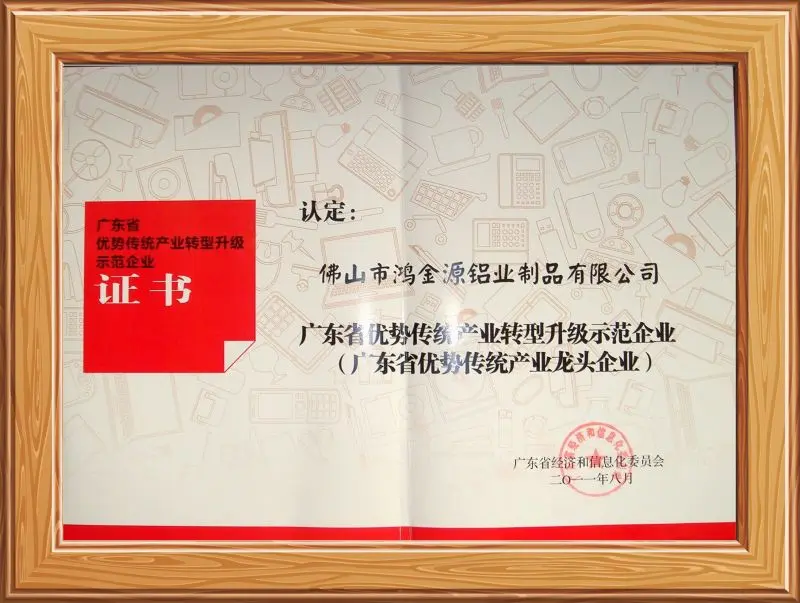
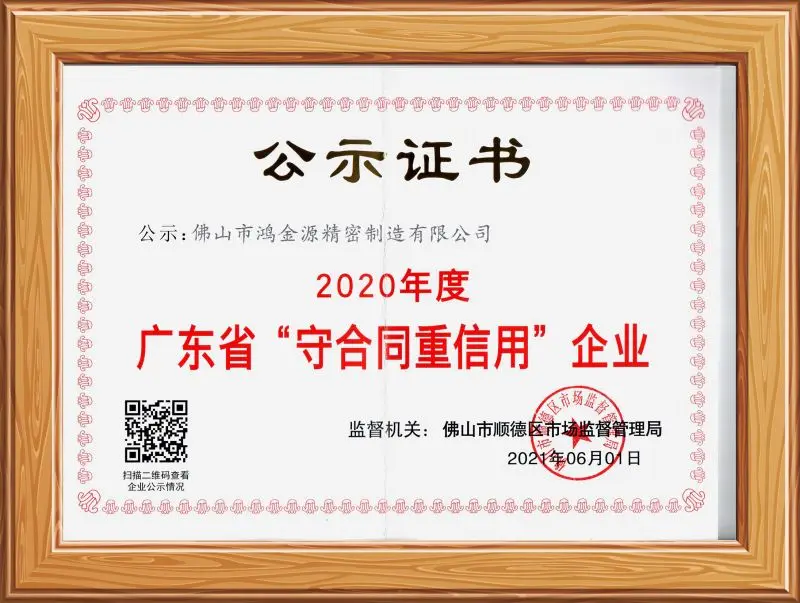
Matching chemical composition with mechanical demands to ensure structural stability.
Choosing the correct aluminum grade depends on mechanical stress, corrosion environment, and post-machining aesthetics. Here is a technical breakdown of the alloys we process in-house:
Composed of 99.0% minimum aluminum. Excellent electrical conductivity, high corrosion resistance, and high workability. Frequently selected for electrical terminals and busbars.
Alloyed with manganese. Non-heat-treatable alloy that offers moderate strength and excellent formability. Commonly used for structural sheet metal and custom storage components.
Alloyed with magnesium. Possesses excellent structural weldability and high resistance to marine corrosion. Excellent choice for demanding structural components and marine mounts.
Alloyed with silicon and magnesium (e.g., 6063, 6061). Features excellent extrudability, high strength post-tempering (T5, T6), and highly responsive surface characteristics for sandblasting and color anodizing.
For architectural and high-finish electronics housings, we utilize specialized 6063-T5/T6 and 6061-T6 alloys. Managing the quenching rate during extrusion combined with natural and artificial aging cycles ensures that our profiles reach optimal tensile strength and yield metrics without structural warping during CNC operations.
Get answers to common technical, commercial, and quality questions concerning custom aluminum machining.
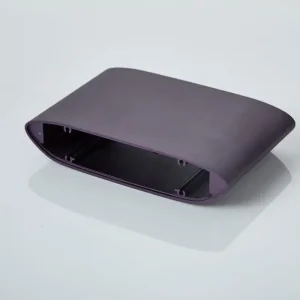
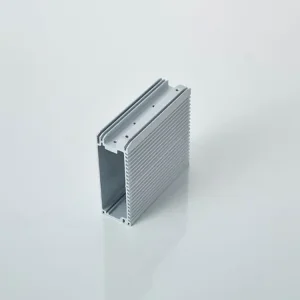
Select industrial products designed for thermal dissipation, structural applications, and architectural installations.
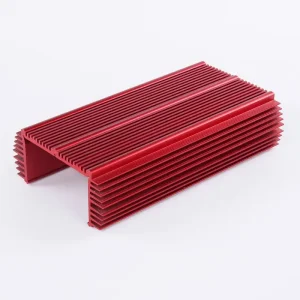
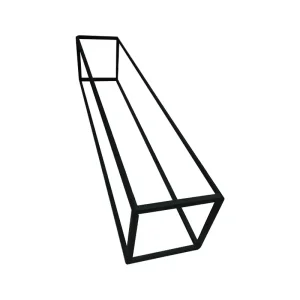
 HG Precision