In modern industrial manufacturing, the demand for lightweight, high-strength structural elements has made customized aluminum profiles indispensable. However, transitioning from raw extruded metal to a functional, aesthetically superior component requires a deep understanding of metallurgy, mechanical processing, and advanced surface treatments. Anodization—the process of electrochemically generating a controlled, durable aluminum oxide film on the metal's surface—demands exceptional purity control during the initial billet melting phase. Sub-standard casting chemistry inevitably results in visual discoloration, structural weaknesses, and localized breakdown of the anodic film under mechanical stress.
As a leading OEM Anodized Aluminum Profile Manufacturer, Foshan Golden Source Precision Manufacturing maintains complete, vertically integrated production control. Our operations encompass in-house custom alloy melting, precision mold design and fabrication, multi-tonnage extrusion, state-of-the-art CNC machining, structural welding, and certified finishing. This unified process minimizes logistical handling damage, reduces mechanical micro-scratches on profiles before anodizing, and provides global industrial buyers with unmatched cost-efficiency and technical reliability.
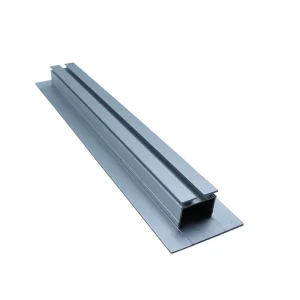
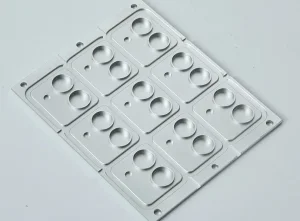
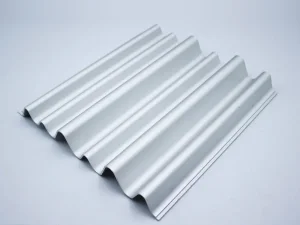
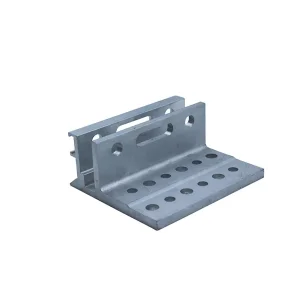
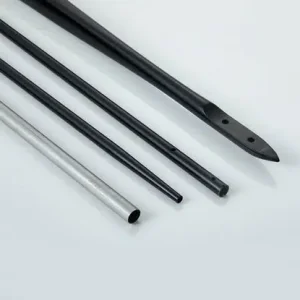
Anodized aluminum profiles are no longer restricted to simple windows and basic architectural trims. In the consumer electronics (3C) sector, modern smartphones, tablet frames, and mechanical keyboards require ultra-thin, dense, and scratch-resistant finishes. These require precise electrolytic controls to maintain clean color consistency and prevent surface smudges.
Furthermore, the rise of the Electric Vehicle (EV) industry has driven a massive demand for structural profiles that combine lightweight properties with excellent corrosion resistance. Anodized battery enclosures and mounting brackets protect sensitive electronic arrays from moisture, mechanical vibration, and road salts.
In outdoor and marine environments, raw aluminum naturally oxidizes, but this atmospheric layer is thin, uneven, and easily worn away. Industrial-scale sulfuric acid anodizing (MIL-A-8625 Type II) forms an engineered oxide layer ranging from 10 to 25 microns thick. This layer integrates with the underlying metal, preventing chipping, peeling, or flaking under heavy weather conditions.
For critical applications such as curtain walls, marine ladders, and solar mounts, anodizing acts as an effective shield against galvanic corrosion. It also provides excellent UV stability, ensuring color fastness and structural integrity over decades of service.
Foshan is the premier global hub for aluminum extrusion manufacturing. The concentration of raw metal smelting, die tooling engineers, machining operations, and chemical treatment plants creates a robust cluster effect. For international procurement managers, sourcing profiles from a fragmented supply chain presents a significant risk: profiles extruded at one facility must be shipped to another for CNC milling, and then to a third facility for anodization. Each transit phase introduces the risk of micro-scratches, atmospheric corrosion, and denting, which often only become visible after anodization.
Foshan Golden Source operates a modern, centralized 73,000-square-meter facility. By handling alloy casting, extrusion, precise CNC machining, welding, and anodizing in-house, we eliminate the logistics-induced handling risks of subcontracting.
Machining prior to surface treatment allows the anodized layer to seal all freshly cut edges and internal threads, ensuring complete corrosion protection. This approach delivers lower unit costs, consistent coloring, and reliable dimensional tolerance control.
Meeting strict environmental standards is essential for modern global trade. Our facilities operate in compliance with ISO 9001, ISO 14001, and ISO 45001 management systems, alongside newer, specialized certifications.
We hold both GRS (Global Recycled Standard) and RCV (Recycled Content Verification) certifications. These confirm that our manufacturing processes use verified recycled aluminum and comply fully with EU REACH regulations and RoHS directives.
The visual and structural success of an anodized profile begins with chemistry control. Small variances in elements like iron, silicon, copper, or manganese can alter the thickness, clarity, and color response of the oxide layer. For example, excessive iron content can cause gray, dull spots on clear anodized profiles. Below is a breakdown of the primary alloys processed in our casting facility:
| Alloy Series | Key Alloying Elements | Anodizing Film Quality | Corrosion Resistance | Primary Industrial Applications |
|---|---|---|---|---|
| 1XXX Series (e.g. 1060) | Al ≥ 99.0% | Excellent clarity | Very High | Electrical conductors, chemical equipment components |
| 3XXX Series (e.g. 3003) | Manganese (Mn) | Slightly yellowish coating | High | Heat exchangers, fluid piping, structural plates |
| 5XXX Series (e.g. 5052) | Magnesium (Mg) | Bright and clear finish | Excellent (Marine-Grade) | Marine fittings, fuel tanks, transport vehicle panels |
| 6XXX Series (e.g. 6063, 6061) | Magnesium & Silicon (Mg-Si) | Highly uniform, versatile coloring | High | Architectural structures, electronics enclosures, EV casings |
| 7XXX Series (e.g. 7075) | Zinc (Zn) | Dense, dark, matte finish | Moderate (Requires proper sealing) | Climbing poles, aerospace frames, high-load linkages |
Anodizing cannot hide extrusion lines, mold marks, or surface scratches. Mechanical pre-treatments like sandblasting or satin brushing are crucial to achieving a uniform appearance.
Following mechanical prep, acid or alkaline etching is used to clean the metal surface at a microscopic level. Acid etching provides a low-gloss, highly uniform appearance and reduces aluminum loss during processing, making it a preferred choice for high-precision components.
The profile is placed in a sulfuric acid bath as the anode, where a direct current generates a controlled, porous oxide layer. This porous structure can then be colored using organic dyes or two-step electrolytic coloring (depositing metal salts in the pores for light-fast architectural finishes).
Finally, the profile is sealed using hot deionized water or cold nickel fluoride treatments. This step closes the pores, locking in the color and establishing the final corrosion-resistant surface.
When sourcing custom anodized aluminum extrusions, relying solely on price per kilogram can lead to quality issues. Quality assurance teams should evaluate potential partners using several key criteria:
Verify that your partner can control and document anodic coating thickness. Standard decorative coatings range from 5 to 10 microns, architectural coatings (Class I) require 18+ microns, and industrial hardcoats (Type III) typically require 50+ microns.
Inquire about raw material sourcing. Partners with in-house alloy melting can adjust chemistry to control tramp elements (like iron and copper). This ensures cleaner anodizing, consistent coloration, and fewer cosmetic rejections.
Confirm that your supplier meets global environmental standards. Compliance with GRS, RCV, and REACH regulations ensures that products meet the carbon footprint and toxicity requirements of international markets.
Established in 1991, Foshan Golden Source Precision Manufacturing Co., Ltd. is a professional manufacturer of high-strength, high-precision, customized aluminum profiles, precise machining parts, welded assemblies, and finished aluminum products.
Our modern, environmentally friendly 73,000-square-meter facility offers a complete one-stop service: from custom alloy casting and in-house mold design and fabrication to aluminum extrusion, precision CNC machining, structural welding, assembly, and advanced surface finishing.
We work with a wide range of aluminum alloys (including the 1XXX, 3XXX, 5XXX, 6XXX, and 7XXX series) to support diverse industries such as automotive components, hardware tools, 3C electronics, railway systems, home furniture, and outdoor equipment. Our processes are certified to ISO 9001, ISO 14001, ISO 45001, RCV, and GRS standards.
Company Catalogue Download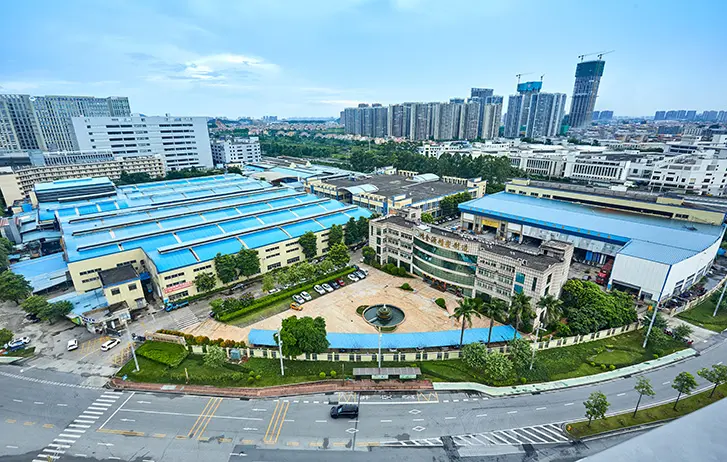
Because we melt our alloys in-house, we can adjust chemical compositions to optimize physical properties. This custom control ensures high purity, consistent extrusion performance, and excellent responsiveness during the anodizing process.
Keeping CNC machining and surface treatment under one roof allows us to maintain tight quality control and reduce production waste. This integrated approach allows us to deliver superior quality components at competitive price points.
Our "one-stop" manufacturing capability eliminates the delays and handling risks associated with outsourcing steps to external vendors. This streamlined flow translates to shorter, more reliable lead times for our clients.
To meet strict environmental and trade regulations (including EU REACH), our operations undergo regular independent audits. Our GRS (Global Recycled Standard) and RCV (Recycled Content Verification) certifications confirm our commitment to green manufacturing and circular material sourcing.
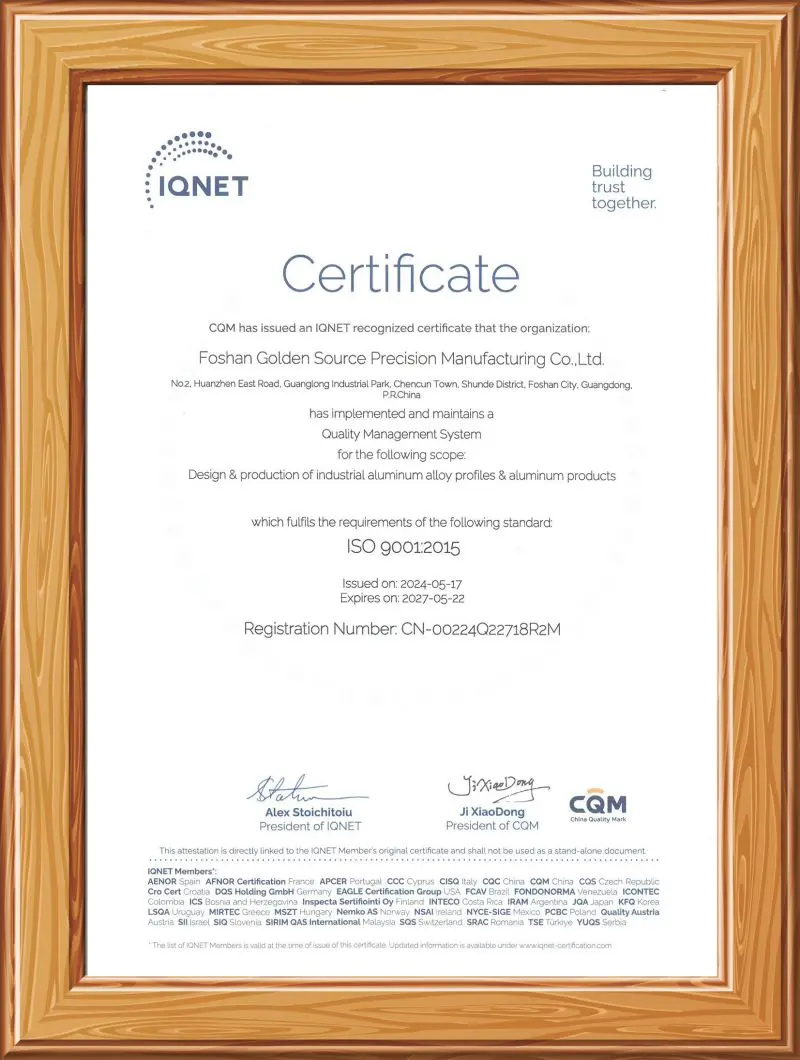
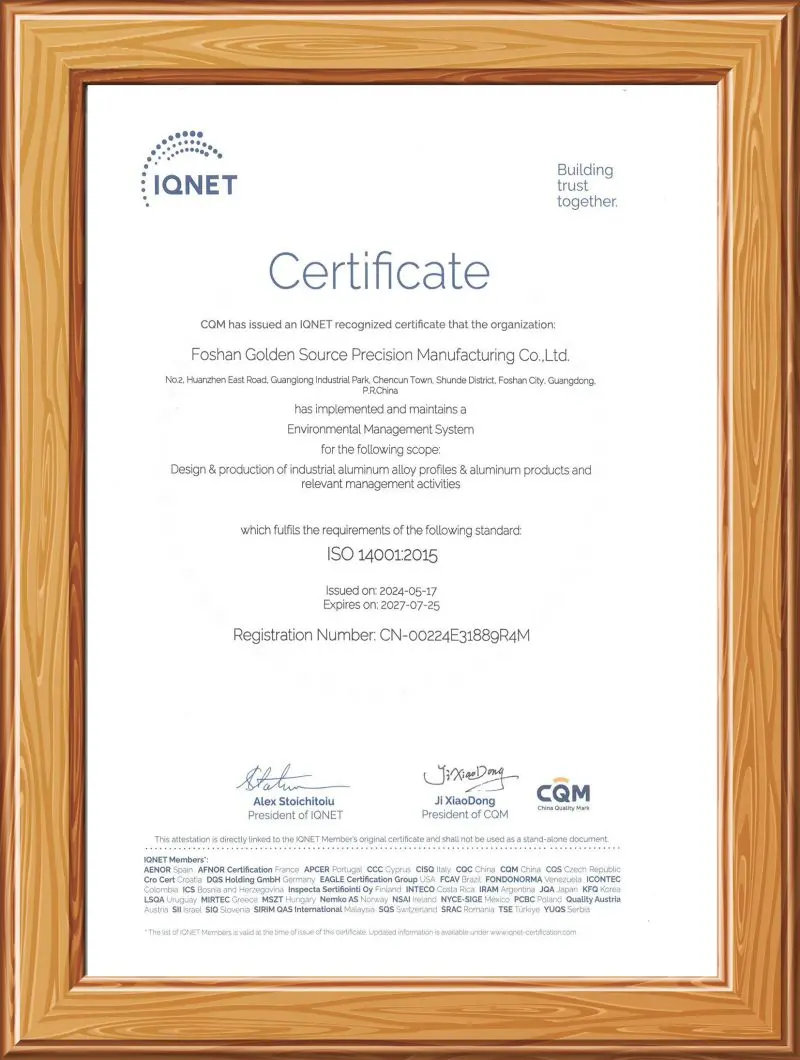
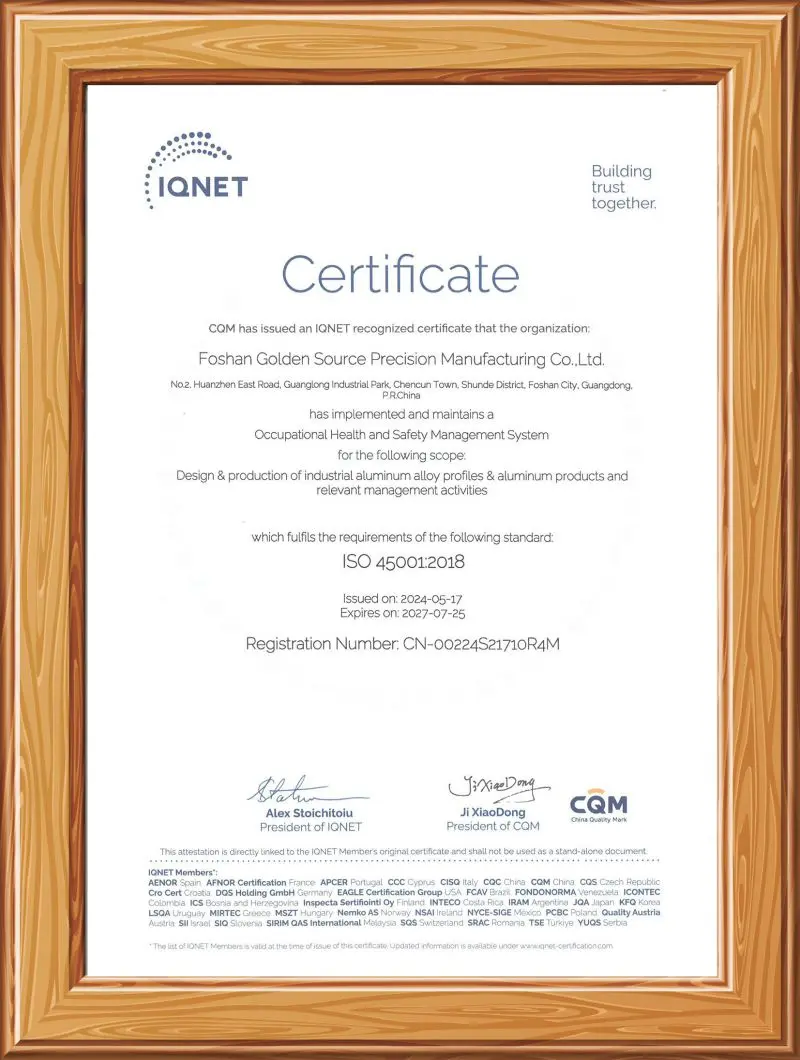
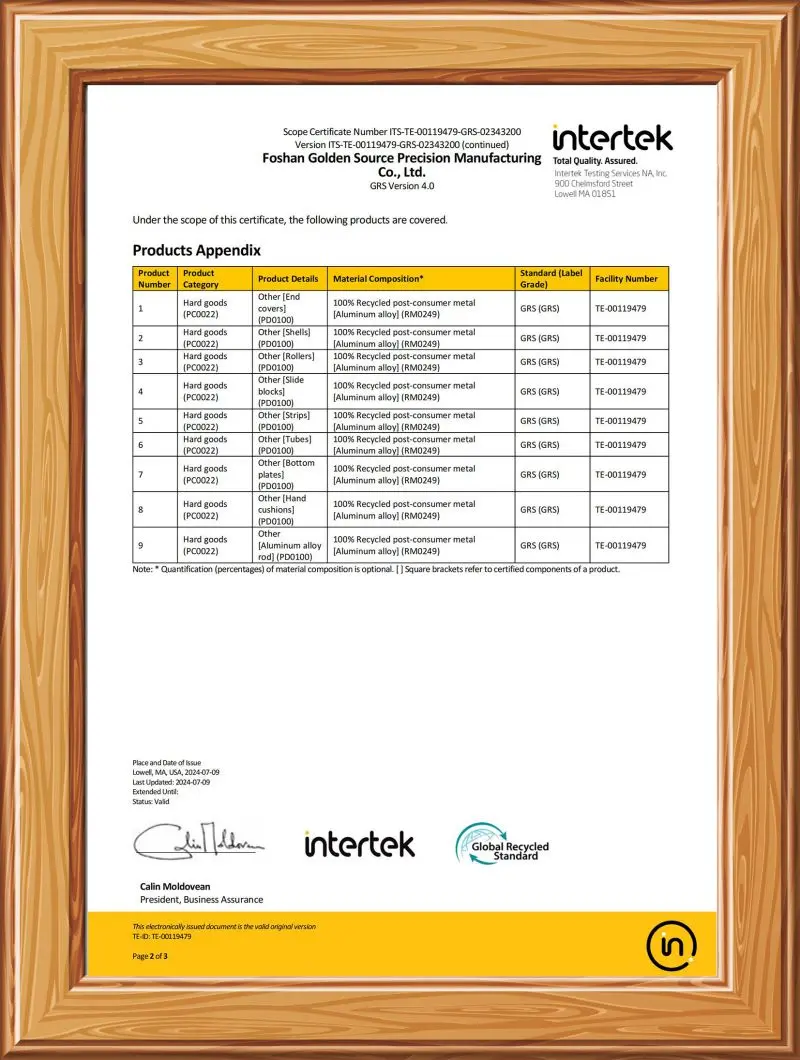
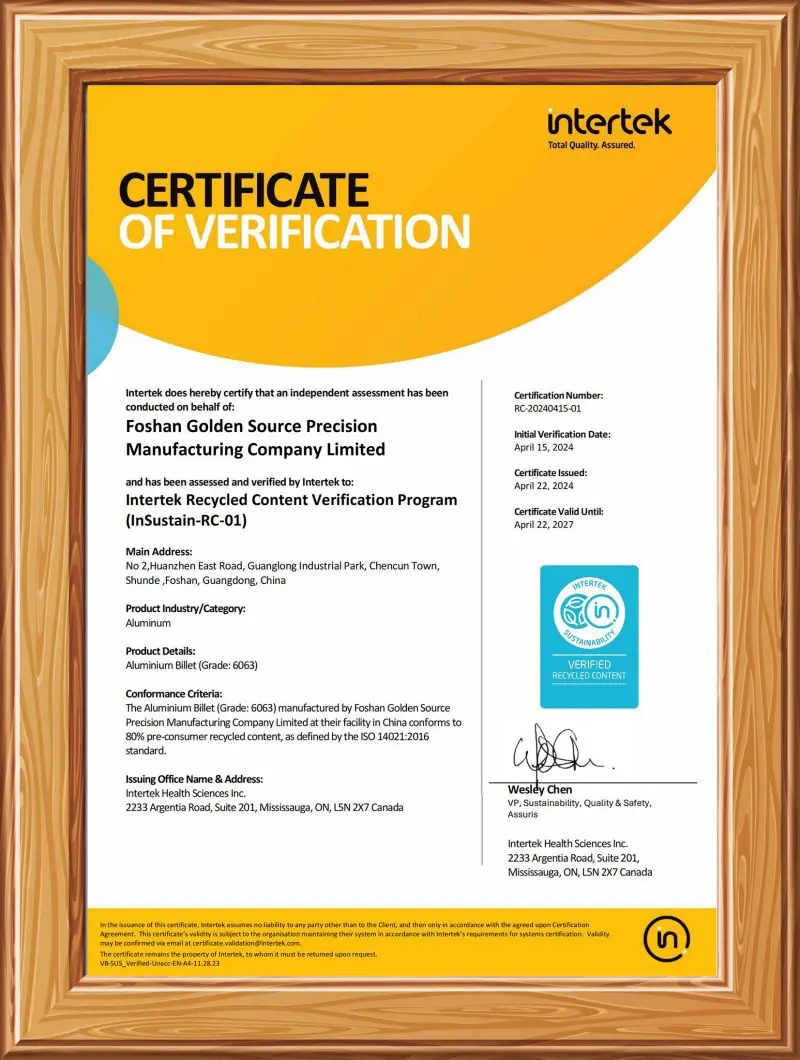
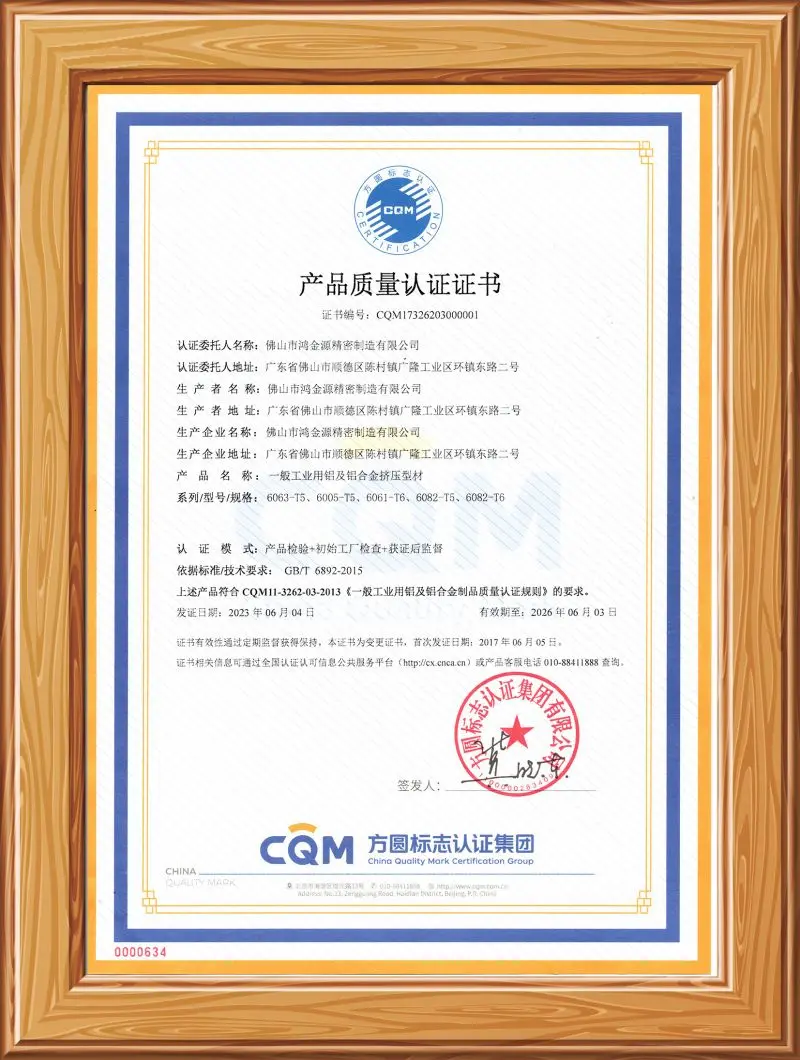
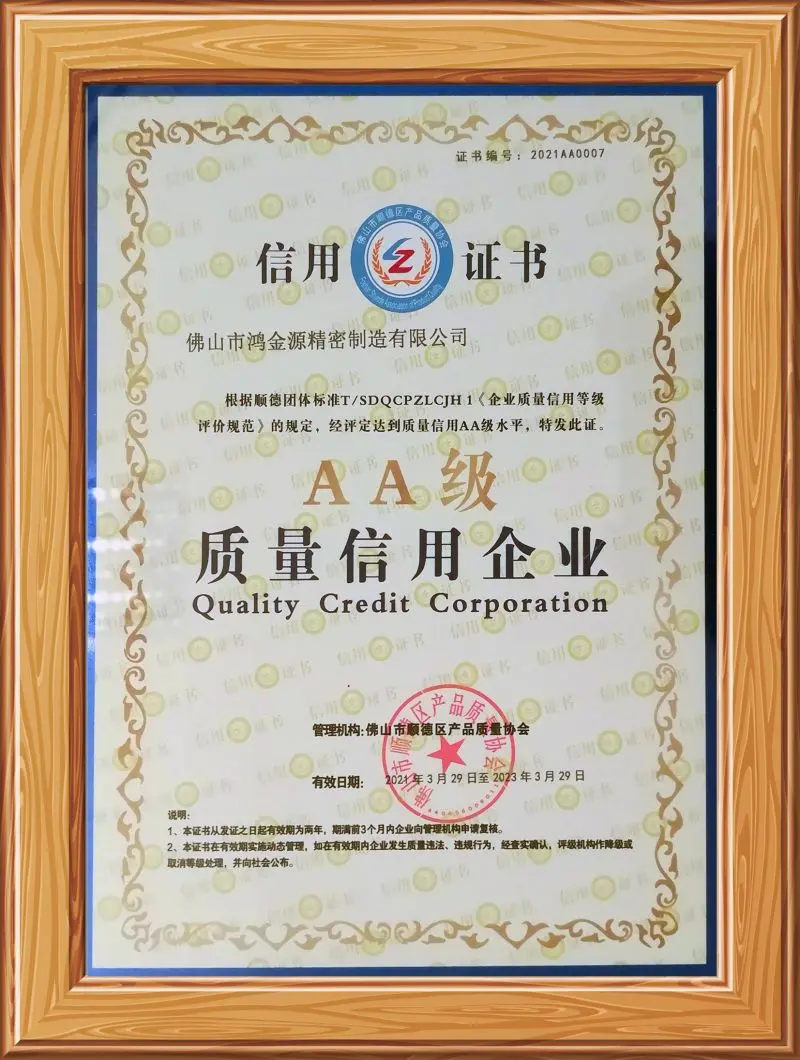
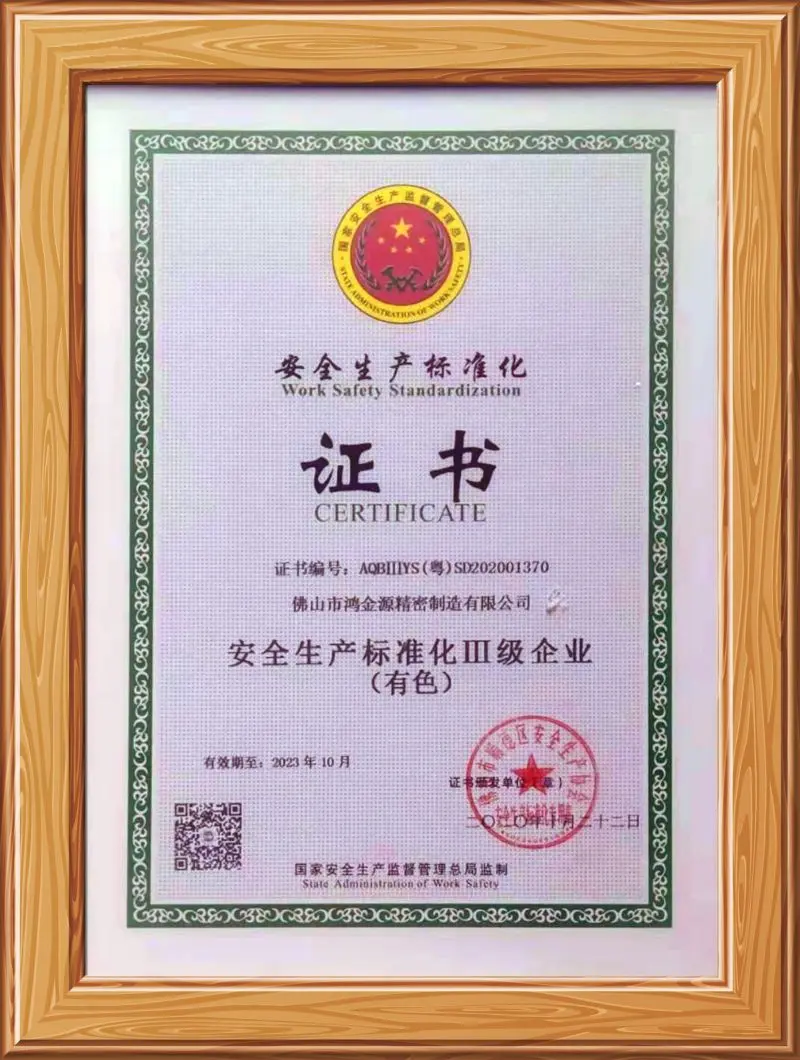
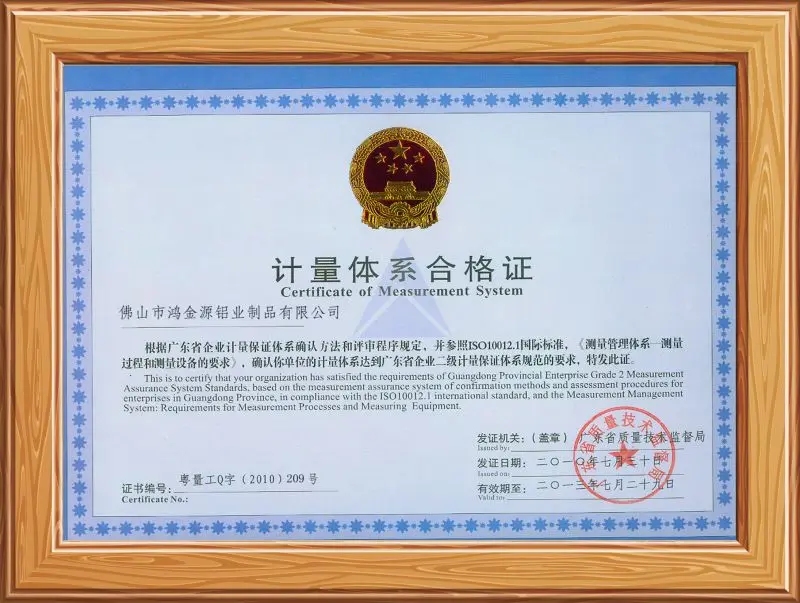
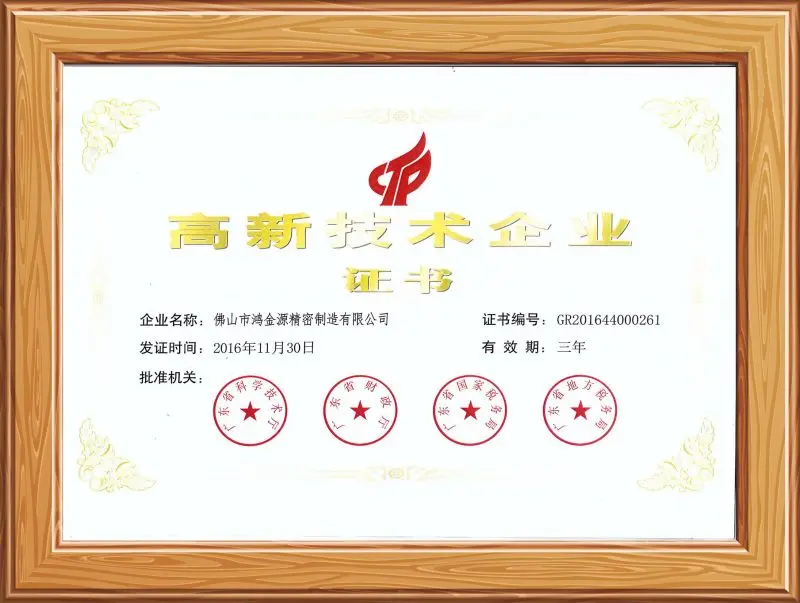
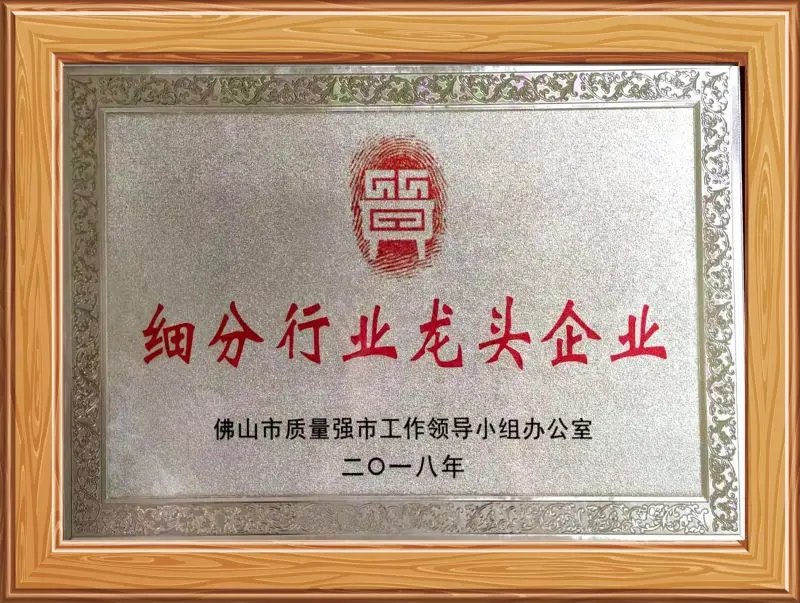
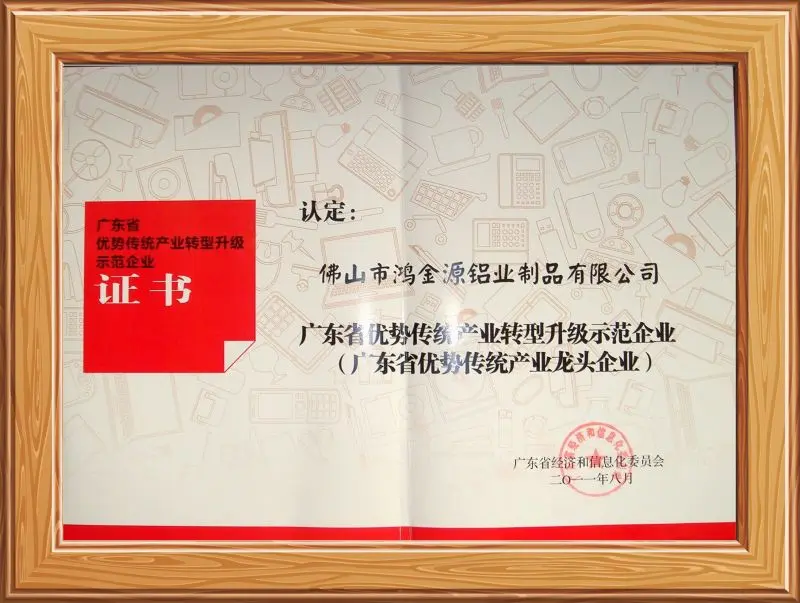
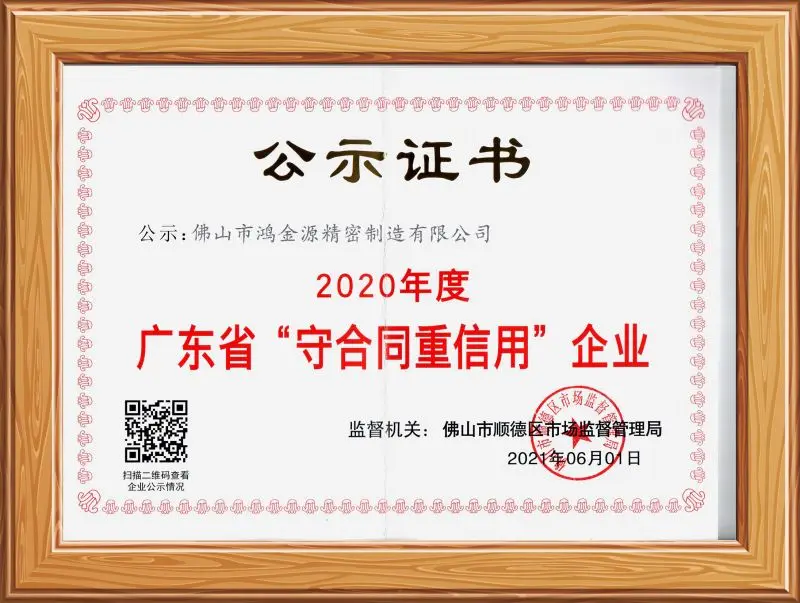
Over the past three decades, Foshan Golden Source has received numerous awards for clean production, credit standing, quality management, and technical innovation from municipal, provincial, and national authorities.
 HG Precision