Seamless aluminum tubing represents the pinnacle of structural performance in modern metallurgy. Unlike structural or welded tubing, which is formed by bending a flat sheet into a profile and welding the seam, seamless tubing is created using solid billets pierced or extruded over a mandrel. This process ensures the complete absence of weld seams, resulting in uniform material density, high concentricity, and superior mechanical performance under extreme stress.
In global supply chains, seamless aluminum tubes are an irreplaceable standard. From chemical containment pathways and aerospace hydraulic structures to high-performance heat exchangers, mechanical engineers rely on seamless products due to their isotropic structural properties. The integrity of the grain flow in seamless profiles allows for significantly higher burst pressure ratings, exceptional performance under extreme cryogenic or elevated thermal environments, and reliable corrosion behavior in marine or chemical exposure conditions.
Currently, global industrial trends indicate a sharp increase in the demand for customized high-strength aluminum seamless tubes. The global push for lightweight electric vehicle (EV) chassis, long-distance hydrogen distribution systems, and clean energy storage solutions has intensified the reliance on specialized alloys such as the 6XXX series (for structural stability and ease of machining) and the 7XXX series (for structural aerospace frameworks). OEMs (Original Equipment Manufacturers) require strict tolerance controls that standard off-the-shelf tubes simply cannot deliver, driving the market toward dedicated custom manufacturing partnerships.
To serve high-consequence industries, manufacturers must manage the metallurgy at the source. At Foshan Golden Source Precision Manufacturing Co., Ltd, we carry out our own melting and alloying processes in-house. This gives us the technical capacity to fine-tune chemical composition targets, minimize structural impurities, and control grain structure orientation. Our casting processes support the full matrix of extrusion series:
| Alloy Series | Key Elements | Primary Physical Properties | Core Industrial Application Scenarios |
|---|---|---|---|
| 1XXX (e.g. 1060) | Al (99.6%) | High thermal/electrical conductivity, low yield strength | Electrical bus bars, chemical cooling systems, heat sink plates |
| 3XXX (e.g. 3003) | Al-Mn | Formable, highly weldable, superior corrosion resistance | Automotive heat exchangers, liquid gas tubing, condenser coils |
| 5XXX (e.g. 5052) | Al-Mg | Marine grade corrosion resistance, high fatigue strength | Offshore infrastructure, marine hydraulics, structural oil lines |
| 6XXX (e.g. 6061/6063) | Al-Mg-Si | Excellent CNC machining properties, structural stability | Structural frames, aerospace fuel tubing, precision hinges, 3C electronics |
| 7XXX (e.g. 7075) | Al-Zn-Mg | Extreme tensile strength, high strength-to-weight ratio | Aviation hydraulic tubes, sports equipment casings, EV suspension links |
Established in 1991, Foshan Golden Source Precision Manufacturing Co., Ltd has grown to become a premium tier-1 manufacturer of high-strength, high-precision, customized aluminum profiles, structural seamless tubes, precise machined parts, welded structures, and complete assembled assemblies.
Operating a state-of-the-art, eco-compliant, 73,000+ square meter manufacturing base, we offer a comprehensive one-stop manufacturing loop. From alloy melting and custom billet casting, structural tooling design and mold building, advanced high-tonnage extrusion, to high-precision CNC machining, robot-assisted structural welding, automated clean assembly, and high-spec surface finish treatments.
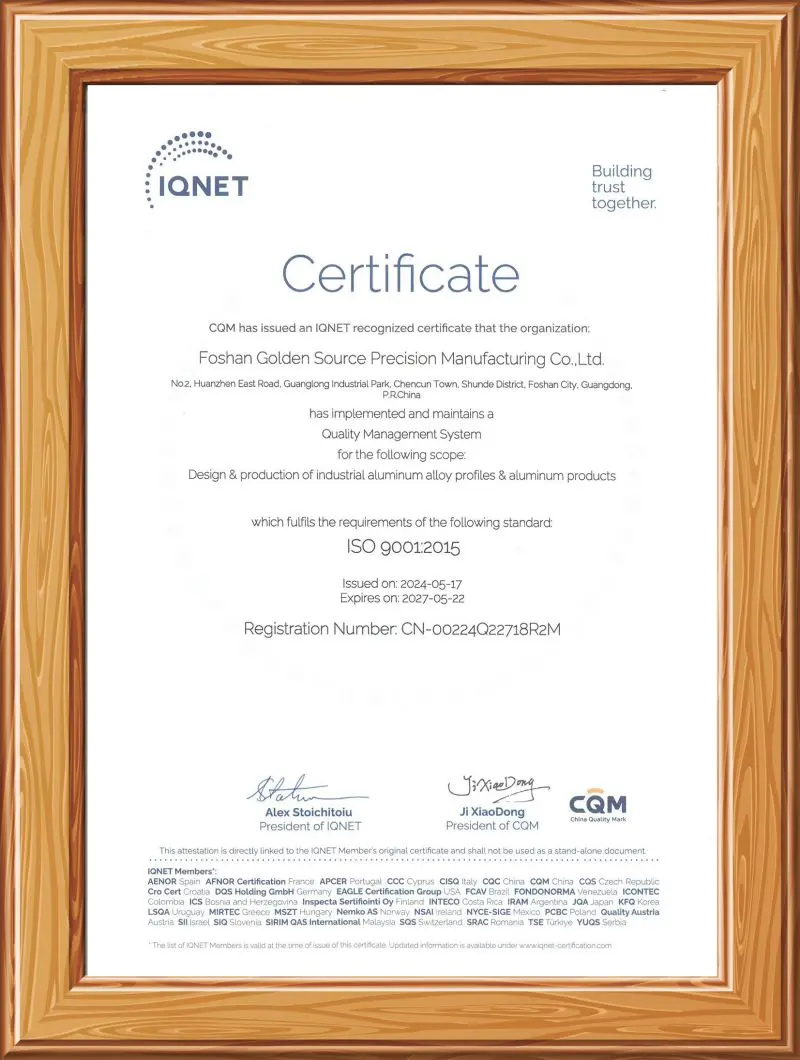
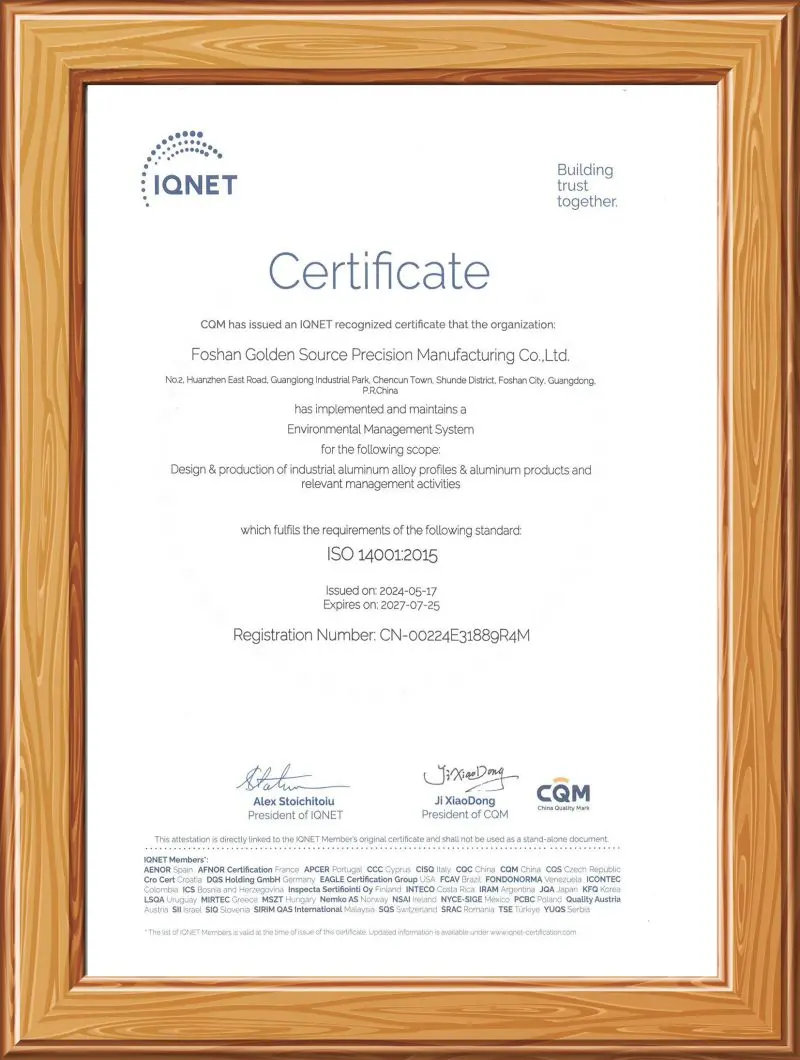
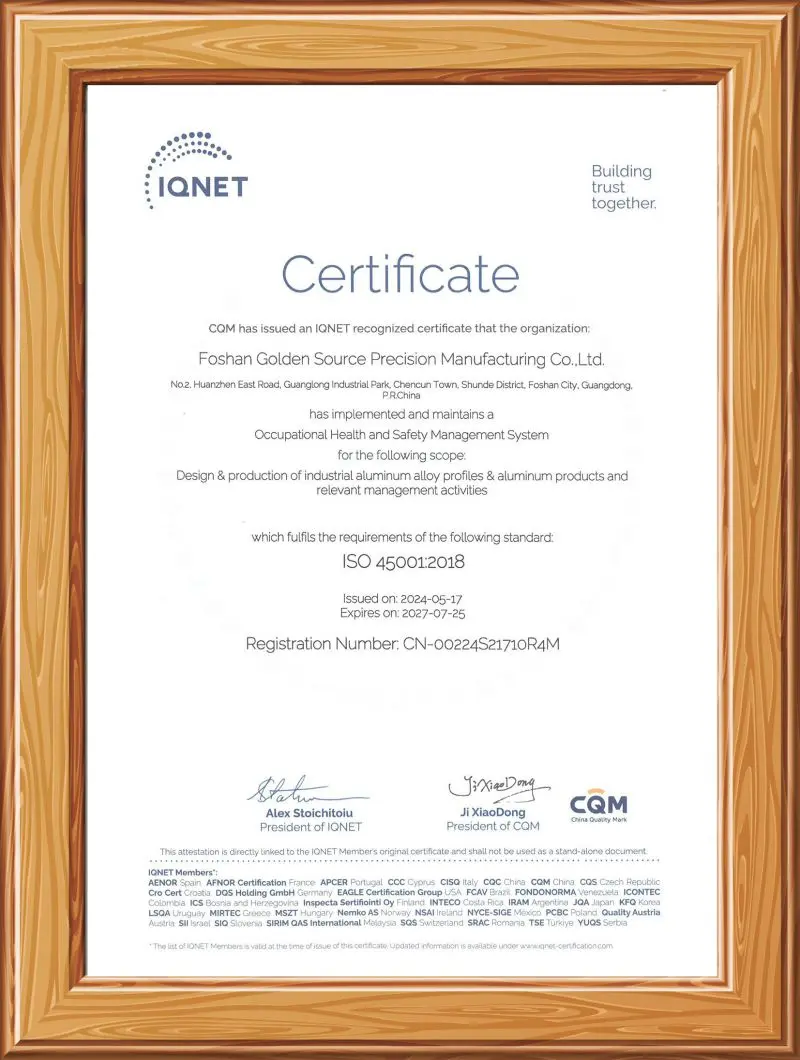
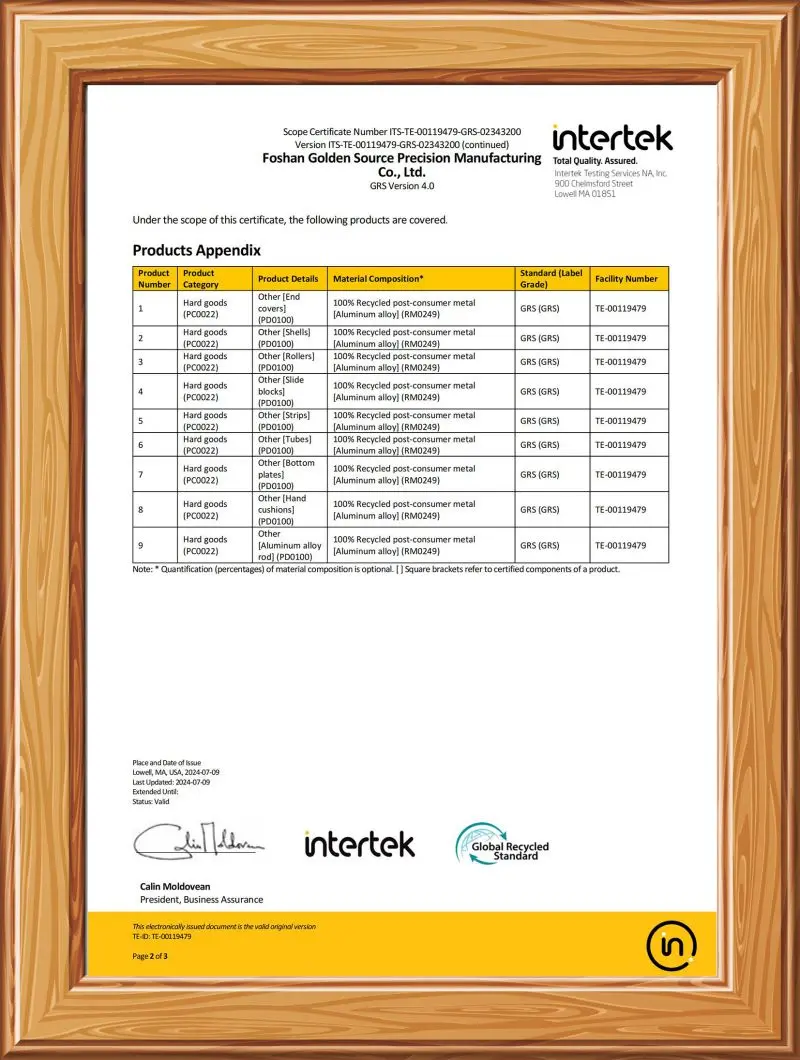
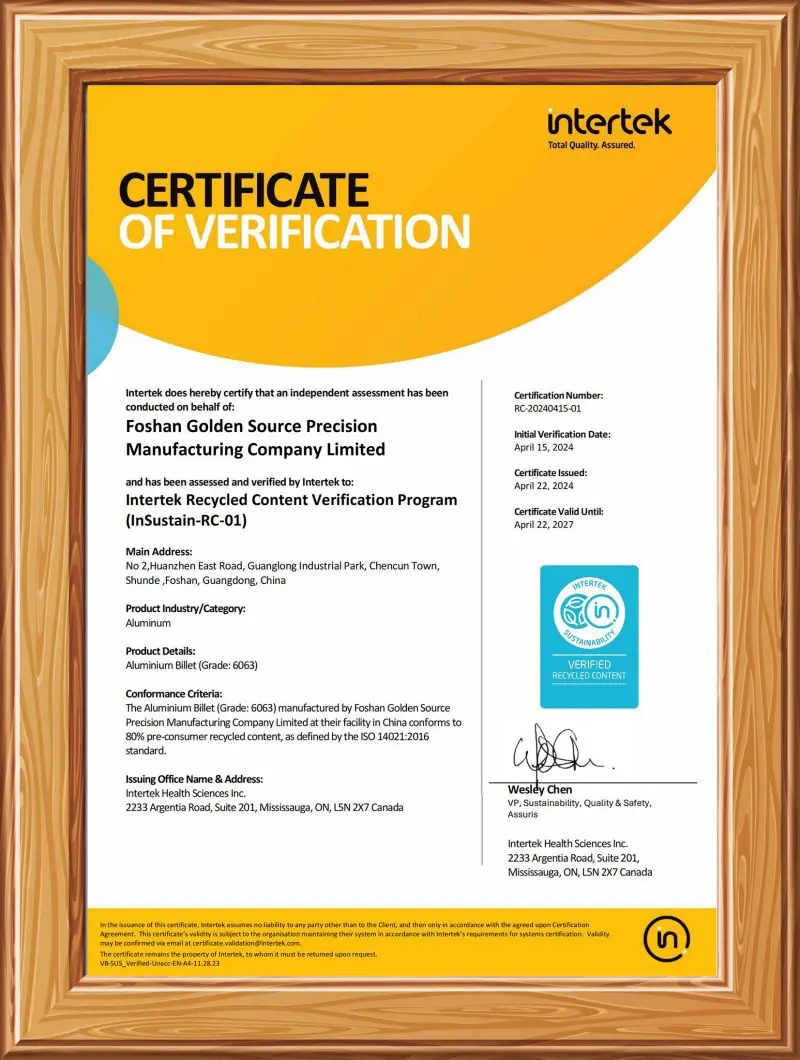
Holding accredited ISO9001, ISO14001, ISO45001, RCV, and GRS certifications, our manufacturing pipelines align completely with EU environmental benchmarks, including strict REACH and RoHS chemical containment regulations.
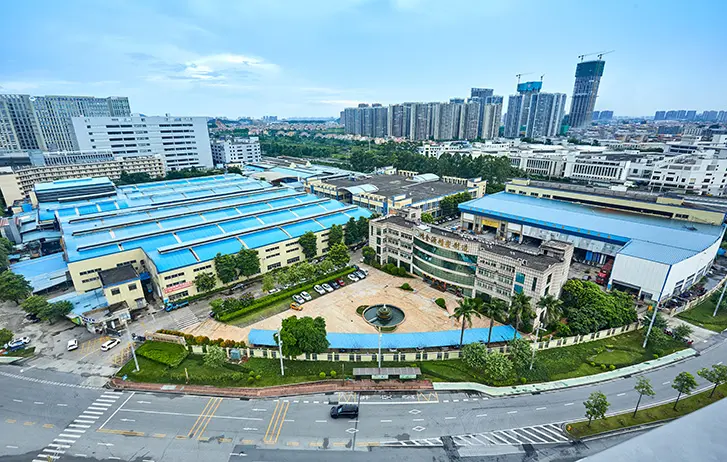
By melting and refining our raw alloys in-house, we customize mechanical compositions down to single percentage elements. This yields flawless grain matrices, high physical strength, and a high-purity alloy surface ideal for complex color anodizing processes.
Every secondary post-processing step—ranging from high-precision multi-axis CNC machining, drilling, tapping, to complex physical surface treatments—is carried out under our roof. This eliminates outsourced transit costs and quality variances, delivering maximum cost efficiency.
Our single-roof design-to-delivery loop ensures minimized production lead times. Tooling modifications, custom sample extrusion, secondary machining validation, and export packaging occur seamlessly, accelerating time-to-market.
When global procurement directors source customized seamless aluminum piping, they look for structural cost optimization, high manufacturing throughput, and rapid custom design development. Foshan, located in Guangdong Province, is a globally recognized manufacturing cluster for advanced aluminum extrusions. This concentration of raw material processors, structural die engineers, automated tooling designers, and export transport networks creates structural efficiencies unmatched anywhere else in the world.
This localized cluster allows us to prototype a custom seamless tube mold design, cast the specialized alloy billets, extrude test components, and carry out precision CNC machining in a fraction of the time required by Western supply chains. The lower structural tooling cost of developing bespoke dies in China significantly reduces the barrier to entry for prototype testing, encouraging rapid engineering iterations. This allows global engineering groups to scale up production runs without massive upfront design and testing costs.
In aerospace platforms, structural weight reduction directly correlates to fuel efficiency and payload capabilities. High-strength seamless aluminum tubes (primarily 7075-T6 or 6061-T6 alloys) serve as structural conduits for fuel delivery and high-pressure hydraulic lines. The lack of a seam ensures zero mechanical failure risk along the longitudinal weld axis, maintaining high structural stability under structural flight vibrations and rapid high-altitude atmospheric pressure shifts.
With the rapid transition toward electrification, the automotive industry requires highly specialized structural components to manage battery safety. Seamless aluminum multi-port profiles and structural tubes act as thermal barriers and liquid coolant distribution pipes inside battery trays. They absorb structural impact energy during collisions, keeping the vehicle body light and preventing battery damage.
Automated manufacturing environments rely on heavy-duty pneumatic and hydraulic actuators to move industrial parts. Seamless aluminum tubes, precision honed and internally polished, act as piston sleeves. These tubes must remain perfectly round with close tolerance dimensions to guarantee smooth cylinder movement and avoid pressure leaks over millions of operating cycles.
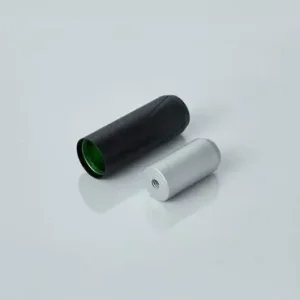
The consumer electronics industry demands clean aesthetics, lightweight structural support, and high heat dissipation. Seamless micro-tubes are widely used in structural telescope stands, electronic sensor protective housings, and computer mouse roller frames (such as our custom anodized roller mouse boxes). These parts require tight tolerances and high-quality clear anodized finishes.
To secure accurate manufacturing quotes and expedite lead times, global sourcing managers should prepare detailed project briefs. When requesting a quote for custom aluminum seamless tubes, we recommend providing the following specifications:
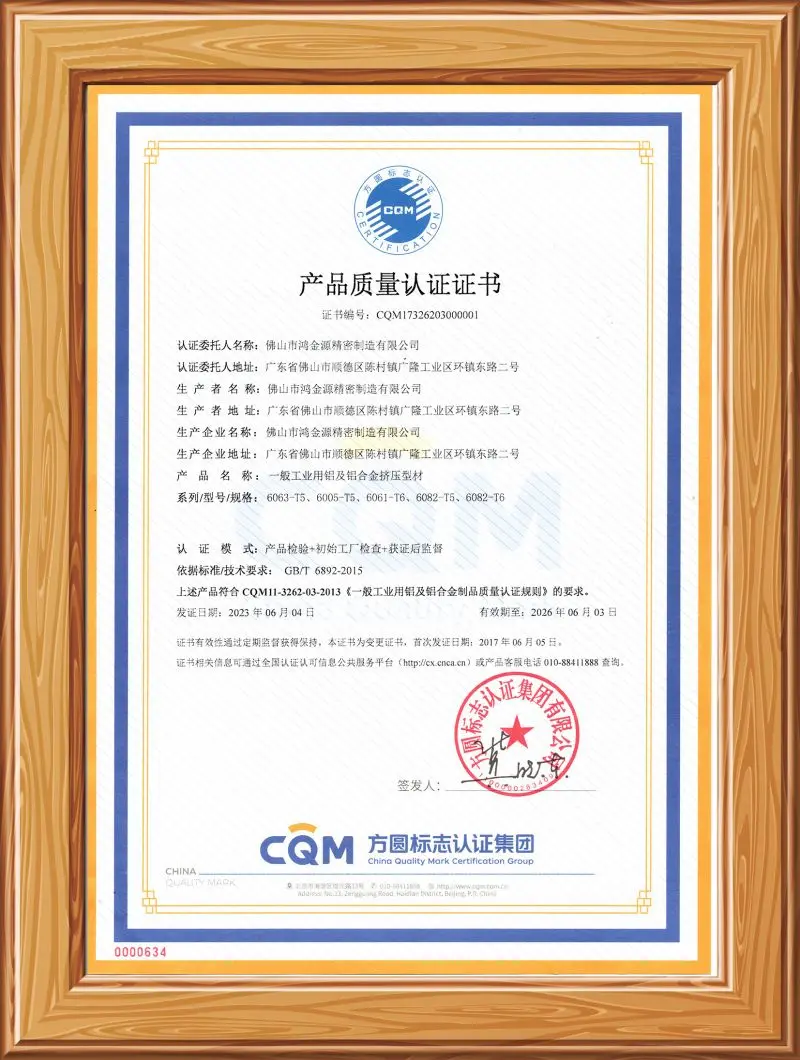
Our quality control protocol is structured to maintain mechanical consistency across every production run. We verify production quality using advanced testing equipment, including: chemical composition spectrometers, mechanical tensile testers, micro-hardness testers, coordinate measuring machines (CMM) for complex structural tolerances, and specialized salt-spray chambers to evaluate corrosion resistance. Our ISO9001 and green manufacturing certifications (GRS, RCV) ensure our materials meet strict international trade compliance standards.
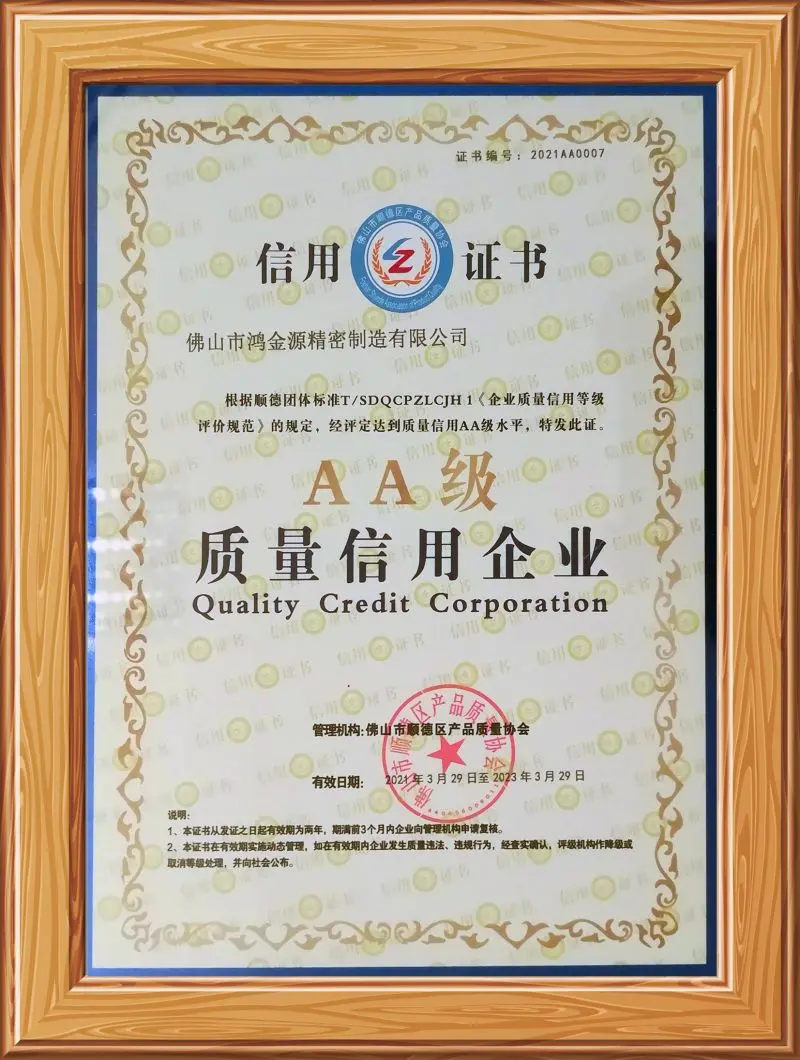
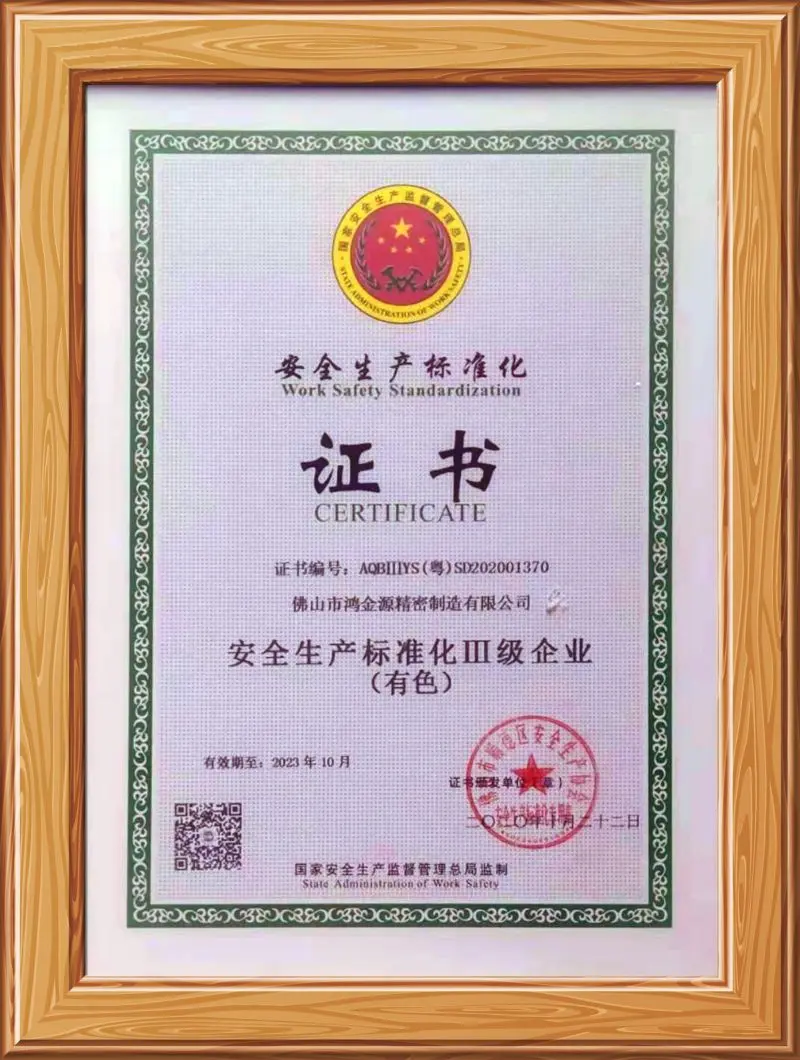
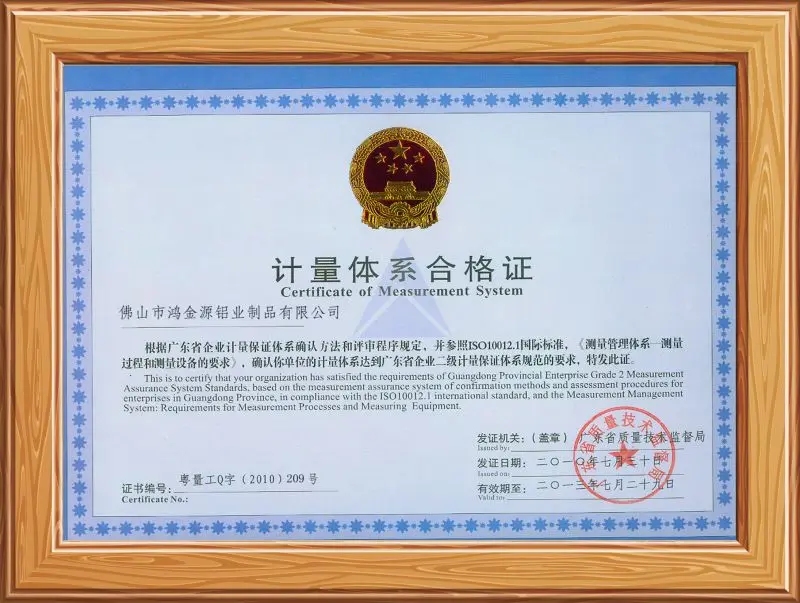
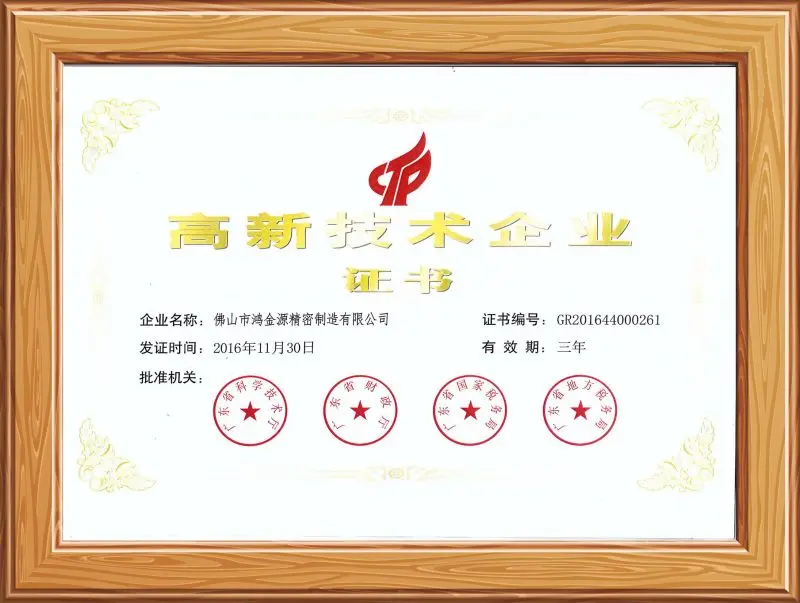
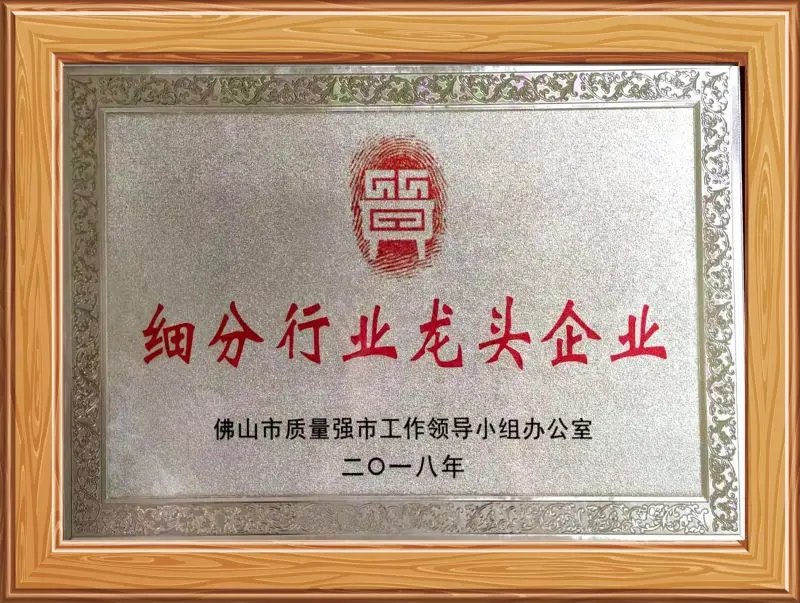
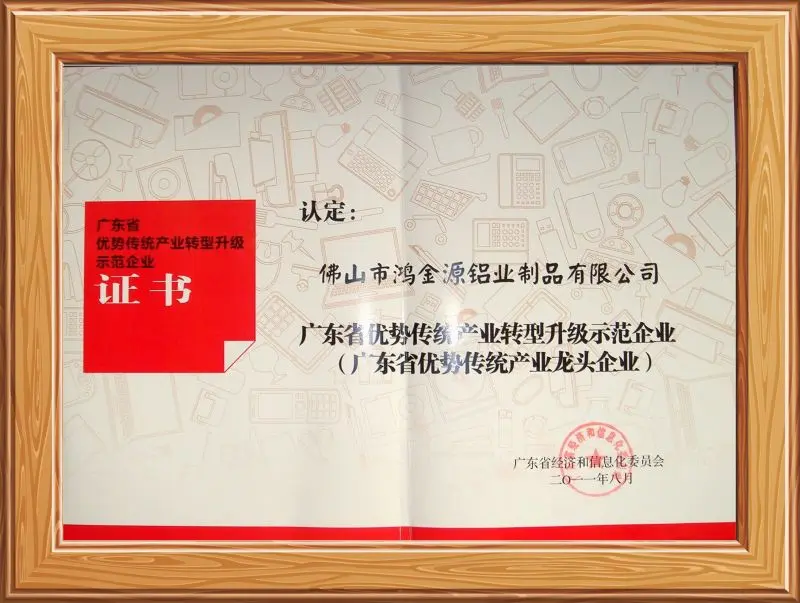
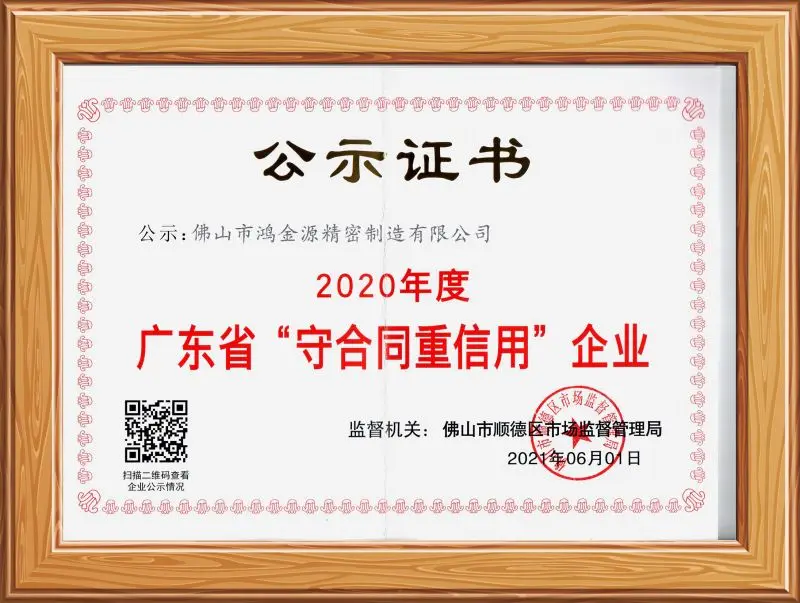
Our facility holds certifications like ISO9001, ISO14001, ISO45001, GRS, and RCV to meet the latest EU environmental regulations. Below is a display of our key quality and structural awards:
 HG Precision