What Are the Top Types of Wardrobe Aluminum Profile?

Time:2026-09-17 Author:Amelia
0%

Choosing the right Wardrobe Aluminum Profile affects strength, appearance, installation speed, and long-term maintenance. A slim frame may look elegant, yet it can flex when supporting a wide glass door. A heavier profile offers stability, but it may reduce usable storage space. These trade-offs make profile selection more important than surface color alone.

Industry consultant Daniel Lee explains, “A good wardrobe profile disappears visually, but never disappears structurally.” His observation reflects practical installation experience. The best profiles usually combine accurate dimensions, consistent wall thickness, reliable anodizing, and clean connector compatibility. Common options include sliding-door profiles, hinged-door profiles, handle-integrated profiles, base tracks, top tracks, and corner sections. Each type serves a different load, movement, and design requirement.

Small details matter. Check the roller channel before choosing the door panel. Examine the joint at the corner. Feel for sharp edges after cutting. A polished finish can still hide weak machining or poor alignment. This article compares the top types of Wardrobe Aluminum Profile by structure, application, finish, and installation demand. It also considers recycled aluminum, coating durability, and maintenance in humid rooms. Some recommendations may change with door width, glass weight, and local fabrication standards. That is worth admitting. No single profile suits every wardrobe. Careful measurement remains essential.
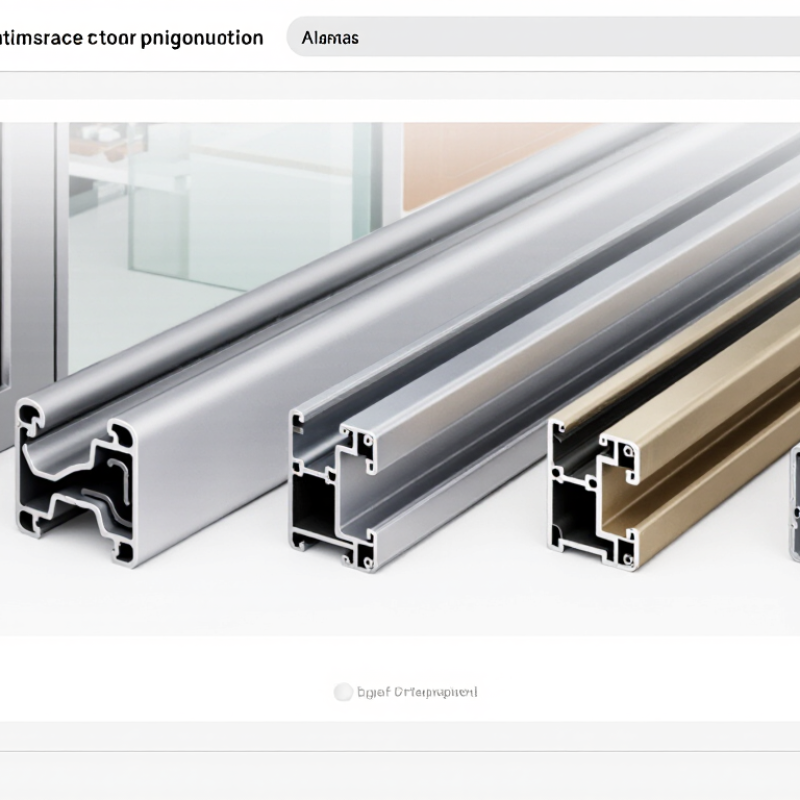
What Are the Top Types of Wardrobe Aluminum Profile?

What Is a Wardrobe Aluminum Profile?

What Is a Wardrobe Aluminum Profile?

A wardrobe aluminum profile is an extruded section used to build a wardrobe’s frame, door, edge, or internal support. It is not the complete cabinet. Instead, it acts like a lightweight skeleton around glass, wood panels, or composite boards. Common types include sliding-door profiles, hinged-door frames, vertical handles, bottom tracks, top tracks, and hanging-rail sections.

Its value comes from controlled geometry. A hollow or ribbed section can resist bending while using less material. Surface treatments, such as anodizing or powder coating, improve appearance and help protect against daily contact. The International Aluminium Institute reports that buildings and construction consume roughly one quarter of global aluminium demand. This wider use reflects aluminium’s durability, low weight, and recyclability. Still, a thicker profile is not automatically better. Poor connections can make a strong-looking frame wobble.

In practical installation, the correct profile depends on door width, panel weight, track design, and wall tolerance. Sliding wardrobes usually need rigid vertical stiles and accurately aligned top and bottom rails. Hinged systems need stronger hinge-side sections. A profile that feels elegant in a showroom may flex after repeated opening. That possibility deserves testing.

Tips: Check the alloy, wall thickness, finish, and load guidance. Measure the panel before selecting the channel. Leave small adjustment space for uneven floors and walls. The Global Aluminium Extrusion Market reports identify construction as a major application area, but wardrobe performance still depends on joints, rollers, and installation quality.

How Are Wardrobe Aluminum Profiles Classified?

Wardrobe aluminum profiles are classified by alloy, cross-section, surface treatment, and application. This method is more useful than judging profiles by appearance alone. The International Aluminium Institute reports that recycled aluminum can require about 5% of the energy used for primary aluminum production. Therefore, material origin also matters during product evaluation.

By alloy, 6063 profiles are common for wardrobe frames because they offer smooth extrusion surfaces and reliable corrosion resistance. 6061 profiles provide higher strength, but they may be less economical for ordinary doors. Temper designations, such as T5 or T6, describe heat treatment and hardness. They should not be ignored. A thin 6063-T5 frame may suit a lightweight panel, while a reinforced 6061 section may better support a wide glass door.

Profiles are also grouped by shape and function. Frame sections create the door perimeter. Track profiles guide rollers. Handle sections improve grip, while corner and connector profiles complete assembly. Cross-sections may be open, closed, or multi-chambered. Closed sections usually resist twisting better. Surface finishes create another category: anodized, powder-coated, or wood-effect finishes. EN 755 and EN 12020 provide useful dimensional and extrusion references for professional inspection.

Classification is not perfectly separated. A handle can also strengthen a door edge. A decorative finish can hide small extrusion marks. That is a practical risk. Buyers should check wall thickness, straightness, alloy designation, coating thickness, and load requirements before choosing a profile. A sample test remains wiser than a catalog promise.

What Are the Main Types of Wardrobe Aluminum Profile?

Wardrobe aluminum profiles are not a single product. They are a group of sections designed for different structural and functional purposes. The main type is the wardrobe frame profile, which forms the vertical sides, top, and bottom rails. It supports panels, glass, and internal fittings. A well-designed frame should resist twisting while remaining light enough for easy installation.

Door profiles are another major type. They hold sliding or hinged door panels and often include channels for glass, wood boards, or sealing strips. Handle profiles may be integrated into the door edge or added as separate pulls. They affect both appearance and daily comfort. Sharp edges are unsuitable for frequent use. Rounded or recessed shapes usually feel safer.

Track profiles guide sliding doors across the wardrobe opening. Their internal rollers and channels must match precisely. Even a small dimensional error can cause vibration, noise, or uneven movement. Partition profiles divide storage areas and can support shelves, drawers, or decorative panels. Corner profiles and connector sections help installers create stable joints without excessive drilling.

Surface treatment also separates profile types. Anodized finishes provide a clean metallic appearance, while powder coating offers wider color choices and added surface protection. In practical projects, profile thickness should match the expected door weight. A heavier section is not always better; it can increase cost and installation effort. One detail is easy to underestimate: poor alignment can ruin an otherwise excellent profile system. Careful measurement still matters most.

What Are the Top Types of Wardrobe Aluminum Profile? - What Are the Main Types of Wardrobe Aluminum Profile?
Profile Type Typical Door System Common Cross-Section Features Typical Wall Thickness Suitable Panel Thickness Main Advantages Recommended Applications
Standard Sliding-Door Profile Top-and-bottom track sliding door Vertical stile with a groove for the door panel and a channel for rollers or fittings Approximately 1.0–1.5 mm 4–10 mm Good balance between strength, cost, installation simplicity, and adjustment capability General bedroom wardrobes, built-in storage, and medium-width sliding panels
Slim-Frame Sliding Profile Top-and-bottom track sliding door Narrow visible face with a compact internal channel for glass, board, or composite panels Approximately 1.0–1.5 mm 4–6 mm Creates a lighter visual appearance and maximizes the visible panel area Contemporary wardrobes, glass-front doors, and minimalist interiors
Heavy-Duty Sliding Profile Reinforced sliding door system Deeper, stronger section designed to accommodate larger rollers, reinforced panels, or wider door leaves Approximately 1.5–2.0 mm 6–12 mm Higher resistance to bending and improved stability for larger or heavier doors Wide wardrobe openings, tall doors, thick boards, and frequently used storage systems
Hinged-Door Frame Profile Side-hinged wardrobe door Frame section with a rebate or groove for the panel and fixing space for hinges Approximately 1.0–1.5 mm 4–10 mm Provides a clean perimeter frame and direct access to the full cabinet opening Traditional wardrobes, narrow cabinet modules, and doors requiring a wide opening angle
Integrated-Handle Profile Sliding or hinged door Recessed or projecting finger-pull channel formed as part of the vertical stile Approximately 1.2–1.8 mm 4–10 mm Combines the frame and handle, reducing separate hardware and improving visual continuity Modern wardrobes where a flush appearance and concealed-looking grip are preferred
Glass-Door Profile Framed sliding or hinged door Internal glazing channel with a gasket or insert to secure glass safely Approximately 1.0–1.5 mm 4–6 mm glass Supports framed glass panels while helping protect panel edges from impact and abrasion Display wardrobes, dressing areas, and doors using clear, tinted, frosted, or mirrored glass
Panel-Joining Profile Modular wardrobe or partition system H-shaped, T-shaped, or connecting channel for joining two panels or creating a transition Approximately 1.0–1.5 mm 4–10 mm Creates aligned joints and helps connect panels without requiring a full perimeter frame Modular storage, internal partitions, decorative panel assemblies, and custom layouts
Top Track Profile Sliding door system Horizontal rail with a running channel for upper guides or rollers Approximately 1.2–2.0 mm System-dependent Guides the door and helps maintain smooth alignment across the wardrobe opening Top-supported or top-guided sliding wardrobes; must be matched with compatible rollers
Bottom Track Profile Sliding door system Horizontal rail with a wheel-running channel and debris-management area Approximately 1.5–2.5 mm System-dependent Transfers door weight to the cabinet or floor and supports stable, smooth movement Bottom-rolling sliding wardrobes with one or more door panels
Edge-Protection Profile Frameless or semi-framed door U-shaped or L-shaped channel that covers and protects an exposed panel edge Approximately 0.8–1.5 mm 4–10 mm Reduces edge damage, improves appearance, and can simplify panel handling Mirrored panels, laminated boards, glass edges, and lightweight wardrobe doors

Note: Dimensions are typical industry ranges for wardrobe aluminum profiles. Actual wall thickness, panel compatibility, load capacity, track geometry, and hardware requirements vary by system design and manufacturer specifications. Load capacity should be verified using the complete door assembly rather than the aluminum profile alone.

How Do Different Profiles Compare in Use and Appearance?

What Are the Top Types of Wardrobe Aluminum Profile?

How Do Different Profiles Compare in Use and Appearance?

Wardrobe aluminum profiles usually fall into four practical groups: door frames, sliding tracks, handle profiles, and hanging rails. Framed door profiles provide visible structure and protect glass or panels at the edges. Slim profiles create a lighter appearance, but they may offer less space for fittings and adjustment. Sliding-track profiles support frequent movement, so smooth rollers and accurate installation matter more than appearance alone. Handle profiles can be integrated into the door edge, producing a clean façade with fewer protruding parts.

Finish changes the visual result significantly. Anodized profiles often show a metallic texture and resist everyday abrasion. Powder-coated surfaces offer wider color choices and a more uniform appearance. The International Aluminium Institute reports that recycled aluminium requires roughly 5% of the energy used for primary aluminium production. This supports recycled-content choices, although the final finish and alloy still affect performance. It is not automatically the greener option.

Use decides the best profile.

A deep frame can hide uneven panel edges and simplify replacement. A narrow frame looks modern, yet it demands tighter cutting and installation tolerances. In humid bedrooms, surface protection and drainage details deserve attention. The U.S. Geological Survey tracks aluminium production and recycling, but broad industry reports rarely separate wardrobe applications. That limitation matters. A profile may look excellent in a showroom, then feel noisy or loose after months of daily sliding. Performance depends on the complete system, not the visible aluminium alone.

How Can You Choose the Right Wardrobe Aluminum Profile?

What Are the Top Types of Wardrobe Aluminum Profile?

How Can You Choose the Right Wardrobe Aluminum Profile?

Choosing a wardrobe aluminum profile starts with the door design and daily use. Sliding doors usually need strong vertical stiles, smooth track channels, and accurate roller support. Hinged doors can use slimmer frames, but their hinges require firm fixing points. Open wardrobes may need reinforced hanging-rail profiles, especially when carrying winter coats. A narrow profile looks elegant. It may not provide enough stiffness for a wide door.

Check the dimensions carefully. Measure door height, panel thickness, and the available installation space before selecting a section. For indoor wardrobes, commonly used 6000-series aluminum alloys offer a practical balance between strength and weight. Profile wall thickness also matters. A thin section can bend during assembly or develop noise after repeated movement. Do not trust appearance alone. Ask for load data, dimensional drawings, and finish specifications from a qualified supplier.

The room environment should guide the surface treatment. Anodized finishes suit clean, modern interiors, while powder-coated surfaces offer broad color choices and consistent coverage. In humid bedrooms or near bathrooms, inspect corrosion resistance and coating quality more closely. Match the profile channel with the panel, seal, brush strip, and roller system. Small mismatches cause rattling. I have seen beautiful frames fail because installers ignored tolerances by only a few millimeters. Leave adjustment space, test the door with its final panel, and inspect the corners before full installation. The compromise is real: maximum slimness, strength, cost, and easy installation rarely arrive together.

FAQS

What is a wardrobe aluminum profile?

It is an extruded section forming part of a wardrobe frame, door, edge, or support. It is not the complete cabinet. It works like a lightweight skeleton around glass, wood, or composite panels.

What are the main types of wardrobe aluminum profiles?

Common types include frame sections, door profiles, handles, tracks, partitions, corners, and connectors. Track profiles guide sliding doors. Handle profiles improve grip and daily comfort.

Are aluminum profiles suitable for sliding wardrobes?

Yes, when the vertical stiles, top rail, bottom rail, and rollers match correctly. Small alignment errors can cause vibration, noise, or uneven movement. A beautiful track can still perform badly.

How do hinged wardrobes differ from sliding wardrobes?

Hinged wardrobes need firm hinge-side sections and reliable fixing points. Sliding wardrobes need rigid stiles and accurately aligned tracks. The door system decides the profile design.

How should I choose the correct profile size?

Measure the door height, width, panel thickness, and installation space. Consider the panel weight and expected daily use. A narrow section may look elegant but flex under a wide door.

Does a thicker aluminum profile always provide better performance?

No. A thicker profile can add strength, cost, and installation effort. Weak joints may still make the frame wobble. Connections matter greatly.

Which surface finish should a wardrobe aluminum profile have?

Anodized finishes provide a clean metallic appearance. Powder-coated finishes offer more color choices and consistent coverage. Humid rooms require closer inspection of coating quality and corrosion resistance.

What details should be checked before installation?

Check the alloy, wall thickness, load guidance, finish, and dimensional drawings. Match the channel with the panel, seal, brush strip, and rollers. Leave small adjustment space for uneven floors and walls. Do not trust appearance alone.

Conclusion

A Wardrobe Aluminum Profile is a structural and decorative component used to build wardrobe frames, sliding doors, handles, edge trims, and connecting sections. It provides strength, stability, and a clean modern appearance while supporting different wardrobe layouts. These profiles can be classified by their function, installation position, cross-sectional shape, surface finish, and door system. Common categories include frame profiles, sliding door profiles, handle profiles, bottom and top tracks, side profiles, and internal support sections.

Different types offer distinct advantages in appearance and use. Slim profiles create a simple, contemporary look, while wider profiles provide greater support for larger doors. Anodized, powder-coated, and wood-effect finishes can match various interior styles and improve surface durability. To choose the right Wardrobe Aluminum Profile, consider door size, weight, opening method, required strength, installation space, finish, maintenance needs, and overall design. A suitable profile should balance safety, functionality, visual appeal, and compatibility with the wardrobe’s other components.


Amelia

Amelia

Amelia is a seasoned marketing professional with a wealth of expertise in our company’s core offerings. With an unwavering passion for driving growth and innovation, she plays a pivotal role in shaping our marketing strategies and enhancing brand visibility. A key aspect of her responsibilities......