Best Aluminum Profile Manufacturers in China?

Time:2026-11-02 Author:Madeline
0%

Choosing among the Best Aluminum Profile Manufacturers in China takes more than comparing prices or polished factory photographs. An Aluminum Profile may look identical on a sample table, yet behave differently after machining, anodizing, or installation. Alloy grade, temper, wall thickness, dimensional tolerance, and surface finish all affect the finished part. Small details matter.

Metallurgist John E. Hatch’s published work on aluminum alloys offers a useful lens for evaluating suppliers. A practical takeaway is: “Judge an aluminum profile by its alloy, process control, and verified performance—not by appearance alone.” This is a paraphrased principle, not a verified direct quotation. Buyers should ask manufacturers for material certificates, inspection records, extrusion capabilities, and clear explanations of how they control tolerances. Requesting a sample can also reveal uneven color, rough edges, or inconsistent dimensions.

This guide looks at manufacturers through those practical checks, alongside production capacity, customization, communication, and delivery reliability. A low quote can be tempting. But unclear specifications or weak quality records may lead to costly rework. Even a careful comparison has limits; factory claims deserve independent verification. The strongest supplier is not automatically the largest. It is the one that can repeatedly meet your application’s requirements and show how it does so.
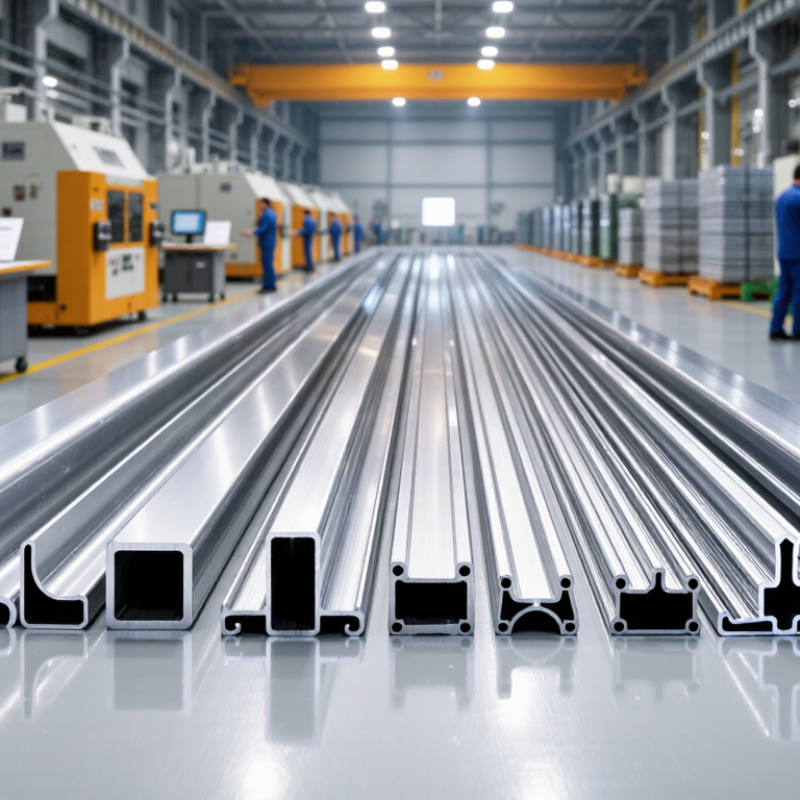
Best Aluminum Profile Manufacturers in China?

Understanding Aluminum Profiles and Their Industrial Applications

Aluminum profiles are shaped sections made by forcing heated aluminum through a die. Their cross-sections can include slots, ribs, and hollow chambers, allowing one component to support, guide, or enclose other parts. That flexibility matters. In buildings, profiles form window frames, curtain walls, and partitions; in factories, they support conveyors, machine guards, and modular workstations. Vehicle makers also use extruded sections where low weight and carefully designed stiffness are useful.

The International Aluminium Institute estimates that about 75% of all aluminum ever produced remains in use, reflecting the metal’s potential for recycling when collection and processing systems are available. The U.S. Geological Survey’s Mineral Commodity Summaries 2024 estimated global primary aluminum production at 70 million metric tons in 2023. These figures describe the wider material industry, not profile output, so they should not be treated as a direct measure of demand for extrusions. For buyers, alloy, temper, wall thickness, and dimensional tolerance influence strength, corrosion behavior, and fit. A drawing may look sound, yet a thin wall can distort during machining or assembly. That detail is easy to miss. Consider the real load, environment, and finishing process before choosing a profile.

How to Evaluate Aluminum Profile Manufacturers in China

Choosing an aluminum profile manufacturer in China starts with the drawing, not the sales pitch. Share the alloy, temper, dimensions, wall thickness, finish, and intended use. Ask whether the factory can hold your tolerance across a full production run. A sample is useful, but it proves little about batch consistency. Measure critical faces with a caliper, and inspect corners, straightness, and surface marks. Small details matter.

Then examine the process behind the sample. Request recent inspection records, material traceability, and test data for anodizing or powder coating, where relevant. Confirm which operations happen in-house and which are outsourced. Ask how the factory handles a failed dimension or uneven finish; a specific corrective-action example is more convincing than a broad promise. Check packaging against a real shipping scenario: profiles can rub together, and long pieces need support. No checklist catches everything. A factory visit or live production walkthrough can reveal gaps, though neither replaces independent inspection. The cheapest quote may omit tooling, protective film, or realistic lead times. Compare complete quotations, then test one order before committing to volume. Even careful buyers can miss something.

Best Aluminum Profile Manufacturers in China? — How to Evaluate Aluminum Profile Manufacturers in China
Evaluation Dimension Suggested Weight What to Check Objective Evidence to Request Scoring Guide
Product and process capability 20% Confirm the supplier can produce the required profile shape, alloy, temper, dimensions, finish, and order volume. Ask about extrusion, heat treatment, machining, and finishing processes relevant to the specification. Process flow, equipment capability list, representative inspection records, and samples made to the required drawing or specification. Score 0–5: 0 = no relevant capability demonstrated; 5 = capability is documented and verified against the project requirements.
Quality management and inspection 20% Check how incoming materials, production processes, and finished profiles are inspected. Verify that measurement equipment is maintained and calibrated. Current quality-management certificate, inspection plans, sample test reports, calibration records, and procedures for handling nonconforming products. Verify certificate scope and validity with its issuer. Score 0–5: assess the completeness of inspection controls, traceability, calibration, and corrective-action records.
Standards and specification compliance 15% Agree on the applicable product standard, alloy and temper designation, dimensional tolerances, mechanical properties, and test methods before production. Written compliance matrix and test reports referencing the standards specified in the purchase documents. Depending on the application, relevant references may include GB/T 5237 for architectural aluminum alloy profiles, ASTM B221 for aluminum-alloy extruded products, or EN 755 for extruded products. Score 0–5: 0 = requirements are not clearly addressed; 5 = requirements and supporting test evidence are aligned and traceable.
Material traceability 10% Determine whether production batches can be linked to material records, inspection results, and delivery documents. Example batch records, material certificates where applicable, lot-identification method, and sample packing list or certificate of conformity. Score 0–5: assess whether records can consistently connect a delivered lot to its documented requirements and inspection results.
Surface finish and coating control 10% Specify the finish required, such as anodizing, powder coating, or mill finish. Confirm appearance criteria, coating requirements, and inspection methods relevant to the intended use. Approved finish samples, process specifications, inspection records, and applicable coating or finish test reports. Score 0–5: evaluate whether finish requirements are defined, samples are approved, and inspection evidence is available.
Tooling and engineering support 10% Review drawing feedback, die design and maintenance arrangements, sample approval steps, and how design changes are controlled. Documented drawing review, tooling ownership and maintenance terms, sample approval record, and change-control procedure. Score 0–5: assess the clarity of engineering communication and control of tooling, samples, and revisions.
Delivery and production planning 10% Check how the supplier plans production, communicates schedule changes, manages packaging, and prepares export documentation when required. Example production schedule, order-status process, packaging specification, and applicable shipping-document checklist. Score 0–5: evaluate the documented planning process and the supplier’s ability to provide timely, traceable updates.
Environmental and compliance controls 5% Review environmental management and the handling of chemicals, emissions, and waste where these are relevant to the processes used. Applicable permits or management-system documentation, process-specific controls, and customer-required compliance declarations. Verify certificate scope and validity. Score 0–5: assess whether relevant obligations and customer requirements are identified and supported by current records.
Total suggested weight 100% Suggested weighted result: add each dimension’s weight multiplied by its score out of 5, then divide by 5. Treat this as a comparison aid, not a guarantee of supplier performance.

Notable Aluminum Profile Manufacturers in China

Best Aluminum Profile Manufacturers in China?
Notable Aluminum Profile Manufacturers in China

China’s aluminum profile sector benefits from a large domestic supply base. The International Aluminium Institute estimated China produced about 41.5 million tonnes of primary aluminum in 2023. That figure describes raw metal, not finished profiles, but it helps explain the scale behind the supply chain. Scale alone is not proof of quality.

Notable manufacturers usually show strength in practical details: consistent alloy composition, controlled extrusion temperatures, accurate dimensions, and dependable surface finishing. Ask for inspection records, alloy certificates, and sample profiles from the same production line used for bulk orders. Check corners and cut ends, too. Small flaws show.

Market demand also gives useful context. Grand View Research valued the global aluminum extrusion market at about US$87.8 billion in 2023 and forecast continued growth through 2030. This is a broad market estimate, not a ranking of Chinese suppliers. Buyers should compare companies against their own needs, such as window systems, heat sinks, or industrial frames. Request tolerance data and coating specifications before comparing prices. A low quote can hide extra finishing costs. Still, no checklist catches every production surprise; pilot orders can reveal issues that documents miss.

China in Context: 2024 Primary Aluminum Production

China is the world’s largest producer of primary aluminum. This chart shows estimated 2024 production in selected countries; it provides upstream industry context and is not a ranking of aluminum profile manufacturers.

Source: U.S. Geological Survey, Mineral Commodity Summaries 2025. Figures are estimates, rounded to the nearest 0.1 million metric tons.

Comparing Manufacturers by Products, Capacity, and Certifications

When comparing aluminum profile manufacturers, separate product range from production scale. The International Aluminium Institute’s 2023 statistics report about 70.6 million tonnes of global primary aluminum production, including roughly 41.5 million tonnes in China. These figures show the scale of the upstream market, not any factory’s extrusion capacity. That distinction matters. Ask for press tonnage, die limits, annual output by profile type, and recent delivery records. Then match those details to your drawings. A supplier making standard window frames may not have the tooling or finishing line for a thick industrial rail.

Check samples against the stated alloy, temper, dimensions, and surface finish. Look closely at cut ends, coating uniformity, and tolerances—not just polished catalog photos. Certifications help, but their scope must fit the actual factory and process. Request current certificates, issuing-body details, and relevant inspection or test reports; an ISO 9001 certificate alone does not prove every profile meets your specification. For automotive or other tightly controlled applications, ask whether the supplier holds the sector-specific approvals your project requires. A spreadsheet comparison is useful, but imperfect. I would also review a recent production batch and clarify how rejected parts are handled.

How to Select a Manufacturer for Your Project

Selecting an aluminum profile manufacturer starts with the project’s actual operating conditions. Define the alloy, temper, cross-section, length, and expected load before requesting a quote. A profile for a damp outdoor setting may need different surface treatment from one used indoors. Small details matter, especially when parts must fit existing hardware.

Ask how the manufacturer controls dimensions across production batches. Request drawings, tolerance ranges, sample profiles, and recent inspection records. Check the sample with calipers, and compare its finish along the full length, not just at the cut end. Ask about extrusion capacity, die maintenance, and how defects are handled. Clear answers are useful. Vague promises are not.

Discuss packaging and delivery early. Long profiles can bend or pick up scratches during transport, even when production quality is sound. A low quote is tempting, but check what it excludes, such as tooling, finishing, or protective wrapping. If possible, review a trial order before committing to a larger run. A polished sample can still hide uneven batch control, so consistency deserves as much attention as price.

FAQS

What details should I send before requesting a quote?

Provide the alloy, temper, dimensions, wall thickness, finish, and intended use. Include expected loads and operating conditions.

How can I check whether a sample matches production quality?

Measure key faces with calipers. Inspect corners, straightness, coating, and surface marks along the full profile. Samples can mislead.

What production records should I request?

Ask for recent inspection records, material traceability, and relevant coating test data. Also ask how the factory corrects failed dimensions.

How do I compare a factory’s capacity with my project?

Request press tonnage, die limits, output for similar profiles, and recent delivery records. A large market does not prove one factory’s capacity.

Do certificates prove that every profile meets my specifications?

No. Check certificate scope, current status, and issuing details. Request reports tied to your actual process and product.

What should I check in a quotation?

Confirm whether tooling, finishing, protective film, packaging, and realistic lead times are included. A low price can leave gaps.

How can I reduce damage during shipping?

Discuss packaging with the factory. Long profiles need support, and pieces should be protected from rubbing and scratches.

Should I place a large order after approving a sample?

A trial order can reveal batch consistency before you commit to larger volumes. I would still review a recent production batch; one sample feels thin evidence.

Conclusion

Aluminum Profile products are widely used in construction, transportation, machinery, and other industries because they can be shaped to meet different structural and functional needs. Choosing a reliable manufacturer in China involves more than comparing prices. Buyers should assess production capabilities, material and process quality, customization options, communication, delivery reliability, and relevant quality certifications. It is also useful to understand whether a supplier can support the project’s required profile designs, finishes, quantities, and technical specifications.

Manufacturers vary in their product ranges, production capacity, equipment, and ability to serve different industries. A practical comparison should consider these factors alongside sample quality, quality-control procedures, lead times, and after-sales support. Before making a selection, define the project’s requirements and budget, confirm that the manufacturer can meet them, and discuss expectations clearly. A careful evaluation can help buyers identify a suitable long-term supplier and reduce the risk of delays or mismatched products.

Madeline

Madeline

Madeline is a dedicated marketing professional with a wealth of expertise in our company's core offerings. With a keen understanding of the industry, she brings a unique perspective to her role, consistently delivering high-quality content that highlights the superior aspects of our products. As......