7 Best Aluminum Extrusion Heat Sinks for Global Buyers

Time:2026-10-12 Author:Charlotte
0%

Choosing the right Aluminum Extrusion Heat Sink can determine whether equipment remains stable or overheats during demanding operation. Global buyers often compare thermal resistance, alloy quality, profile geometry, surface finish, and supply reliability. However, catalog values rarely tell the complete story.

Dr. John H. Lau, a recognized electronics-packaging researcher, offers a useful design principle: “Thermal design is a system problem, not a component problem.” That view matters here. A heat sink may perform well in laboratory airflow, yet deliver weaker results inside a crowded enclosure. Fan direction, mounting pressure, thermal interface material, dust, and ambient temperature all influence real performance.

This guide examines seven practical aluminum extrusion options for international purchasing teams. Each option is considered through measurable factors, including exposed surface area, fin spacing, base thickness, weight, machining needs, and expected production volume. Some profiles suit compact LED modules. Others support power supplies, industrial controllers, battery systems, or high-current electronics.

Details matter.

Extruded aluminum offers repeatable production and flexible customization. Anodizing can improve surface durability, but it does not automatically solve poor thermal contact. Wider fins may increase cooling area, while narrow channels can restrict airflow and collect dust. Buyers should also confirm alloy specifications, dimensional tolerances, packaging methods, and sample-testing procedures before placing large orders.

There is no universal best choice. A lighter profile may reduce freight costs but limit thermal capacity. A larger profile may cool better but create installation problems. These compromises are easy to overlook. This comparison aims to make them visible, while recognizing that final selection should follow testing under the product’s actual operating conditions.
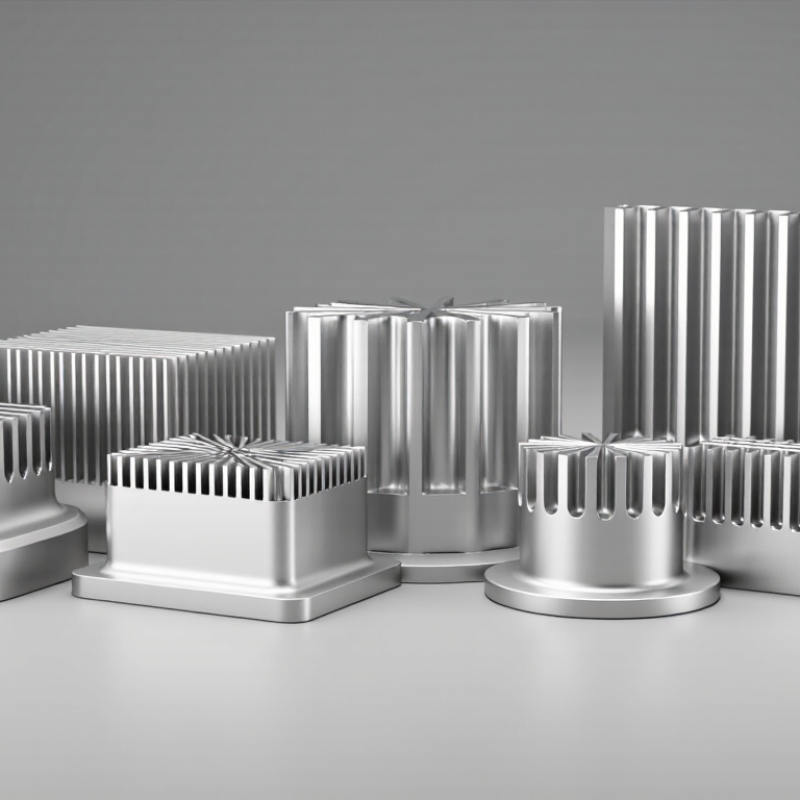
7 Best Aluminum Extrusion Heat Sinks for Global Buyers

Aluminum Extrusion Heat Sinks: Structure, Materials, and Working Principles

Aluminum extrusion heat sinks use a simple structure: a flat base connects to repeated fins. The base spreads heat from a component, while the fins enlarge the cooling surface. Narrow fins suit limited spaces. Wider fins can perform better with natural airflow. The design must match the enclosure, mounting holes, and available air path.

Most profiles use 6063 aluminum because it offers good thermal conductivity, corrosion resistance, and extrusion detail. 6061 aluminum provides higher mechanical strength, although its thermal performance may differ slightly. Temper conditions, such as T5 or T6, also affect hardness and machining behavior.

Anodizing can improve surface protection, but it does not automatically solve poor thermal design. The interface matters. A thin, even layer of thermal compound helps reduce contact resistance between the heat source and base.

In operation, heat travels from the device into the base, then moves through the fins and leaves through convection or forced airflow. Fin spacing should consider dust, fan speed, and installation direction. A taller profile is not always better. A catalog rating can mislead when testing conditions differ from the real enclosure. The calculation is useful, but never perfect. Global buyers should request alloy data, dimensional tolerances, surface treatment details, thermal test conditions, and production samples before volume orders. Small differences in flatness or burr removal can affect assembly more than expected.

Key Performance Criteria for Comparing Extruded Heat Sink Designs

When comparing extruded aluminum heat sinks, thermal resistance should lead the evaluation. A lower value, such as 0.8°C/W, generally indicates better heat transfer under defined airflow and power conditions. However, supplier test methods often differ. This makes direct comparisons imperfect.

Material selection matters. Aluminum Association data places common 6063 extrusion alloys near 200 W/m·K thermal conductivity, while some stronger alloys conduct less efficiently. Fin geometry also changes results. Narrow fins increase surface area, but overly tight spacing can restrict airflow. The U.S. Department of Energy reports that cooling may consume up to 40% of data center energy, so pressure drop deserves serious attention. A heat sink that needs excessive fan power may create hidden operating costs.

Global buyers should check base thickness, fin height, surface flatness, and interface quality. A base that bends during mounting can increase contact resistance, even when the extrusion looks substantial. For natural convection, wider fin spacing often performs better than dense profiles. For forced airflow, moderate spacing may provide stronger heat removal. Thermal cycling, anodized protection, and corrosion testing also support long service life. Small details matter.

Practical testing should use the intended fan, mounting force, thermal interface material, and ambient temperature. Published graphs are useful, but repeatability can be weaker than expected. That is worth questioning. Specifications should include airflow, wattage, test orientation, and measurement uncertainty before purchase decisions are made.

Seven Leading Aluminum Extrusion Heat Sink Configurations

Seven leading aluminum extrusion heat sink configurations serve different thermal and mechanical needs. A flat-back profile suits simple mounting against a metal panel. Straight-fin designs provide balanced airflow and easy cutting. High-density fin profiles increase surface area for compact electronics, but they need cleaner airflow. Low-profile extrusions fit beneath covers with limited vertical space. U-channel profiles cool two opposing surfaces and can protect wiring inside the channel. L-shaped profiles combine heat transfer with a practical corner mounting surface. These choices are not interchangeable.

An integrated liquid-channel extrusion supports demanding power systems when air cooling becomes insufficient. Its internal passages require pressure testing and careful sealing. In my experience, fin spacing often matters more than fin height. Dust can collect between narrow fins. A taller profile may also fail inside a shallow enclosure. Global buyers should check alloy temper, flatness, cut length, mounting-hole tolerance, and surface treatment. Anodizing can improve corrosion resistance, but it does not repair poor contact between the heat sink and device. Metric and imperial hardware may also create small, costly mismatches. One selection mistake remains common: choosing the highest-rated profile without measuring real airflow. Thermal testing under the actual load is still necessary.

7 Best Aluminum Extrusion Heat Sinks for Global Buyers

Seven Leading Aluminum Extrusion Heat Sink Configurations

The chart compares commonly used aluminum extrusion heat sink configurations by representative fin height and base width ranges used in electronics, LED lighting, power conversion, and industrial control applications. Actual thermal performance depends on airflow, surface area, alloy, orientation, and installation conditions.

Global Buyer Considerations: Standards, Customization, and Supply

Selecting among the 7 best aluminum extrusion heat sinks requires more than comparing thermal ratings. Global buyers should verify alloy grade, temper, surface treatment, and dimensional tolerances. Standards matter. Ask for material certificates, RoHS and REACH declarations, and documented thermal testing. For regulated equipment, confirm whether applicable electrical or safety requirements affect the heat sink assembly. A supplier using ISO 9001 controls is helpful, but certification alone does not prove consistent performance.

Customization often begins with a drawing and ends with a physical inspection. Specify base flatness, fin spacing, mounting holes, anodizing thickness, and allowable burrs. A prototype can reveal problems that software misses, especially around airflow and screw clearance. Keep the interface clean and flat. Small gaps can raise thermal resistance. Some buyers over-focus on fin height. That is not always wise.

Supply reliability needs evidence. Review extrusion capacity, tooling ownership, batch traceability, packaging protection, and replacement-part procedures. Confirm lead times for tooling, samples, and repeat orders separately. Ask how the supplier handles alloy shortages or an unexpected die repair. Dual sourcing may reduce risk, although it can create matching issues between finishes and dimensions. In practice, drawings are sometimes incomplete, and forecasts are often optimistic. Leave room for correction. A clear inspection plan, retained samples, and agreed acceptance limits make international purchasing more dependable.

Installation, Maintenance, and Application Suitability by Heat Sink Type

7 Best Aluminum Extrusion Heat Sinks for Global Buyers

Installation, Maintenance, and Application Suitability by Heat Sink Type

Choosing an aluminum extrusion heat sink depends on heat load, airflow, space, and mounting access. Flat-back profiles suit compact control boards and simple screw mounting. Straight-fin profiles work well with natural convection, but fin spacing must allow air movement. U-channel designs protect components while transferring heat through a narrow enclosure. Cross-cut fins increase turbulence and improve cooling in forced-air systems. Pin-fin profiles handle changing airflow directions, making them useful in irregular cabinets. Radial profiles spread heat outward from circular components. Heavy-duty plate-fin profiles support larger power modules, although they add weight and require stronger fasteners.

Installation needs a clean contact surface, even pressure, and a suitable thermal interface material. Avoid tightening one corner completely before the others. That can bend the base and create hidden air gaps. Leave clearance above the fins. Even a few millimeters can affect convection. During maintenance, inspect dust buildup, loose screws, oxidation, and dried thermal compound. In humid environments, check exposed aluminum more often. Small issues become expensive failures.

Tips: Measure the component temperature before selecting a profile. Compare results at the highest expected ambient temperature. Use forced airflow only when noise and filter maintenance are acceptable. Check extrusion tolerances before ordering large quantities. Profiles may look identical but perform differently. I have found that theoretical calculations can miss enclosure restrictions. Test a sample in the real installation. No profile is perfect.

FAQS

What is the basic structure of an aluminum extrusion heat sink?

A flat base connects to repeated fins. The base receives heat from the component. The fins enlarge the cooling surface. Simple, but spacing still matters.

How does an extruded heat sink remove heat?

Heat moves from the device into the base. It then travels through the fins. Convection or forced airflow carries heat away. Airflow direction matters.

Which aluminum alloy is commonly used?

6063 aluminum is common because it supports good conductivity and detailed extrusion shapes. 6061 aluminum offers higher mechanical strength. Its thermal performance may differ slightly.

Is a taller fin profile always better?

No. A taller profile may not fit the enclosure or receive enough airflow. Narrow fins save space. Wider spacing often helps natural convection. Bigger is not always better.

How does fin spacing affect cooling?

Tight spacing increases surface area but can restrict airflow. Dust may collect between narrow fins. Wider spacing often suits natural airflow. Moderate spacing may suit fans better.

What should buyers check before placing a volume order?

Request alloy data, dimensional tolerances, surface treatment details, and production samples. Check base flatness and burr removal. Small assembly problems can become expensive.

Why is thermal resistance important?

Lower thermal resistance generally means better heat transfer under defined conditions. For example, 0.8°C/W may indicate strong performance. Comparisons remain imperfect when test methods differ.

What conditions should a thermal test include?

Use the intended fan, mounting force, interface material, and ambient temperature. Record airflow, wattage, orientation, and measurement uncertainty. Published graphs are useful, but not perfect.

Conclusion

This guide explains how an Aluminum Extrusion Heat Sink is designed, manufactured, and used to manage heat in electronic and industrial equipment. It introduces the role of aluminum alloys, extrusion profiles, fins, bases, and airflow paths, while describing how these elements transfer heat away from components. It also outlines key comparison criteria, including thermal performance, surface area, weight, mechanical strength, corrosion resistance, dimensional accuracy, and compatibility with natural or forced-air cooling.

The article reviews seven practical heat sink configurations, ranging from compact straight-fin and slotted-fin designs to pin-fin, wide-base, high-density, and customized profiles. It also discusses global buyer considerations such as material standards, quality documentation, customization requirements, packaging, lead times, and supply consistency. Finally, it provides guidance on installation, cleaning, thermal interface materials, inspection, and application suitability, helping buyers select an efficient and reliable solution for their operating environment.


Charlotte

Charlotte

Charlotte is a seasoned marketing professional with a deep understanding of the company's portfolio and a passion for elevating its presence in the market. With a keen eye for detail and a commitment to excellence, she ensures that our professional blog is regularly updated with insightful articles......